⚠️ Accidents and disruptions
This topic is part of the exam material for the theory exam Taxi vakbekwaamheid theorie (TVT). Below you find the toetstermen (test terms), the rules you need to know and a few example questions.
Toetstermen (test terms) in this topic
- 5.1 After an accident: PAMAN
- 5.2 Reporting well: who, what, where
- 5.3 Traffic jams, blockages and delays
The rules
After an accident: PAMAN
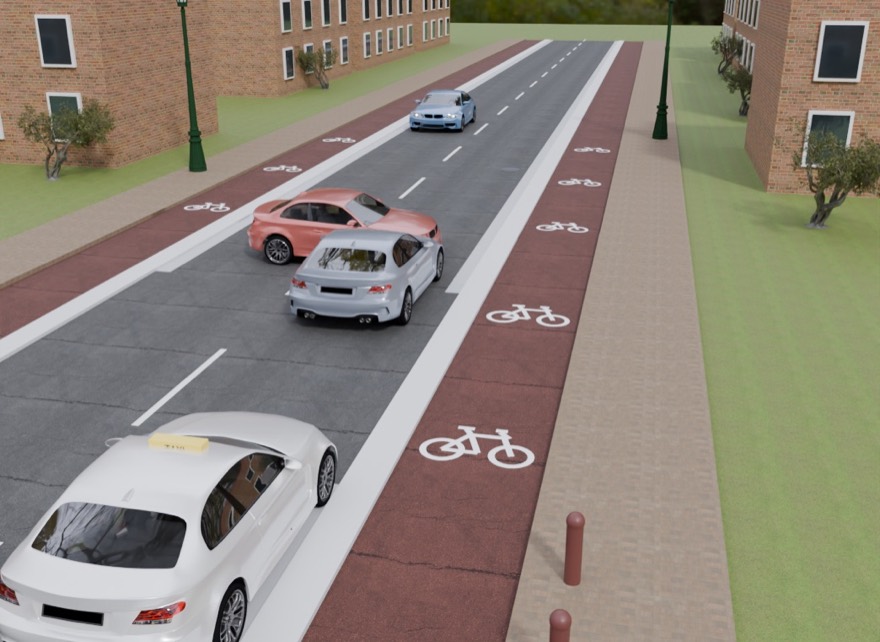
Straight after a collision or accident you follow the PAMAN rule: Personal safety, the safety of others (Andermans veiligheid), Marking the scene, Alerting the emergency services and giving Necessary help. For the safety of others you keep passengers and bystanders out of the danger zone. If you place a warning triangle, put it clearly visible about 30 metres from the vehicle, on the side of the traffic for which it is a danger. In incident management Rijkswaterstaat closes a lane with a red cross so that emergency services and recovery crews can work safely.
How to remember it: Picture this: a man called PAMAN gets out of his car. First he checks himself (P), then the people around him (A), sets down a triangle (M), takes out his phone (A) and only then kneels beside the injured person (N).
Please note: Your own safety first, even if you want to help immediately: an injured helper can no longer help anyone. The two A's are different: the first is keeping people safe, the second is alerting the emergency services.
Source: CBR exameneisen TVT 5.1; RVV 1990 art. 58; Rijkswaterstaat incidentmanagement
Reporting well: who, what, where
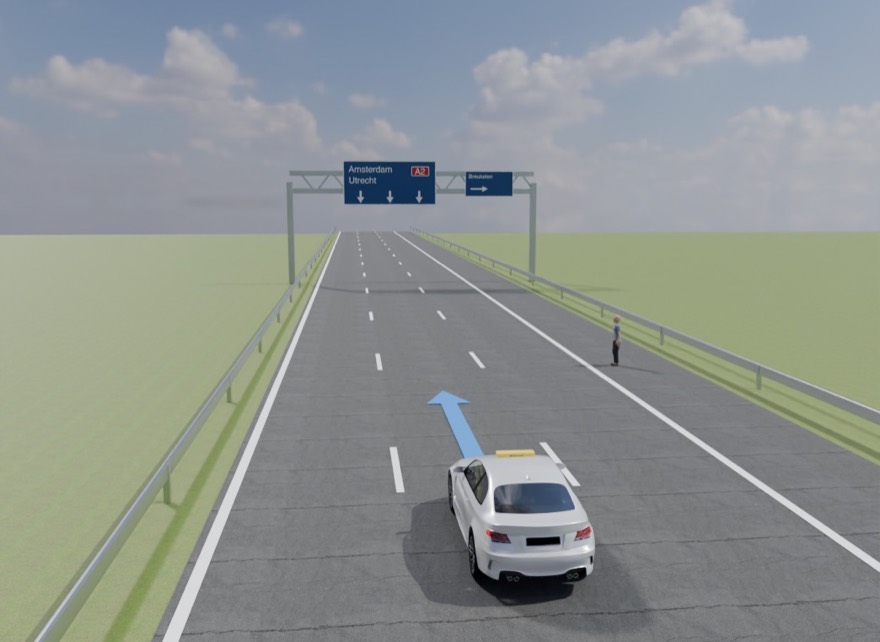
After a collision with an injured person, or when life is in danger, you call 112; with damage only, you call 0900-8844 if you want the police to come. Tell the control room what is going on, where help is needed, which emergency service seems to be needed, and whether there are injured people and how many. In a built-up area you give the street name and house number; outside a built-up area the road number, the hectometre post and the direction of travel. You report an object on the motorway to Rijkswaterstaat on 0800-8002.
How to remember it: Picture this: your report is a postcard to the control room. On the front: what happened and how many are injured; on the back the address: in town street and house number, on the motorway the post with road number, hectometre and Re or Li.
Please note: 112 also works without call credit and without a valid SIM card. Is there a life-threatening situation, such as a person on the road, or have you broken down on an open peak-hour lane yourself? Then you call 112, not 0800-8002.
Source: Rijksoverheid 112; Rijksoverheid hectometerpaaltjes; Rijkswaterstaat voorwerpen melden en pech op de snelweg; CBR exameneisen TVT 5.2
Traffic jams, blockages and delays
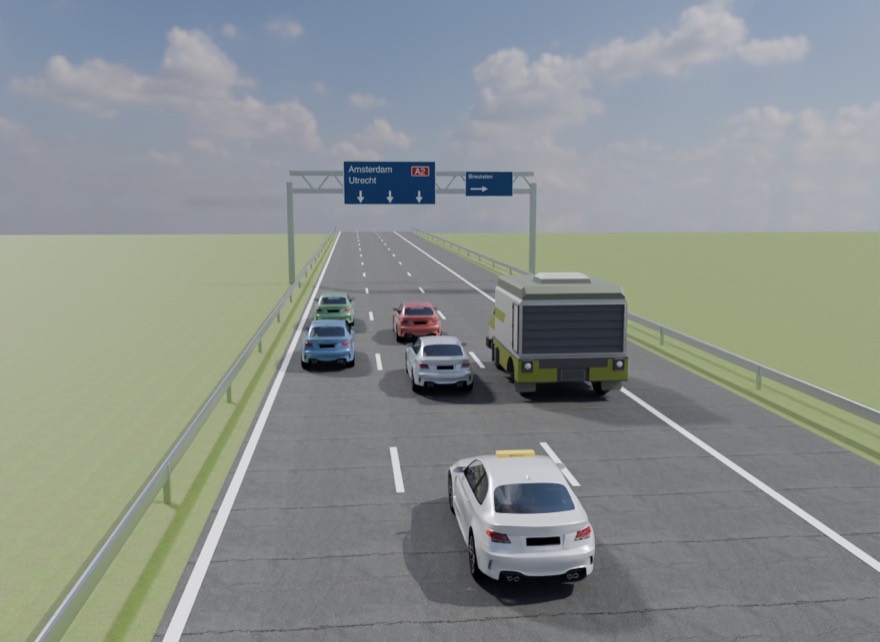
Check the traffic information before setting off, so you spot a jam as early as possible and choose another route in time. Current traffic information is available via the internet, teletext, radio and television, among others; diversions are shown on signs above and beside the road (DRIPs). When delayed, you tell the passenger honestly how long the delay is, and you inform the control centre if needed, hands-free or from a safe place. After a minor collision without injuries, with cars that can still drive, you move the taxi to the side to prevent a blockage.
How to remember it: Picture this: you are a pilot. Before take-off you check the weather report (traffic information), on the way you report to the control tower (the control centre), and over the intercom your passengers hear how long the delay is.
Please note: Slowing down to look at an accident on the other carriageway causes rubbernecking jams and danger: keep your attention on your own carriageway and drive on. The hard shoulder is not meant for getting round a jam.
Source: CBR exameneisen TVT 5.3; Rijksoverheid actuele verkeersinformatie; Rijkswaterstaat incidentmanagement
Short and sharp
PAMAN: the order
P = personal safety, A = others' safety (passengers and bystanders out of the danger zone), M = mark, A = alarm (112), N = necessary help. So look after your own safety first.
The two A's differ: the first is keeping people safe, the second is calling. After marking comes alarming, not help. And with an injured person you do not leave: the next trip must wait.
First aid for the injured
Neck or back pain with tingling? Keep the person still. Motorcyclist with a helmet? Helmet stays on, visor up. Pale clammy skin and bleeding (shock)? Press on the wound and keep them lying down.
Unconscious and not breathing normally: have someone call 112 and start resuscitation. If someone must vomit, turn him on his side. In shock you give nothing to eat or drink.
Breakdown on the motorway
Cannot reach a lay-by, car park or filling station? Switch on the hazard lights and park on the verge, close to a guardrail with the front wheels turned toward it. Everyone waits far on the verge or behind the guardrail.
You call breakdown assistance only from that safe place. A warning triangle stands about 30 metres from the vehicle, towards the traffic at risk (not needed if you use flashing warning lights). On an open rush-hour lane you call 112.
Fire in a tunnel
Fire in your own car and it still drives? Drive out of the tunnel and park on a hard shoulder or lay-by. Another vehicle on fire? Keep your distance, park as far right as possible, switch the engine off, leave the key in the ignition and walk to the emergency exit.
In a tunnel never turn round and never reverse. Through the emergency phone in the help post you call the Rijkswaterstaat traffic controller, who closes the tunnel and alerts the emergency services.
112, 0900-8844 or 0800-8002
112: injured people, danger to life, a person on foot on the motorway or a car on an open rush-hour lane. 0900-8844: the police for material damage only. 0800-8002: Rijkswaterstaat for an object on the motorway with no immediate danger.
112 works even without credit and without a valid SIM card. If the line drops, the control room calls back if your details were sent: keep your phone with you. Without a SIM card you call again yourself. On the road you phone hands-free or stop safely first.
Giving the location correctly
Inside the built-up area you give the street name and house number. Outside it you give the road number, the hectometre marking and the direction (Re or Li) from the distance marker post, which stands every 100 metres.
Tell the control room what has happened, where it is and which emergency service seems needed. Also say whether there are injured people and how many.
Queues and traffic information
Check traffic information before you leave and choose another route if needed. Current information is on the internet, radio and television, and on signs above the road (DRIPs). The Rijkswaterstaat site shows queues, roadworks and camera images.
Stuck? Tell the passenger honestly how much delay there will be and call the dispatch centre hands-free or from a safe place. The hard shoulder is not for queues. With an accident on the other carriageway, drive on rather than slow down to look.
Minor collision with no injuries
Both cars drivable and nobody hurt? Move the taxi to the side and sort it out there. Fill in the European accident form together with the other driver; it is the same all over Europe, only the language differs.
If you disagree about the crosses (question 12), do not sign. After signing you change nothing, or the form is invalid. Hand over your copy only once the other has signed too. You use the other car's green card to check the insurance.
Facts to remember
- PAMAN: Personal safety, Others' safety, Mark, Alarm, Necessary help.
- The warning triangle stands clearly visible about 30 metres from the vehicle, towards the traffic for which it is a danger.
- A distance marker post stands every 100 metres. Outside the built-up area you give road number, hectometre marking and direction (Re or Li).
- 112 for injuries or danger to life, a person on the motorway or a car on an open rush-hour lane. 0900-8844 for material damage only. 0800-8002 for an object on the motorway with no immediate danger.
- Breakdown on the motorway without a lay-by: hazard lights on, on the verge by the guardrail with the front wheels toward it, everyone far on the verge or behind the guardrail, and only then phone.
- Fire in a tunnel. Your own car on fire and it still drives: drive out of the tunnel. Another vehicle on fire: keep your distance, park on the right, engine off, key in the ignition and walk to the emergency exit.
- The helmet stays on (visor up), with neck pain the person stays still, with shock and bleeding you press on the wound and keep them lying down, and with unconsciousness and no normal breathing you have 112 called and start resuscitation.
Example questions
The taxi has broken down on the motorway. There is a crash barrier on the verge. How does the driver position the car?
🇳🇱 De taxi heeft pech op de snelweg. In de berm staat een vangrail. Hoe zet de chauffeur de auto neer?
- Close to the crash barrier, with the front wheels turned towards it
- Close to the crash barrier, with the front wheels turned towards the road
- Away from the crash barrier, with the front wheels straight
Show the answer
Close to the crash barrier, with the front wheels turned towards it
Rijkswaterstaat advises putting the car close to the crash barrier, with the front wheels turned towards it. Passengers must still be able to get out on the right.
RWS: Pech op de snelwegBecause of an accident further ahead there is a red cross above the lane a taxi driver is in. May he continue in this lane until he reaches the accident?
🇳🇱 Door een ongeval verderop staat boven de rijstrook van een taxichauffeur een rood kruis. Mag hij op deze rijstrook doorrijden tot hij bij het ongeval is?
- Yes
- No
Show the answer
No
A red cross means that the lane may not be used. The driver changes to an open lane as soon as it is safe to do so. This allows the emergency services to work safely.
RVV 1990 art. 73A taxi has broken down on the motorway. Which details of the hectometre marker does the driver report?
🇳🇱 Een taxi heeft pech op de snelweg. Welke gegevens van het hectometerpaaltje geeft de chauffeur door?
- The road number, the hectometre figure and Re or Li
- The road number and the colour of the marker
- The name of the next exit
Show the answer
The road number, the hectometre figure and Re or Li
The marker shows the road number, the hectometre and the carriageway (Re or Li). This helps the emergency services find you quickly.
Rijksoverheid: doel hectometerpaaltjes
Keep practising in the app
In TaxiTheorieHub you practise with more than 1100 questions in the question types of the exam, take full practice exams of 40 questions and read the explanation for every question. In 12 languages, with the Dutch of the exam one tap away.
Download on the App Store