
All Dutch information signs: what they do and do not ask of you
Information signs are usually blue and rectangular. They forbid nothing and require nothing: they tell you where you are or what is further on. That is exactly why they are tricky in the exam, because an information sign that looks like a mandatory sign easily leads to the wrong answer. Below are all 30.
Information is not an instruction
That is the whole distinction, and it earns points in every exam. A round blue sign with a bicycle (G11) means: as a cyclist you must ride here. A rectangular blue sign only gives information, such as a zebra crossing (L2) or a dead-end road (L8). The first is a duty, the second a piece of information.
Where the mistakes happen
Most mistakes in this category do not come from the sign itself but from the sub-sign underneath. A sub-sign can limit the information to certain times, certain vehicles or a certain direction. Without the sub-sign the answer is often incomplete. The sub-signs are a category of their own in the sign library.
All 30 information signs
Jump to: C3 · C4 · C5 · C23-01 · C23-02 · C23-03 · L1 · L2 · L3 · L4 · L5 · L6 · L7 · L8 · L9 · L10 · L11 · L12 · L13 · L14 · L15 · L16 · L17 · L18 · L19 · L20 · L21 · L3a · L3b · L3c
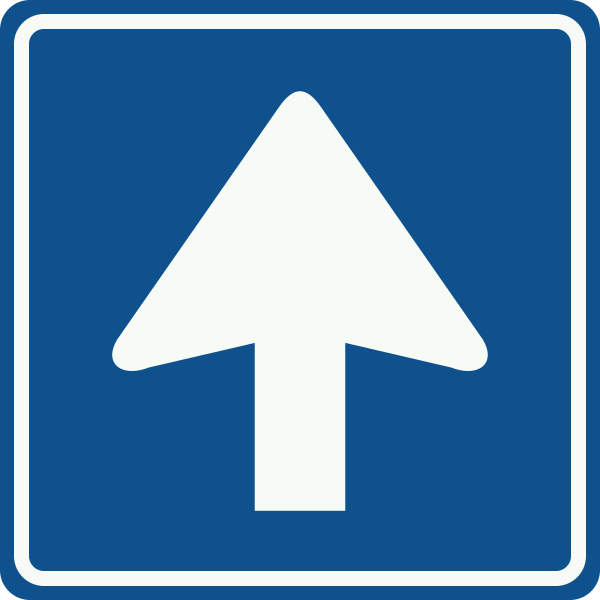
C3 — One-way street (traffic only permitted in the direction of the arrow)
Memory hook: The blue rectangle with one white arrow is a one-way sign: it points a single direction, so that is the only way you flow.
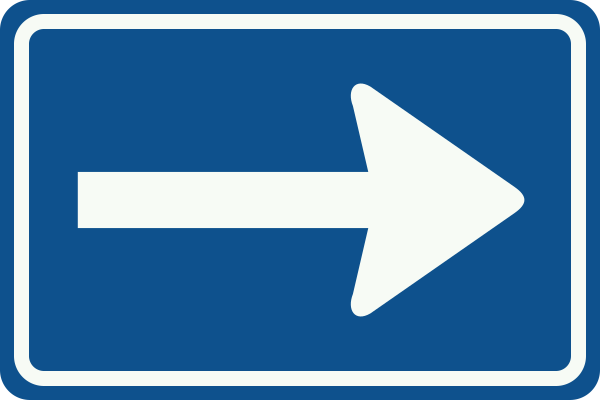
C4 — One-way street (arrow variant placed at driveways or side roads)
Memory hook: A crisp white arrow on blue points one way: this is a one-way street, you only go that direction.
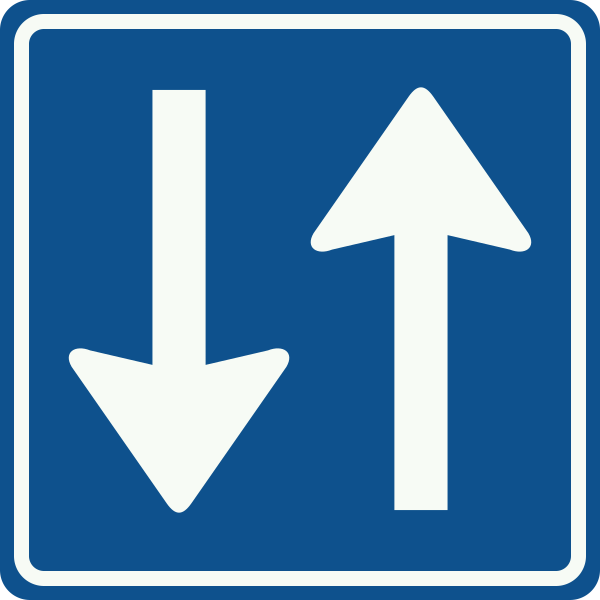
C5 — Entry permitted
Memory hook: A blue sign with a white arrow pointing straight ahead says warmly: come on in, this road is open for you.
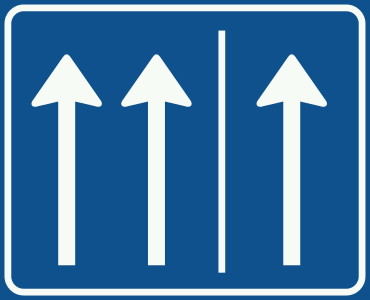
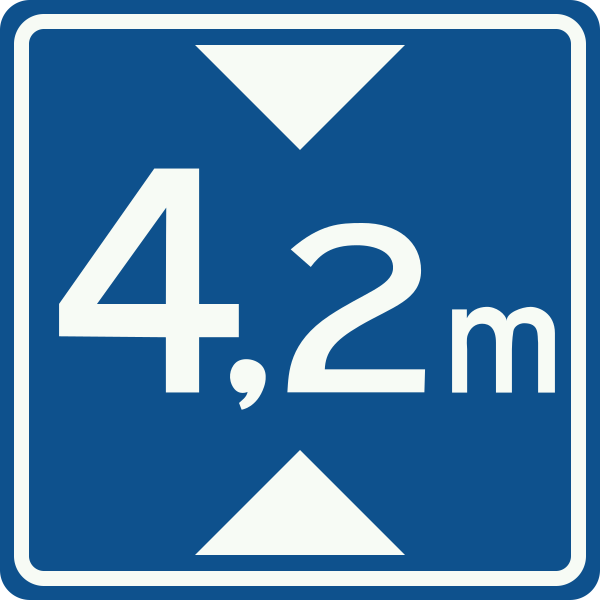
L1 — Clearance height of an underpass (indicates the available headroom)
Memory hook: Two black arrows pointing at each other with a number between: that's the tunnel's ceiling — taller than the figure and you'll lose your hat.
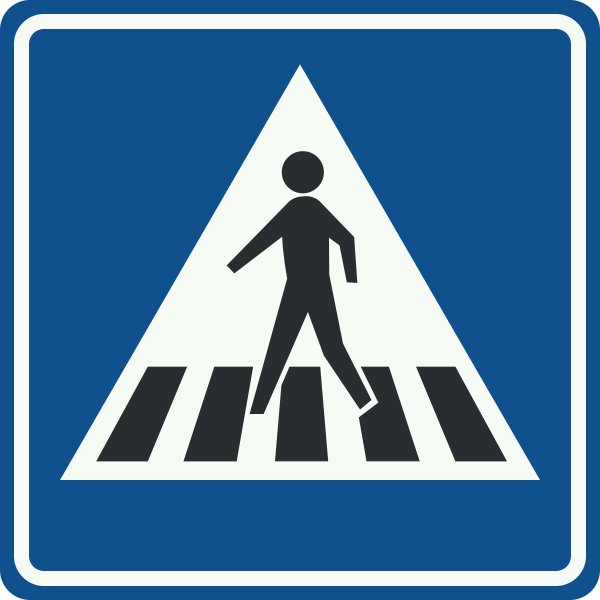
L2 — Pedestrian crossing (zebra crossing)
Memory hook: The blue sign with a walker on stripes: here lies the zebra crossing, the white bars are your safe passage across.
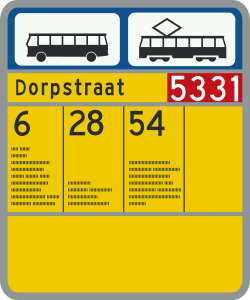
L3 — Bus stop / tram stop
Memory hook: A blue plate with a bus (or tram): public transport pauses here, so this is the stop to hop aboard.
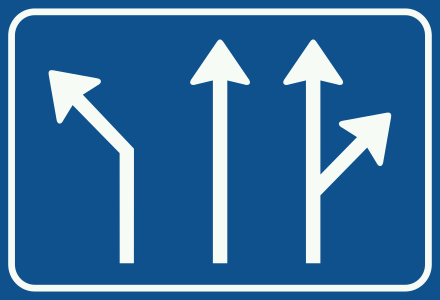
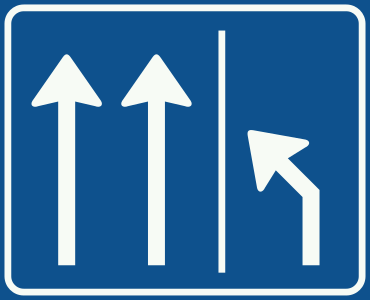
L4 — Get in lane / pre-sorting (indicates the lane for the shown direction)
Memory hook: Arrows fanning apart say: choose your lane now, slot yourself into the strip pointing to where you want to go.
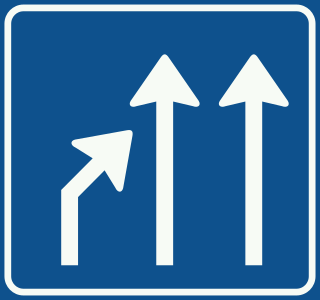
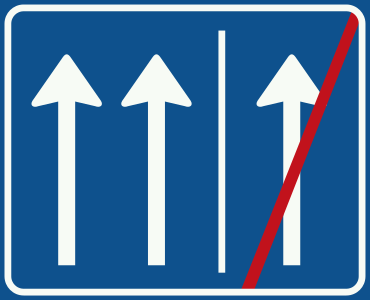
L5 — End of lane
Memory hook: A blue sign of a lane pinching down to nothing: your strip of road is 'dying out' like a river running dry - merge across in good time.
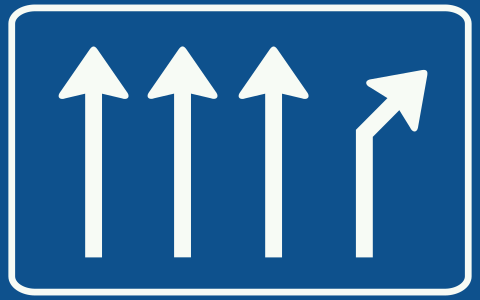
L6 — Splitting of the carriageway (road divides)
Memory hook: The road splits like a forking branch: choose your side, left or right, as the way divides in two.
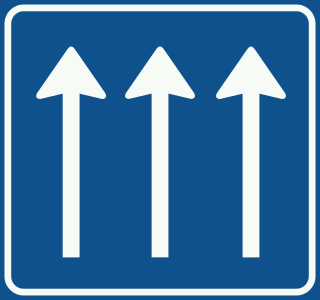
L7 — Number of through lanes
Memory hook: The blue fan of arrows counts the straight-ahead lanes: this many lanes carry on without turning.
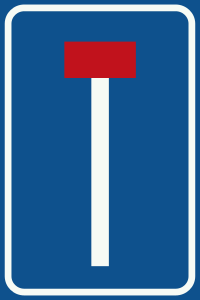
L8 — Dead-end road (no through road)
Memory hook: A white post on blue with a red crossbar at the top: the road is a dead end, you can't get through.
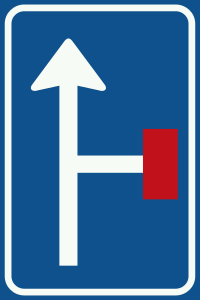
L9 — Advance warning of a dead-end road ahead
Memory hook: Blue sign with a stub that dead-ends in red: this road stops — drive on and you'll park your nose against a wall.
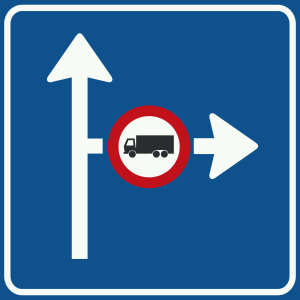
L10 — Advance notice of a traffic measure applying to the indicated direction(s)
Memory hook: The sign with advance arrows: it warns you early about a traffic measure in the shown direction, a heads-up so nothing surprises you.
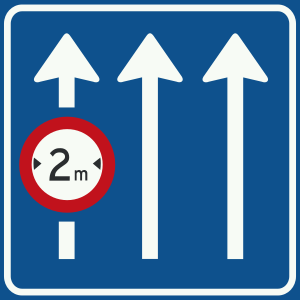
L11 — The traffic sign applies only to the indicated lane or lanes
Memory hook: Arrows point straight down onto your lanes: the sign above speaks only to those marked lanes, no others.
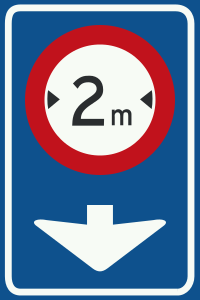
L12 — The traffic sign applies only to the indicated single lane
Memory hook: A sign with an arrow aimed at just one lane: 'I count here only', whatever it says applies to that single strip alone.
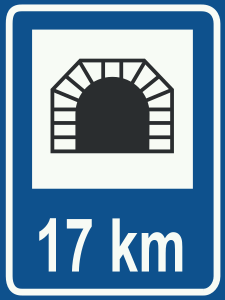
L13 — Road tunnel (with tunnel length indicated)
Memory hook: Blue sign with a tunnel mouth and a number: the digits count the metres of darkness - the bigger the number, the longer you dive underground.
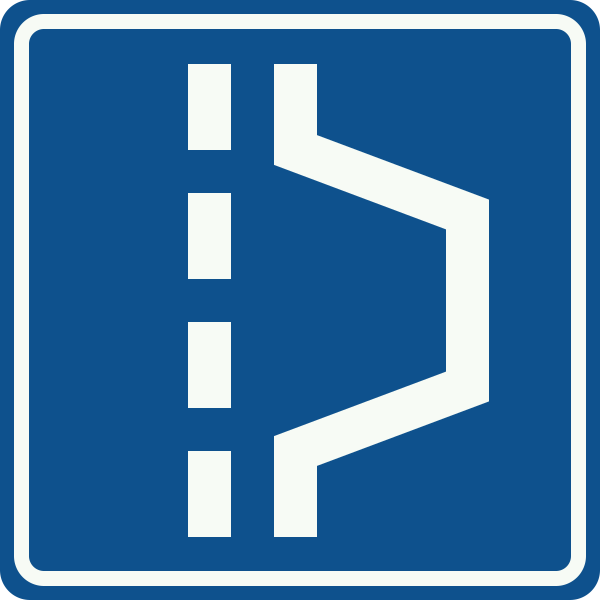
L14 — Emergency refuge / lay-by (safe stopping bay)
Memory hook: A safe little harbour beside the motorway: if you break down, this is where you slip aside to safety.
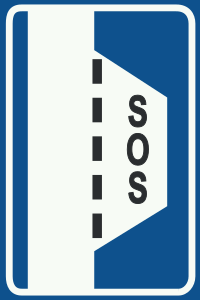
L15 — Emergency refuge equipped with an emergency telephone and a fire extinguisher
Memory hook: A phone in a lay-by: the motorway's lifebuoy — broken down? shelter here and call from here.
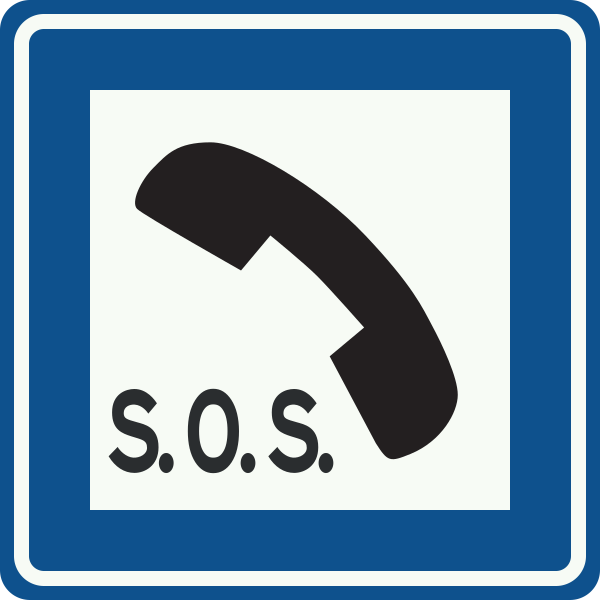
L16 — Emergency telephone
Memory hook: Blue sign with a phone handset: in trouble, grab the handset — this is the roadside emergency phone.
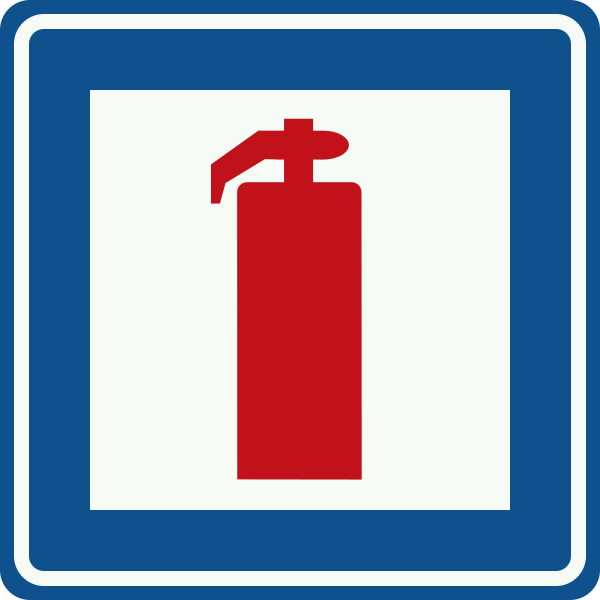
L17 — Fire extinguisher
Memory hook: A little white flame on the sign: the fire extinguisher lives here — think 'flames? grab here!'
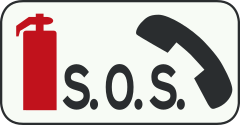
L18 — Emergency telephone and fire extinguisher
Memory hook: The blue sign with a phone and extinguisher: trouble on the road, here you call for help and grab the fire extinguisher.
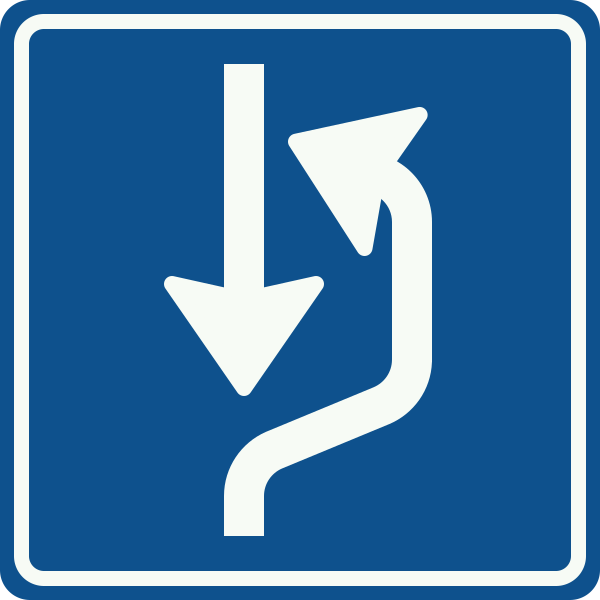
L20 — Passing / pull-over place on the right side of the road
Memory hook: A blue sign with a bulge to the right: here's a safe little pocket to pull over on the right.
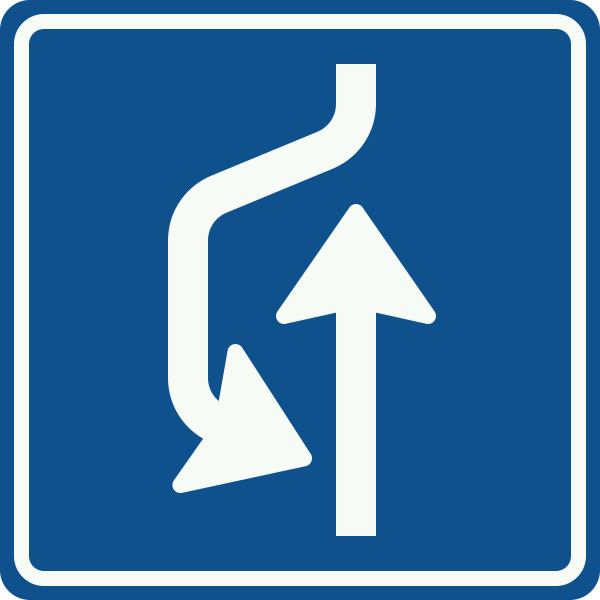
L21 — Passing / pull-over place on the left side of the road
Memory hook: A little bulge on the left of the road is your escape harbour: pull over left here to let the oncoming car slip past.
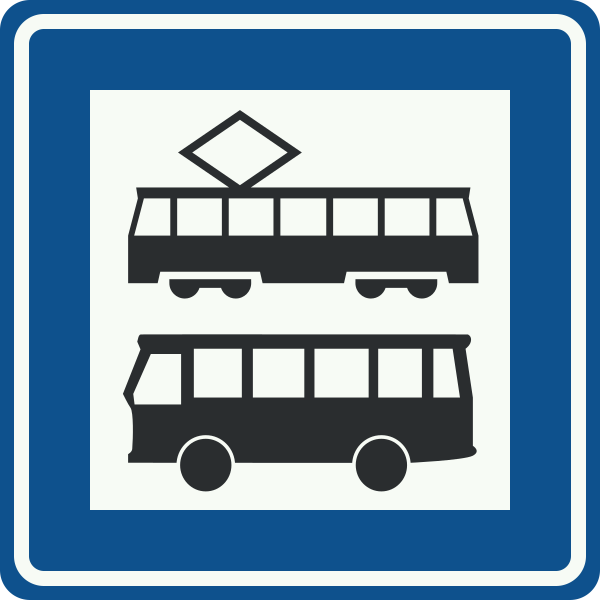
L3a — Tram stop and bus stop.
Memory hook: Tram and bus shoulder to shoulder on one sign: two travelling companions sharing a stop.
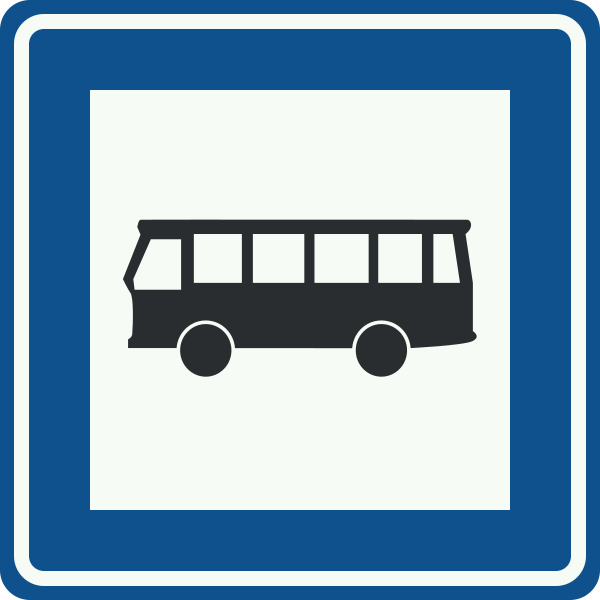
L3b — Bus stop.
Memory hook: A bus alone: this stop is the bus's standing appointment.
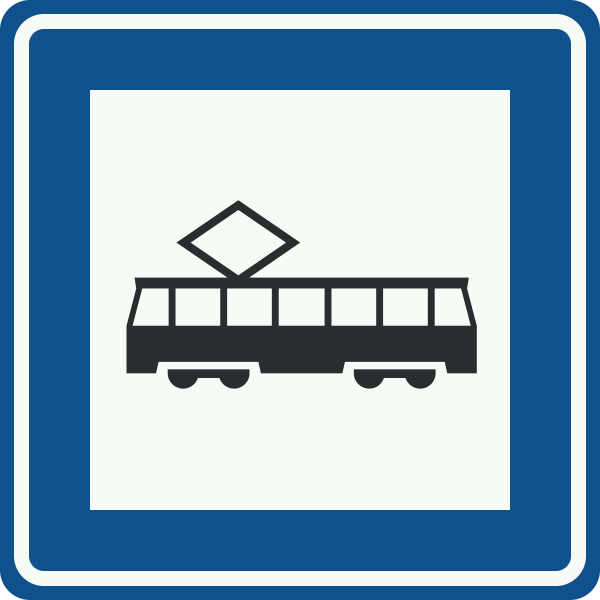
L3c — Tram stop.
Memory hook: A tram alone: rails but no tyres — this is the tram's own stop.
Keep practising
Recognising signs is one thing; applying them in a situation is the real exam work. In the animated right-of-way quiz you see the situation move and have to decide, just like in hazard perception. The rules per topic are in the theory guide.
Want to practise? Try the free questions on road signs and markings, with an explanation for every answer.
Practise this with 2,609 questions and 19 animations
Rijtheorie Hub practises exactly like the CBR exam: 50 questions, 30 minutes, pass with 44. Free to try, in 12 languages.
Download free