The most important Dutch road signs: 22 signs in 10 pairs
The most important Dutch road signs are the signs that decide who goes first, how fast you may drive, where you may not enter and where you may stop or park. Below are 22 signs in 10 pairs that look alike or belong together. It is our own selection of signs that are easy to mix up.
Why these important road signs?
We chose on two points. The sign has a rule with direct consequences: priority, speed, a ban or an order. And the sign has a twin that you easily mix it up with. We do not know which signs the CBR asks about most often and we make no claim about that. So in the end, learn all road signs.
The most important Dutch road signs in 10 pairs
1. Give way or stop: B6 and B7
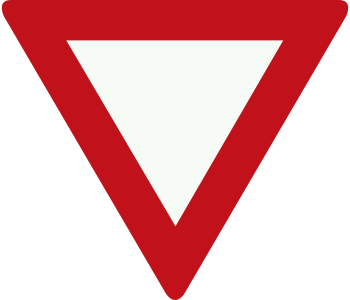
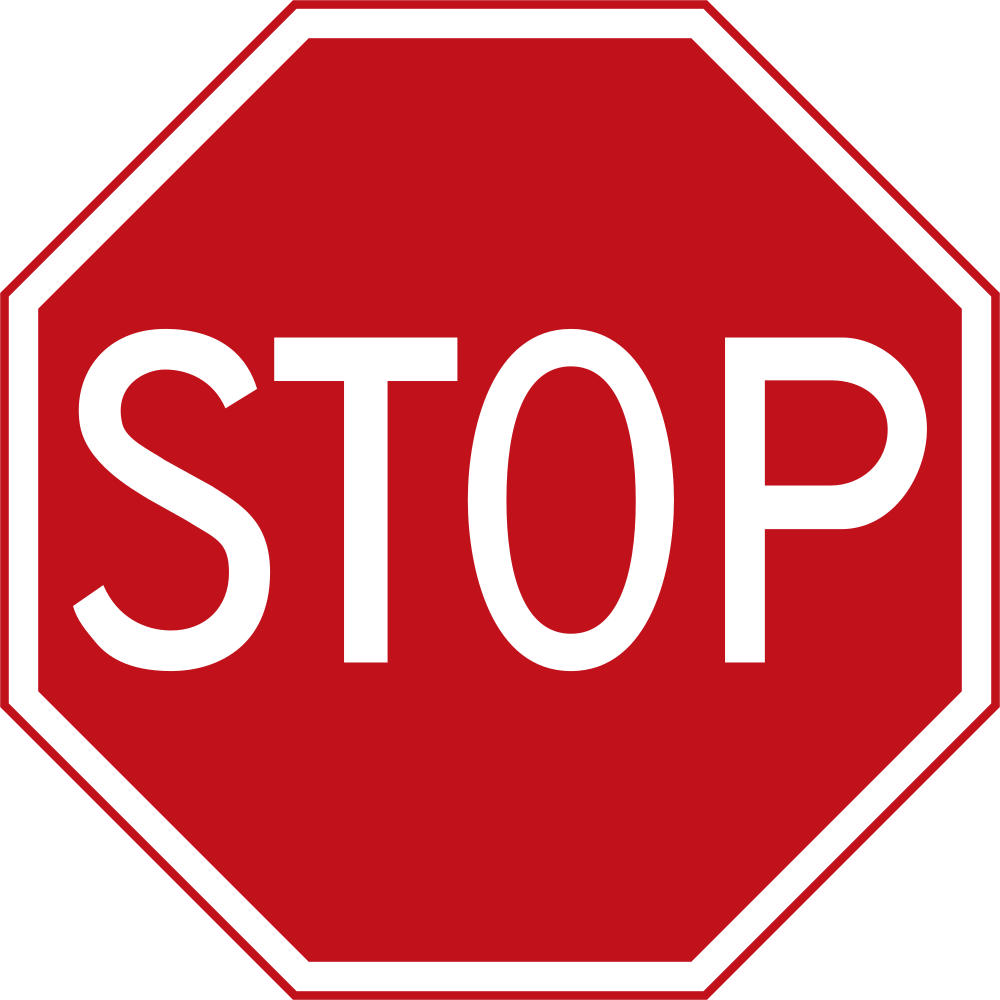
At B6 you give way to drivers on the crossing road. If nothing is coming, you do not have to stop. At B7 you must always stop, even if the road is empty. See give-way lines (haaientanden) and stop sign.
2. Priority road or priority junction: B1 and B3
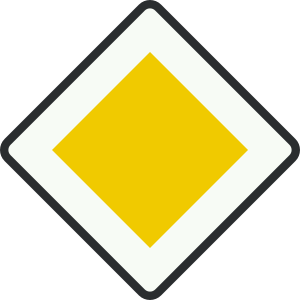
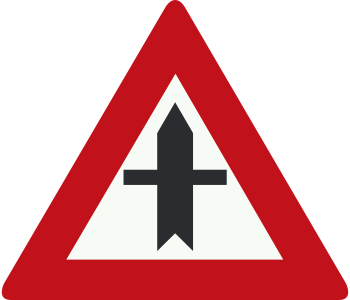
B1 says that you are driving on a priority road (voorrangsweg). B3 applies only to the next junction: there you have priority. Outside the built-up area (bebouwde kom) you may not park on the carriageway of a priority road (Article 24 of the RVV 1990).
3. No entry: C1 and C2, and the opposite C3
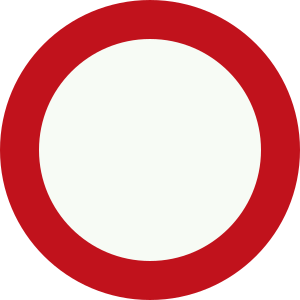
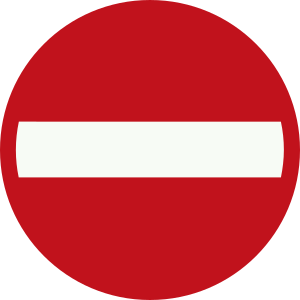
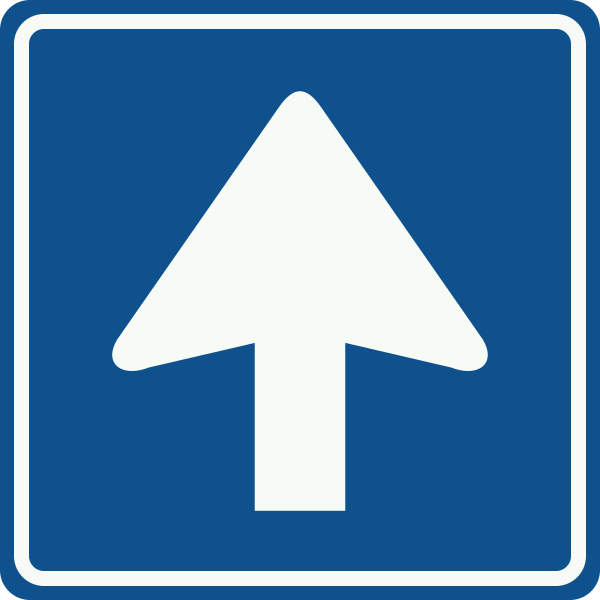
C1 closes the road in both directions to all vehicles. C2 is on the wrong side of a one-way street: you may not enter here. C3 is on the right side: you may only enter the road from this side.
4. Parking ban or stopping ban: E1 and E2
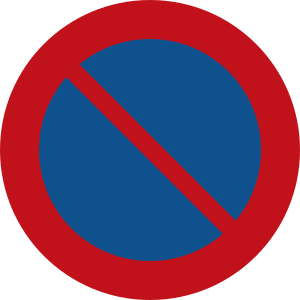
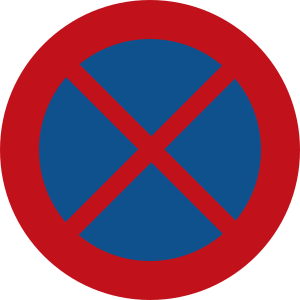
One stripe is E1: no parking, but you may let someone get in or out and load or unload. A cross is E2: stopping is not allowed either. Both apply to the side of the road where the sign stands. More in parking ban and stopping ban.
5. Motorway or expressway: G1 and G3
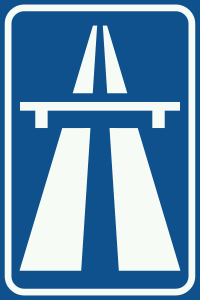
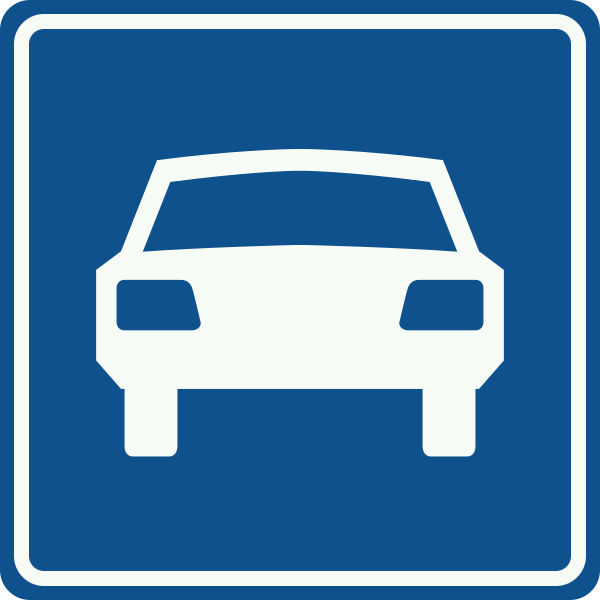
G1 is the motorway (autosnelweg): at most 130 km/h, unless signs show something else. G3 is the expressway (autoweg): at most 100 km/h (Article 21 of the RVV 1990).
6. Speed limit or advisory speed: A1 and A4
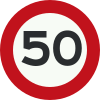
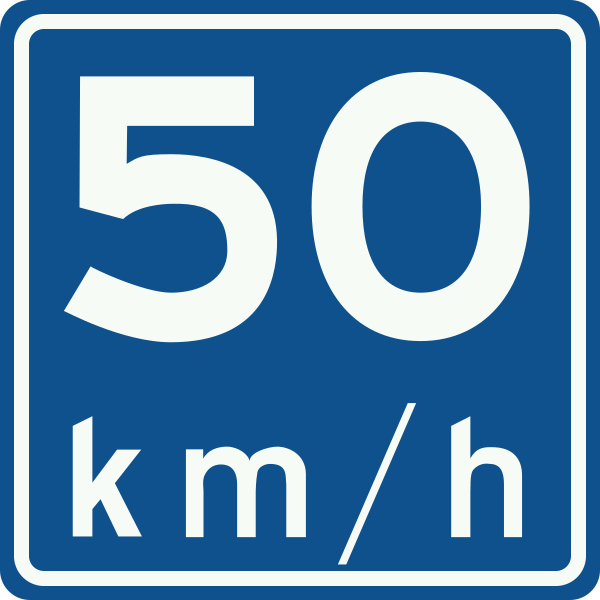
A1, round with a red border, is a speed limit. A4, blue and square, is an advisory speed. A speed on an electronic matrix sign (A3) is also a speed limit and not advice.
7. Oncoming traffic, who goes first: F5 and F6
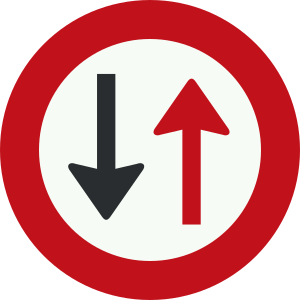
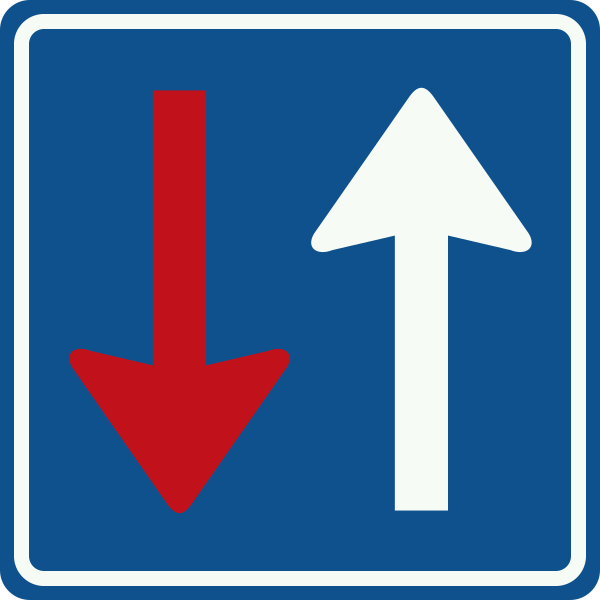
At F5 you may not drive on if traffic is approaching from the other side. At F6 it is the other way round: the drivers from the other side let you go first.
8. Cycle paths: G11, G12a and G13
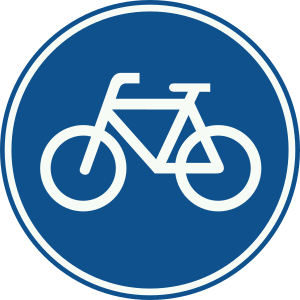
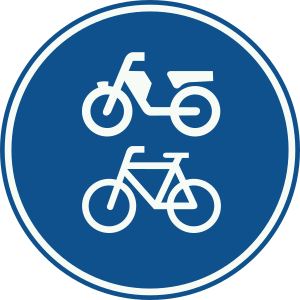
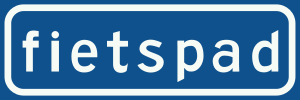
G11 is the compulsory cycle path. G12a is the cycle/moped path, where moped riders must ride too. G13 is the non-compulsory cycle path. For you as a car driver it means: you know which road users you can expect on the path and therefore when you turn.
9. Level crossing: J10 and J11
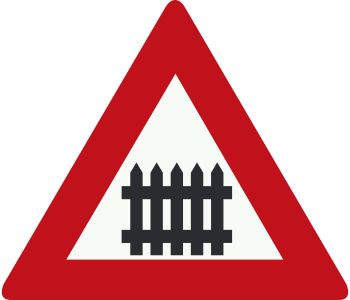
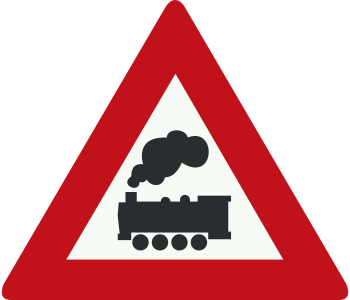
J10 warns of a level crossing with barriers, J11 of a level crossing without barriers.
10. No overtaking: F1 and F3
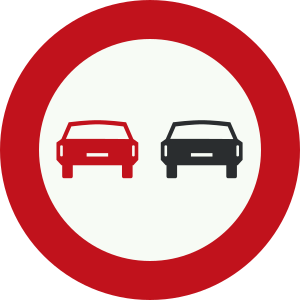
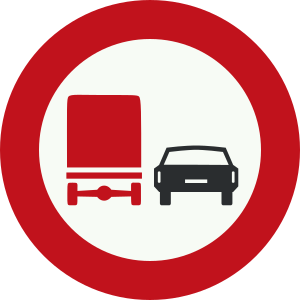
F1 bans motor vehicles from overtaking each other. F3 applies only to lorries. Read more in overtaking and the overtaking ban.
Difficult road signs: where does it often go wrong?
- End signs. The same sign with a red diagonal stripe, such as G2, means the end of that type of road. F8 means the end of all bans that were shown with signs.
- Sub-signs. A sub-sign (onderbord) can limit a sign to certain road users or make an exception for someone. See sub-signs.
- Shape and colour. Round with a red border is a ban, round and blue is an order. You can find that reading key in types of road signs.
How to learn the signs
Learn the signs in pairs, as above, and then test yourself without the names. You can do that with the road sign quiz and with the practice questions about traffic rules.
Frequently asked questions
What are the most important Dutch road signs for the theory exam?
The CBR does not publish a list. The exam has a part about traffic signs and instructions. We advise you to start with the signs about priority, speed, road closures and parking.
What are difficult road signs?
Signs that look alike, such as B6 and B7, E1 and E2, C2 and C3, A1 and A4, and F5 and F6. Learn them as a pair, then you see the difference.
How many road signs do you need to know?
All signs from Annex 1 of the RVV 1990 can come up. The law divides them into eleven chapters, from speed (A) to information (L).
What is the difference between sign B6 and B7?
At B6 you give way to drivers on the crossing road. At B7 you do that too, but you must always stop first.
Want to practise? Try the free questions on road signs and markings, with an explanation for every answer.
Practise this with 2,606 questions and 19 animations
Rijtheorie Hub practises exactly like the CBR exam: 50 questions, 30 minutes, pass with 44. Free to try, in 12 languages.
Download free Get it on Google Play