21 traffic situations from the app, free and without an account. In 16 of them you choose what you do: brake, release the accelerator or do nothing; the others are about what to expect in such a situation. Then you see the right answer and why. The app has 329 questions with brake, release the accelerator or do nothing.
In the hazard perception part of the CBR exam you see a traffic situation from the car and choose: brake (remmen), release the accelerator (gas loslaten) or do nothing (niets doen).
Since the exam was renewed, these are moving images instead of photos. The exam is one continuous block of 50 questions in which hazard perception, knowledge and insight alternate; you pass with 44 correct. Here you see each situation as a 3D image. You can see situations in motion in the animated right-of-way quiz and in the 19 animated right-of-way lessons in the app.
21 situations: what do you do?
Score: 0 of 0
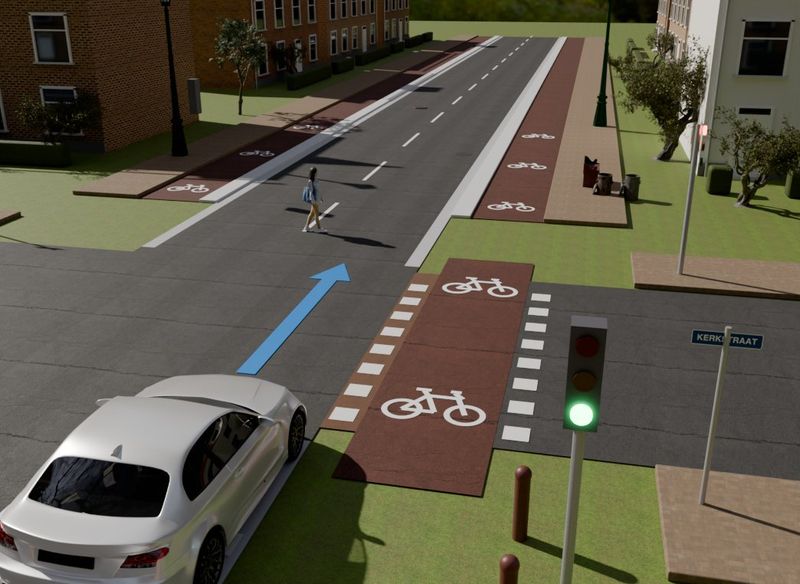
1. The light has just turned green. A pedestrian is still crossing right in front of you. What do you do?
Show in Dutch
Het verkeerslicht is net op groen gesprongen. Een voetganger is nog bezig vlak voor je over te steken. Wat doe je?
Explanation: Green means proceed (art. 68(1)(a) RVV 1990), but not at the expense of a pedestrian still on the carriageway. You must always be able to stop within the distance that is clear (art. 19): brake and let the pedestrian cross.NL: RemmenSource: RVV 1990 art. 19; art. 68 lid 1 onder a
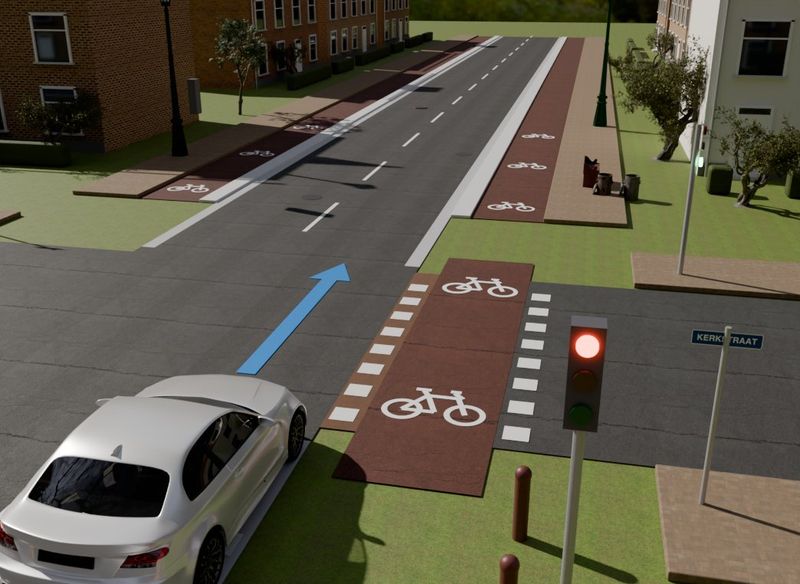
2. You approach this junction and the traffic light for you is red. The junction is completely empty. What do you do?
Show in Dutch
Je nadert dit kruispunt en het verkeerslicht voor jou staat op rood. Het kruispunt is helemaal leeg. Wat doe je?
Explanation: A red light means stop (art. 68(1)(c) RVV 1990) and you stop before the stop line (art. 79). That the junction is empty is irrelevant: brake and wait for green.NL: RemmenSource: RVV 1990 art. 68 lid 1 onder c; art. 79
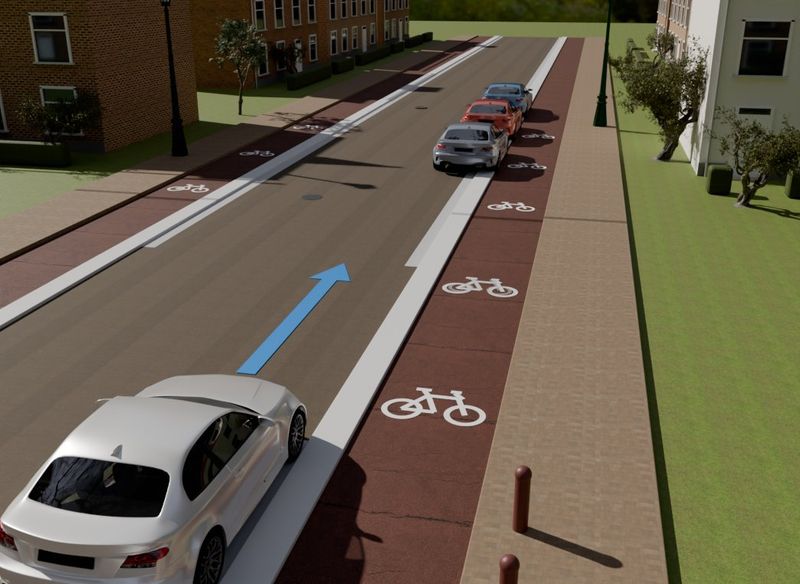
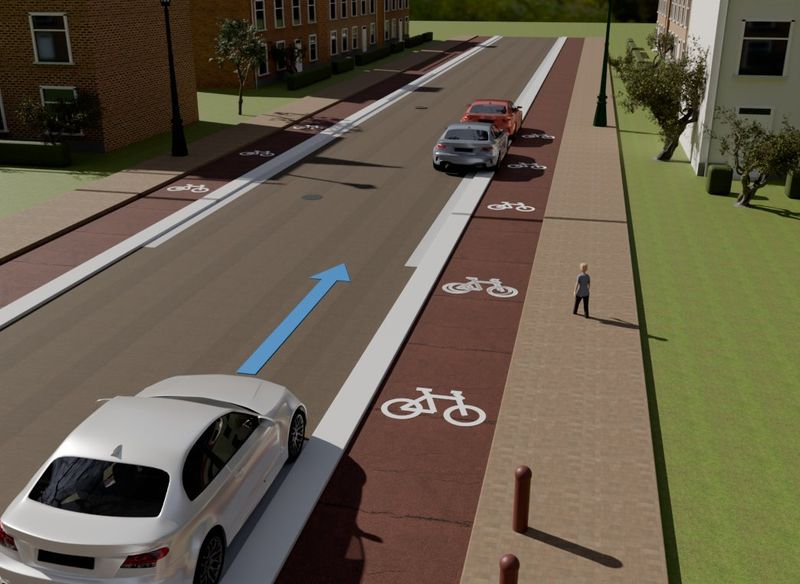
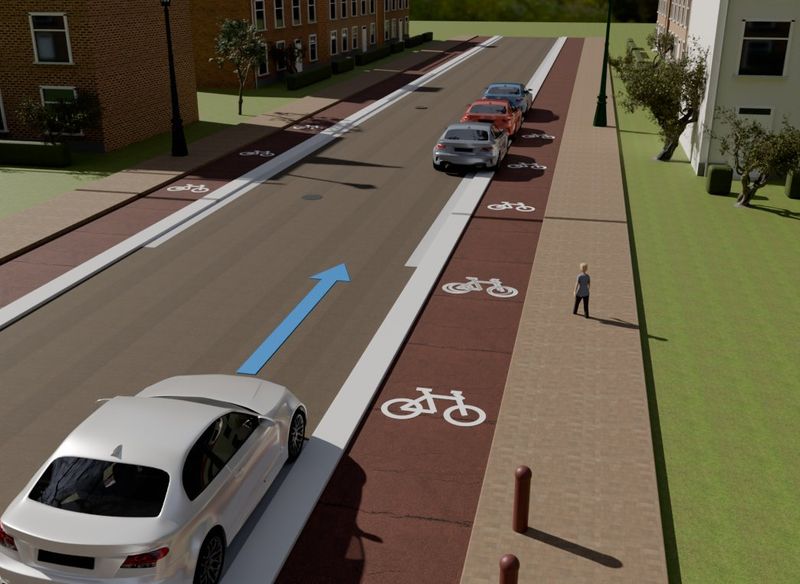
3. You are driving past a row of parked cars in a residential street. The front car has its left indicator on, its front wheels are already turned outwards and someone is behind the wheel. What do you do?
Show in Dutch
Je rijdt langs een rij geparkeerde auto's in een woonstraat. De voorste auto heeft zijn linkerknipperlicht aan, de voorwielen staan al naar buiten gedraaid en er zit iemand achter het stuur. Wat doe je?
Explanation: Three signals together say it is about to pull away. As a special manoeuvre it must give way to you under article 54, but do not count on it: ease off and keep lateral space so you can still react.NL: Gas loslatenSource: RVV 1990 art. 54
4. Outside the built-up area, at dusk, a deer jumps onto the road with a second animal right behind it on the verge. What do you do?
Show in Dutch
Buiten de bebouwde kom springt in de schemering een ree de weg op, met een tweede dier vlak achter zich in de berm. Wat doe je?
Explanation: Deer move in groups: where one crosses, a second almost always follows. The animal is already inside your stopping distance, so brake straight ahead and hold the wheel; swerving onto the other side is more dangerous.NL: RemmenSource: RVV 1990 art. 19
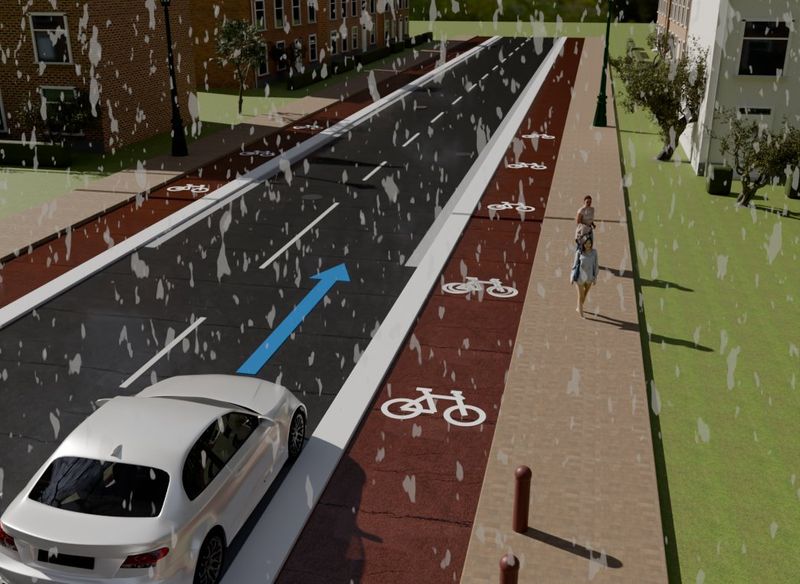
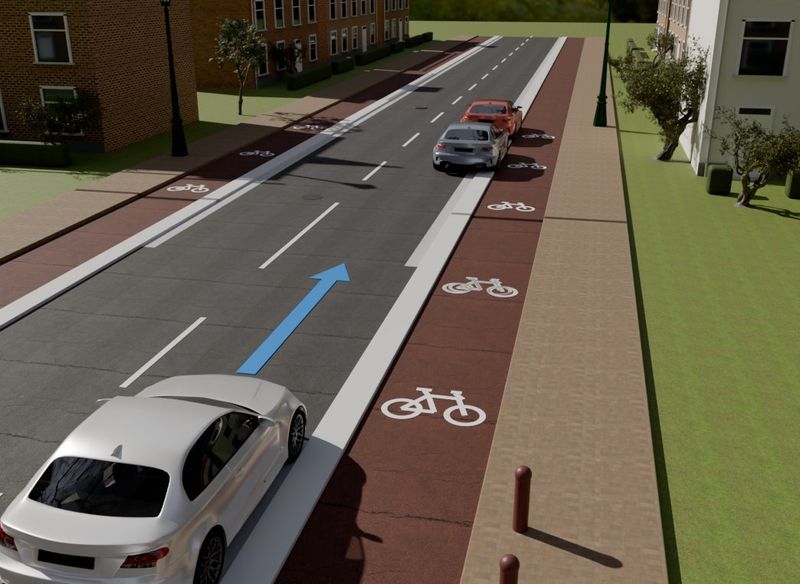
5. It is raining and the road is wet, but at 10°C there is no risk of ice. You are already driving at an adjusted speed and keeping ample distance; two pedestrians are chatting calmly on the pavement, well back from the edge, and the road ahead is clear. What do you do?
Show in Dutch
Het regent en het wegdek is nat, maar bij 10°C is er geen kans op ijzel. Je rijdt al met een aangepaste snelheid en houdt ruime afstand; op de stoep lopen twee voetgangers rustig te praten, ver van de rand, en de weg vóór je is vrij. Wat doe je?
Explanation: A wet road is not the same as an icy road, and the pedestrians clearly stay on the pavement. Your speed and distance are already adjusted and there is no concrete hazard: braking unnecessarily could even cause a rear-end collision. Drive on calmly.NL: Niets doenSource: RVV 1990
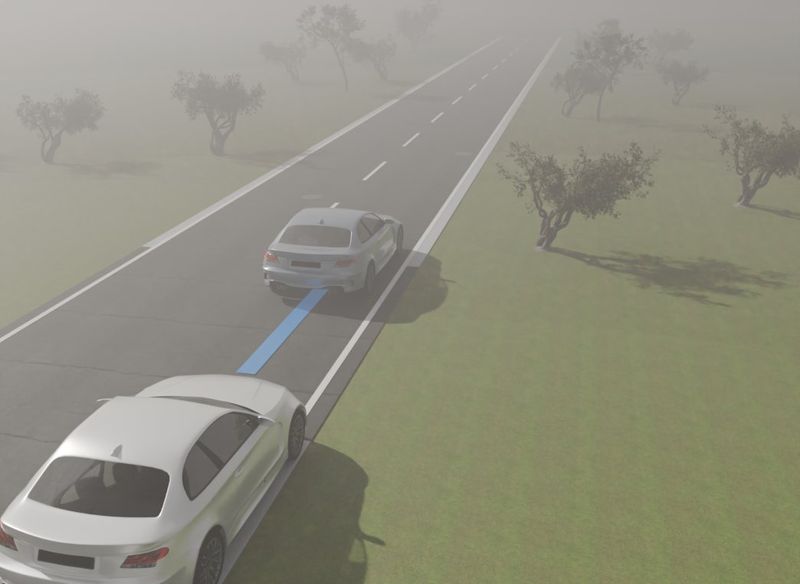
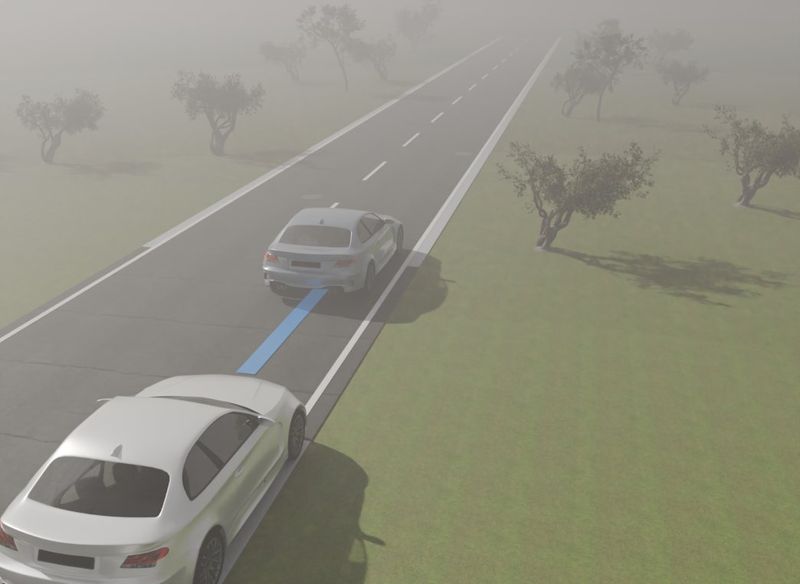
6. In dense fog you can see only about 40 metres. Suddenly the red tail lights of a slow-moving car loom up right in front of you. What do you do?
Show in Dutch
Door dichte mist zie je nog maar zo'n 40 meter ver. Plotseling doemen vlak vóór je de rode achterlichten op van een langzaam rijdende auto. Wat doe je?
Explanation: You must be able to stop within the distance you can see (Art. 19 RVV 1990). The car is close and slow: merely releasing the accelerator is not enough, brake to make your speed and distance safe.NL: RemmenSource: RVV 1990
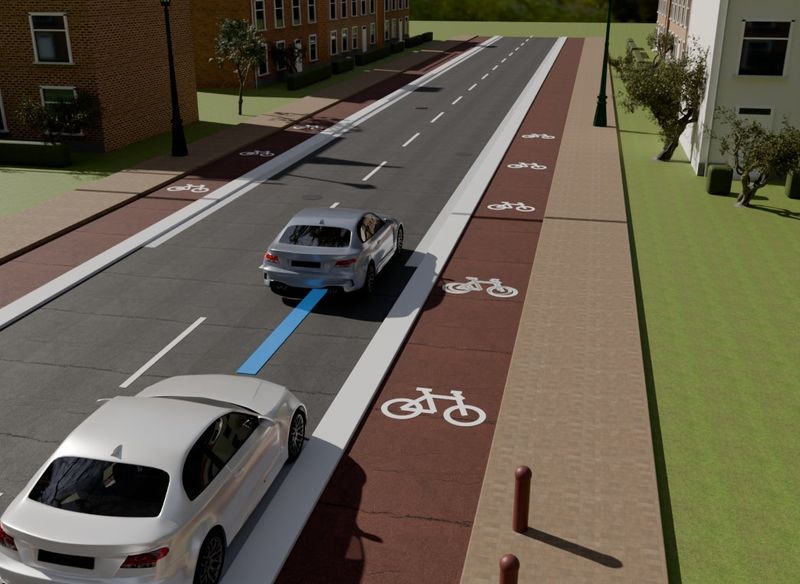
7. Your predecessor's brake lights suddenly come on. What do you do?
Show in Dutch
De remlichten van je voorligger gaan plotseling aan. Wat doe je?
Explanation: The car ahead stops unexpectedly; brake immediately to stop within your following distance and avoid a rear-end collision (art. 19 RVV).NL: RemmenSource: RVV 1990 art. 19 — plotseling remmende voorligger
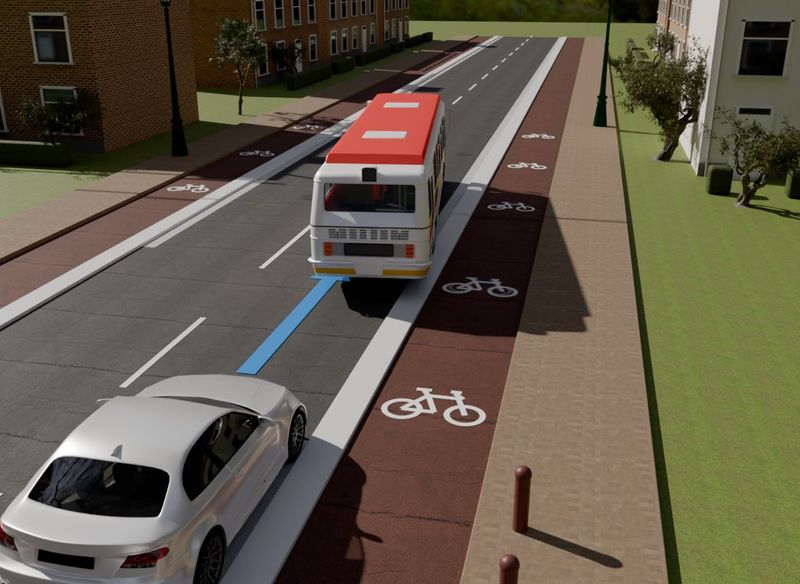
8. You are driving at 30 km/h along a city street. Some way ahead of you a service bus is at the stop and switches on its indicator to pull out. What do you do?
Show in Dutch
Je rijdt 30 km/u door een straat in de stad. Een eind vóór je staat een lijnbus bij de halte en zet zijn richtingaanwijzer aan om weg te rijden. Wat doe je?
Explanation: In a built-up area you give a service bus that is indicating the opportunity to pull out from the stop (RVV 1990 art. 56). By releasing the accelerator you create room without braking unnecessarily hard; doing nothing would obstruct the bus.NL: Gas loslatenSource: RVV 1990 art. 56
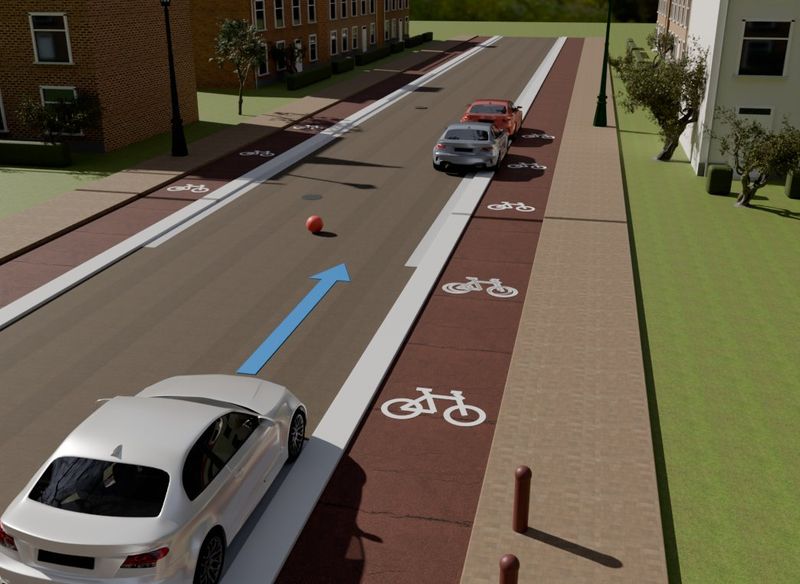
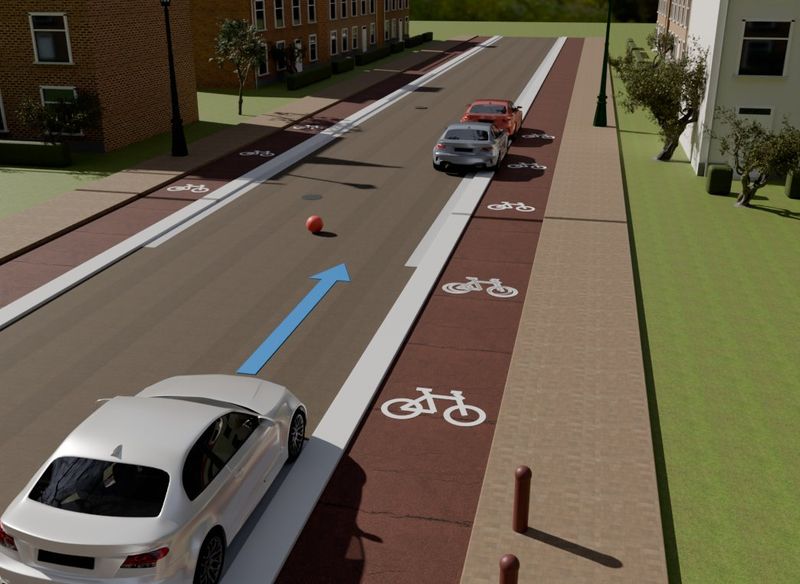
9. What do you do in this situation?
Show in Dutch
Wat doe je in deze situatie?
Explanation: A child you cannot yet see often runs after a ball; brake immediately so you can stop for a child running onto the road.NL: RemmenSource: RVV 1990 art. 19 (anticiperen)
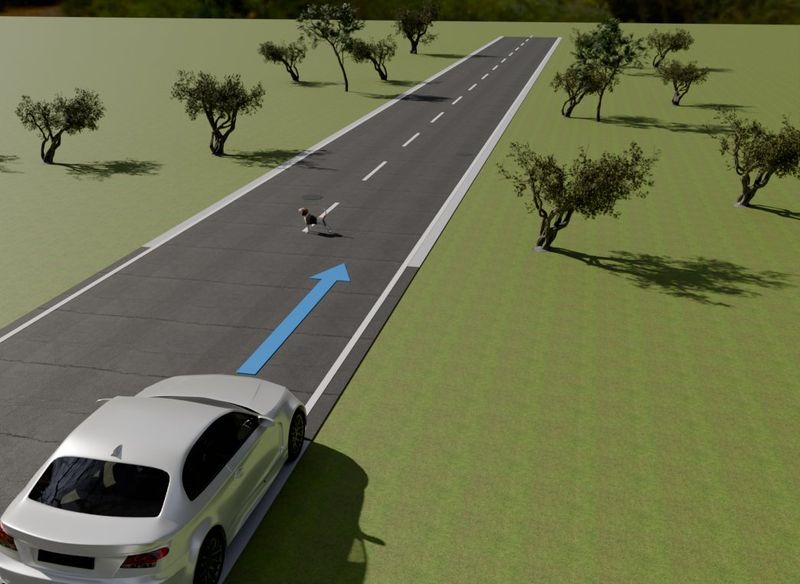
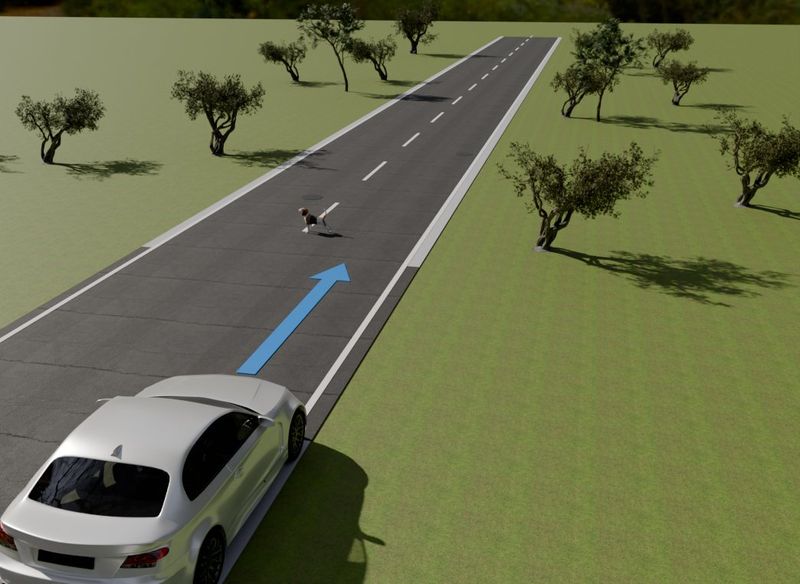
10. On a rural road a loose dog runs from the verge onto the carriageway, a few car lengths ahead of you. What do you do?
Show in Dutch
Op een buitenweg rent een loslopende hond vanaf de berm de rijbaan op, een paar autolengtes voor je. Wat doe je?
Explanation: The animal is already inside your stopping distance, and a child or owner often follows a loose dog. Brake and keep the wheel straight; swerving onto the other side puts you into oncoming traffic.NL: RemmenSource: RVV 1990 art. 19
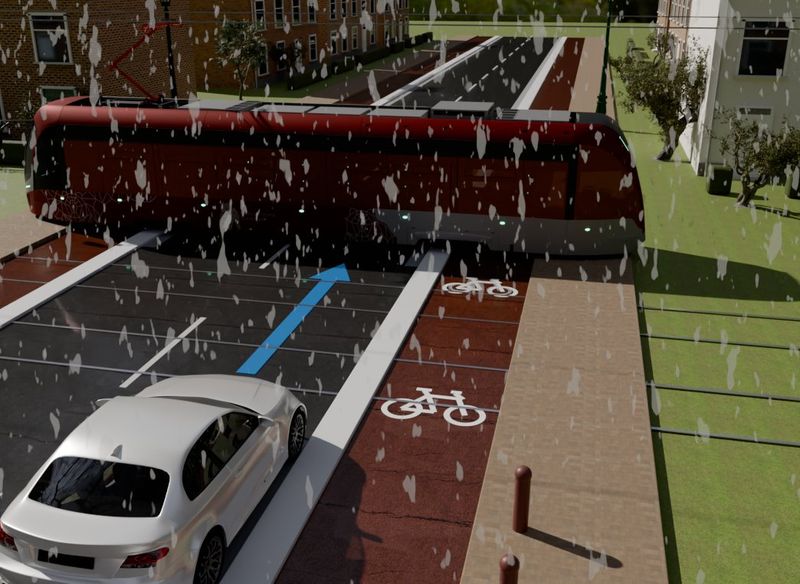
11. You enter a city bend where wet tram rails cross your lane diagonally. What do you do before the bend?
Show in Dutch
Je gaat een stadsbocht in waar natte tramrails schuin je rijstrook kruisen. Wat doe je vóór de bocht?
Explanation: Wet tram rails are extremely slippery, especially in a bend. Brake before the bend so you can cross them calmly and upright.NL: RemmenSource: Gevaarherkenning - natte tramrails in bocht
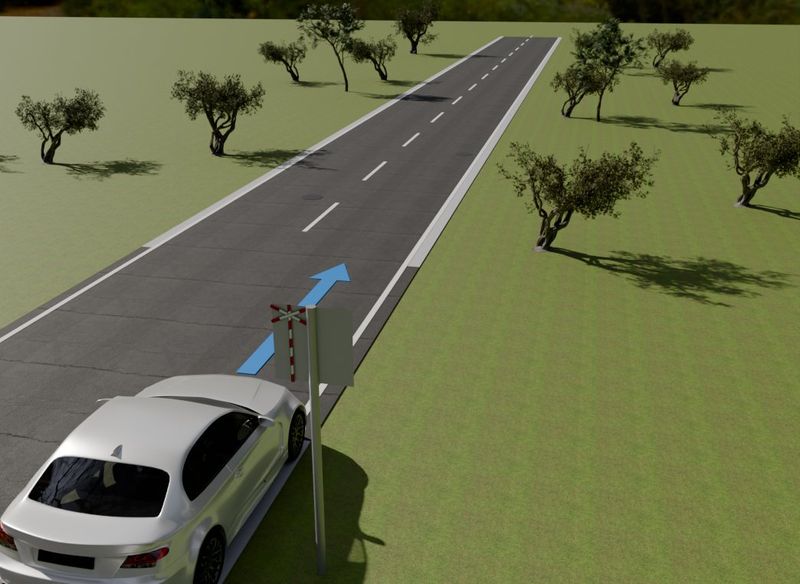
12. You approach an unguarded level crossing and see or hear no train. What do you do?
Show in Dutch
Je nadert een onbewaakte spoorwegovergang en ziet of hoort geen trein. Wat doe je?
Explanation: At an unguarded crossing you do not trust silence blindly; release the gas and be ready to stop until you are sure no train is coming.NL: Gas loslatenSource: Gevaarherkenning - onbewaakte overweg
13. You are driving in dense fog on a rural road. Suddenly the tail lights of a car appear right in front of you. What do you do?
Show in Dutch
Je rijdt in dichte mist op een buitenweg. Plotseling doemen vlak vóór je de achterlichten van een auto op. Wat doe je?
Explanation: In fog you see a car ahead only late; if it appears right in front of you, you are too close to regain a safe distance by merely easing off. Brake and restore your following distance (art. 19).NL: RemmenSource: RVV 1990 art. 19
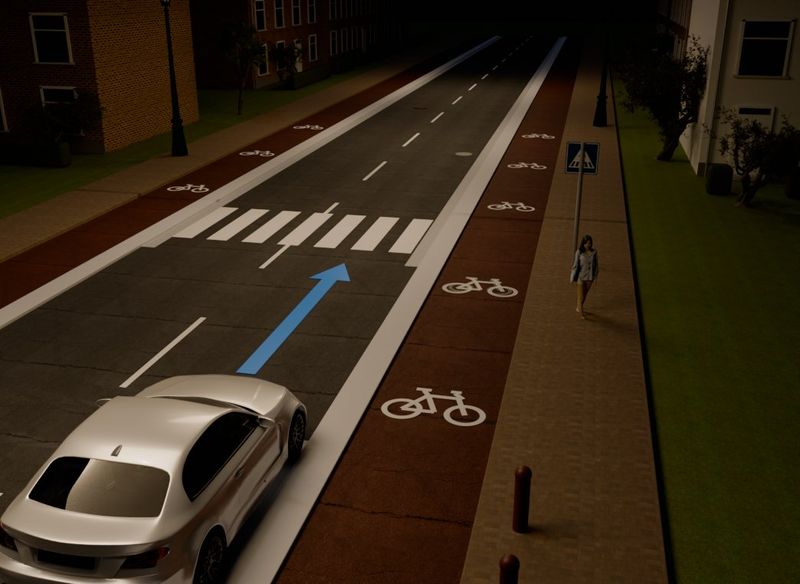
14. At night in a built-up area you approach a zebra crossing at 50 km/h. On the right pavement a pedestrian is walking past the crossing; he is not yet making any move to cross. What do you do?
Show in Dutch
's Nachts in de bebouwde kom nader je met 50 km/u een zebrapad. Op de stoep rechts loopt een voetganger langs het zebrapad; hij maakt nog geen aanstalten om over te steken. Wat doe je?
Explanation: The pedestrian is still on the pavement but may step onto the crossing at any moment; then you must let him go first (art. 49(2)). Easing off and being ready to brake gives you time to stop (art. 19); braking is only needed once he crosses, and doing nothing is too late in the dark.NL: Gas loslatenSource: RVV 1990 art. 49 lid 2; art. 19
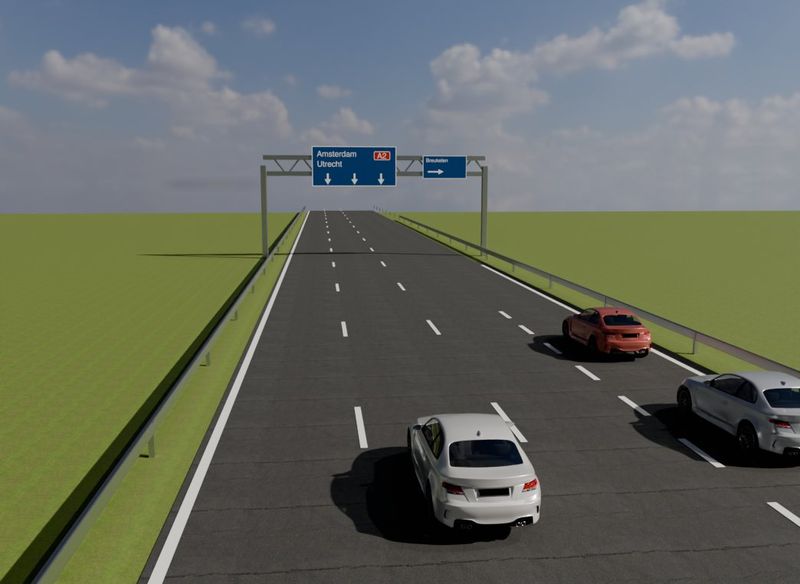
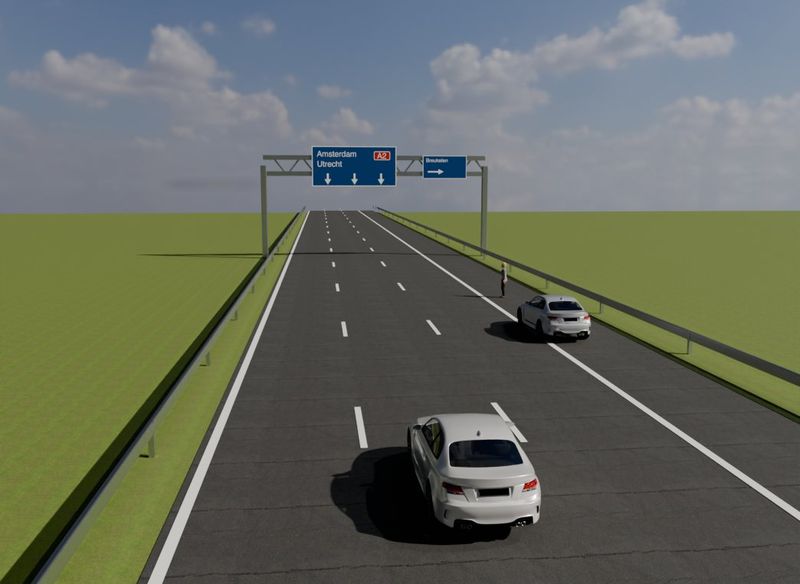
15. You are driving 100 km/h in the right lane. A car on the acceleration lane accelerates hard and steers toward your lane; there is traffic in the lane to your left. What do you do?
Show in Dutch
Je rijdt 100 km/u op de rechterrijstrook. Een auto op de invoegstrook trekt snel op en stuurt naar jouw strook; links naast je rijdt verkeer. Wat doe je?
Explanation: By releasing the accelerator you smoothly make room for the merging traffic without surprising the car to your left; hard braking is dangerous and doing nothing could cause a collision.NL: Gas loslatenSource: CBR gevaarherkenning / RVV 1990 art. 54 (invoegend verkeer verleent voorrang)
16. You are driving 100 km/h in the right-hand lane. On the hard shoulder just ahead a broken-down car is parked and someone is stepping out on the carriageway side. What do you do?
Show in Dutch
Je rijdt 100 km/u op de rechterrijstrook. Op de vluchtstrook vlak vóór je staat een auto met pech; iemand stapt net uit aan de rijbaanzijde. Wat doe je?
Explanation: Ease off the accelerator and keep clear of the hard shoulder, because the person could unexpectedly step onto the carriageway. If there is room, move slightly left; hard braking is not yet needed at this stage, but easing off alertly is.NL: Gas loslatenSource: CBR gevaarherkenning; naderen stilstaand voertuig op de vluchtstrook
17. The child has picked up the ball and now stands still on the pavement, looking your way. May you assume it will stay put and just keep driving at 30?
Show in Dutch
Het kind heeft de bal opgepakt en staat nu stil op de stoep, terwijl het jouw kant op kijkt. Mag je aannemen dat het blijft staan en gewoon op 30 doorrijden?
Explanation: Children are unpredictable and can still step onto the road suddenly. Stay cautious, slow down if needed and keep watching the child (art. 19 RVV 1990).NL: NeeSource: RVV 1990 art. 19
18. What is the safest way to drive in this situation?
Show in Dutch
Wat is in deze situatie de veiligste rijstijl?
Explanation: Children can suddenly cross from between parked cars; driving slower and keeping distance lets you see them sooner and stop in time (art. 19 RVV).NL: Snelheid verlagen en meer afstand tot de geparkeerde auto's houdenSource: RVV 1990 Art. 19 (anticiperen, snelheid aanpassen)
19. Which observation most clearly warns you that a child may cross any moment?
Show in Dutch
Welke waarneming waarschuwt je het duidelijkst dat er zo een kind kan oversteken?
Explanation: A ball rolling onto the road is a classic predictive cue: a child you cannot yet see may come running right after it. The other observations do not specifically point to a child crossing.NL: Een bal die tussen geparkeerde auto's de weg op roltSource: RVV 1990 Art. 19 (waarschuwingssignalen herkennen)
20. You are passing parked cars where someone has just got in. What do you do?
Show in Dutch
Je passeert geparkeerde auto's waar iemand net is ingestapt. Wat doe je?
Explanation: Someone who just got in may still open the door; keep extra side clearance and adjust speed so you do not hit the door (art. 5 RVV).NL: Meer zijruimte houden en je snelheid aanpassen voor een mogelijk openslaand portierSource: RVV 1990 Art. 5 (openslaand portier)
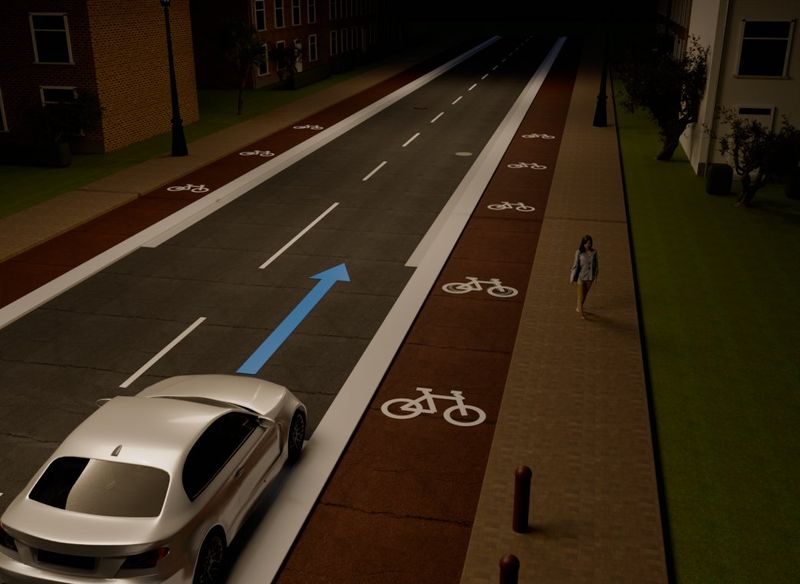
21. It is night. You are driving 50 km/h along a lit street and see a pedestrian in dark clothing walking on the pavement to the right, close to the kerb. Why does this pedestrian need extra attention at night?
Show in Dutch
Het is nacht. Je rijdt 50 km/u door een verlichte straat en ziet rechts op de stoep een voetganger in donkere kleding vlak langs de stoeprand lopen. Waarom vraagt deze voetganger 's nachts extra aandacht?
Explanation: In the dark you only see a pedestrian in dark clothing late, while you must still be able to stop within the distance you can see (RVV 1990 art. 19). Pedestrians get no extra priority at night, and main beam is actually prohibited when meeting other road users (art. 32(2)).NL: Je ziet hem later dan overdag, dus je hebt minder tijd om te reageren als hij de weg op staptSource: RVV 1990 art. 19; RVV 1990 art. 32