Rijtheorie HubPractise the CBR theory in 12 languagesFree on the App Store
OpenPractise the CBR theory in 12 languages
Free on the App Store
Short, factual explanations of the rules the CBR asks about most often.
The Dutch CBR car theory exam: 50 questions in 30 minutes, pass with 44 correct, so at most 6 mistakes. Plus test questions, question types and what to bring.
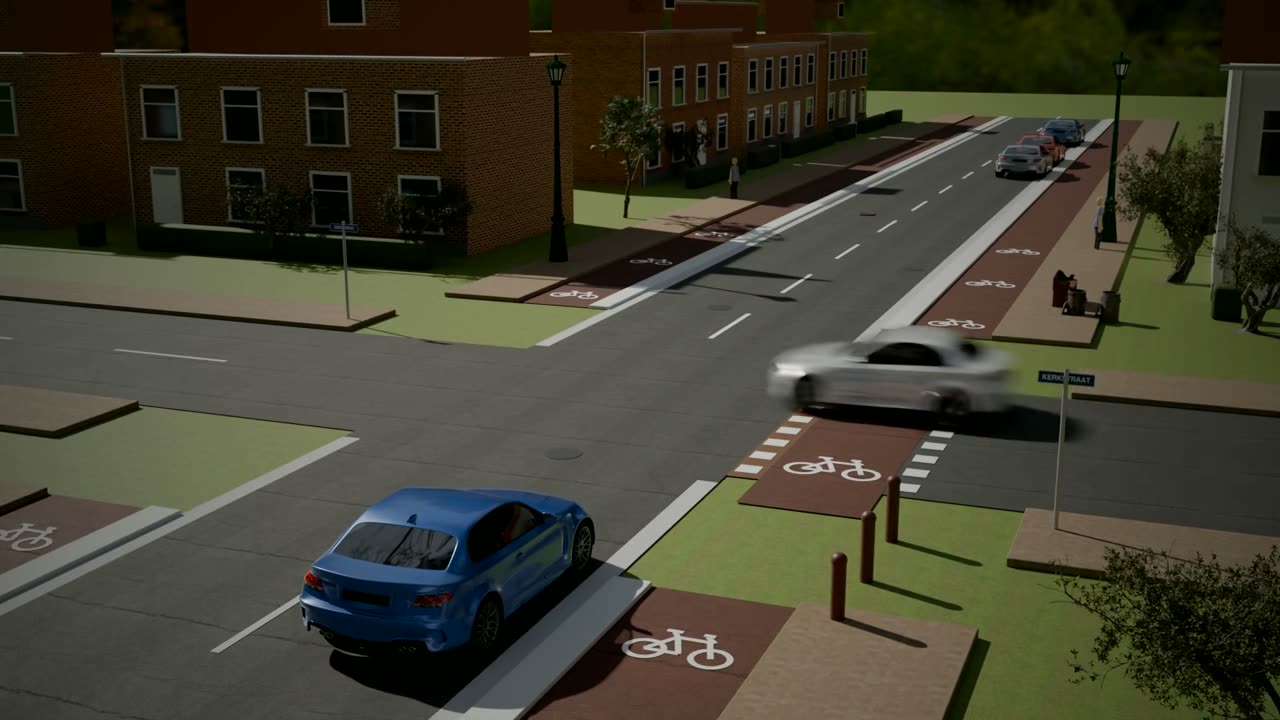
The basic right-of-way rule with all its exceptions: cyclists from the right, T-junctions, turning left. With moving situations from Rijtheorie Hub.
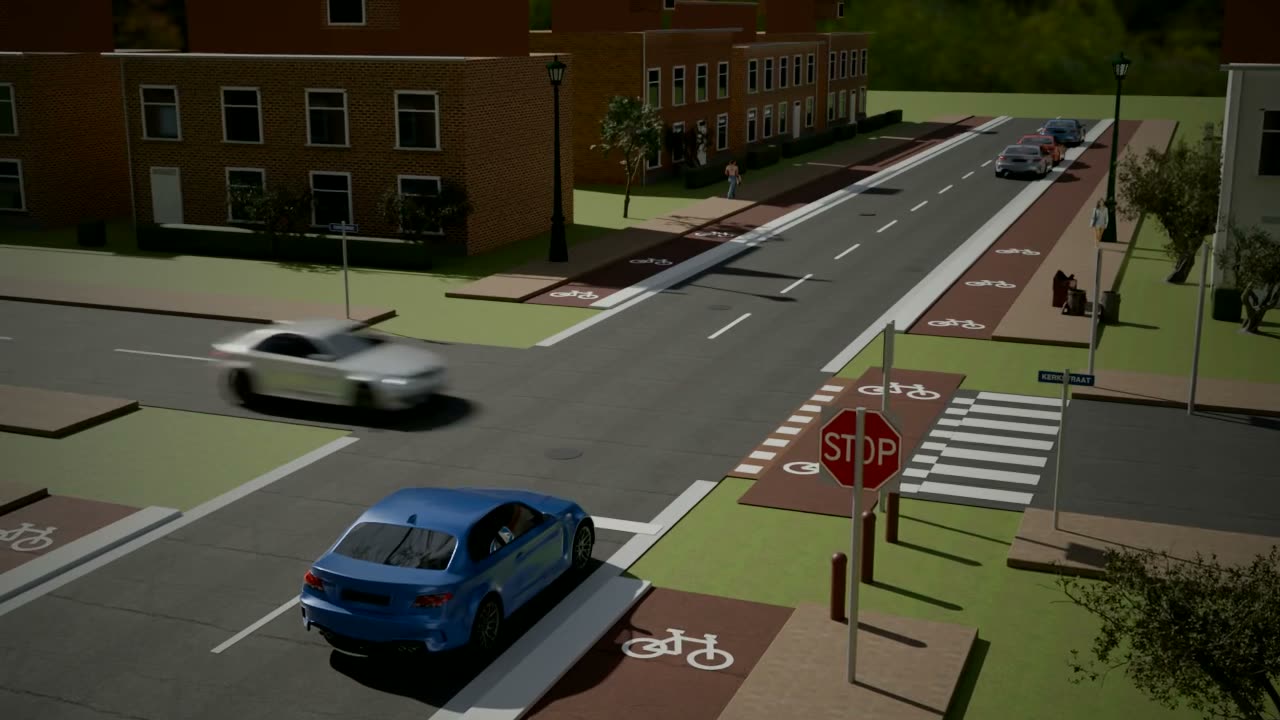
Give-way lines mean you give way without having to stop; at a stop sign you always come to a complete stop, even with no traffic. With animations.
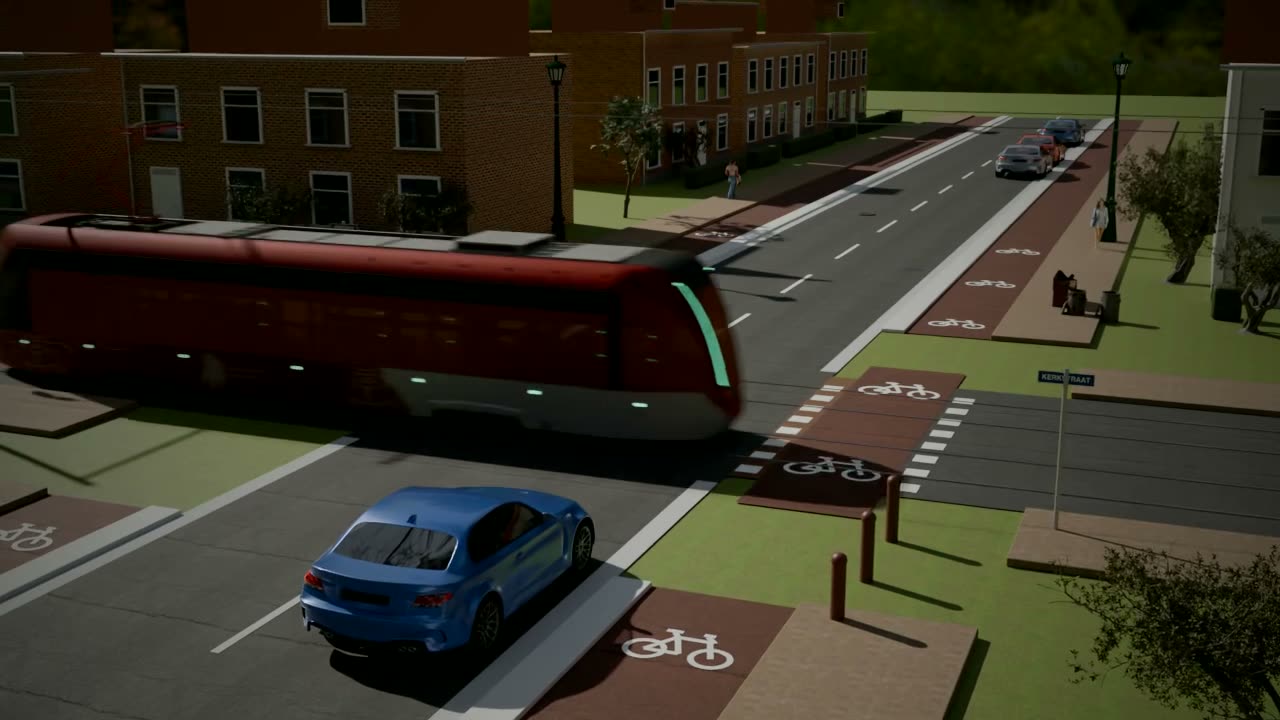
At an uncontrolled junction the tram always goes first, even from the left. When does that not apply, and what must you never do on tram tracks?
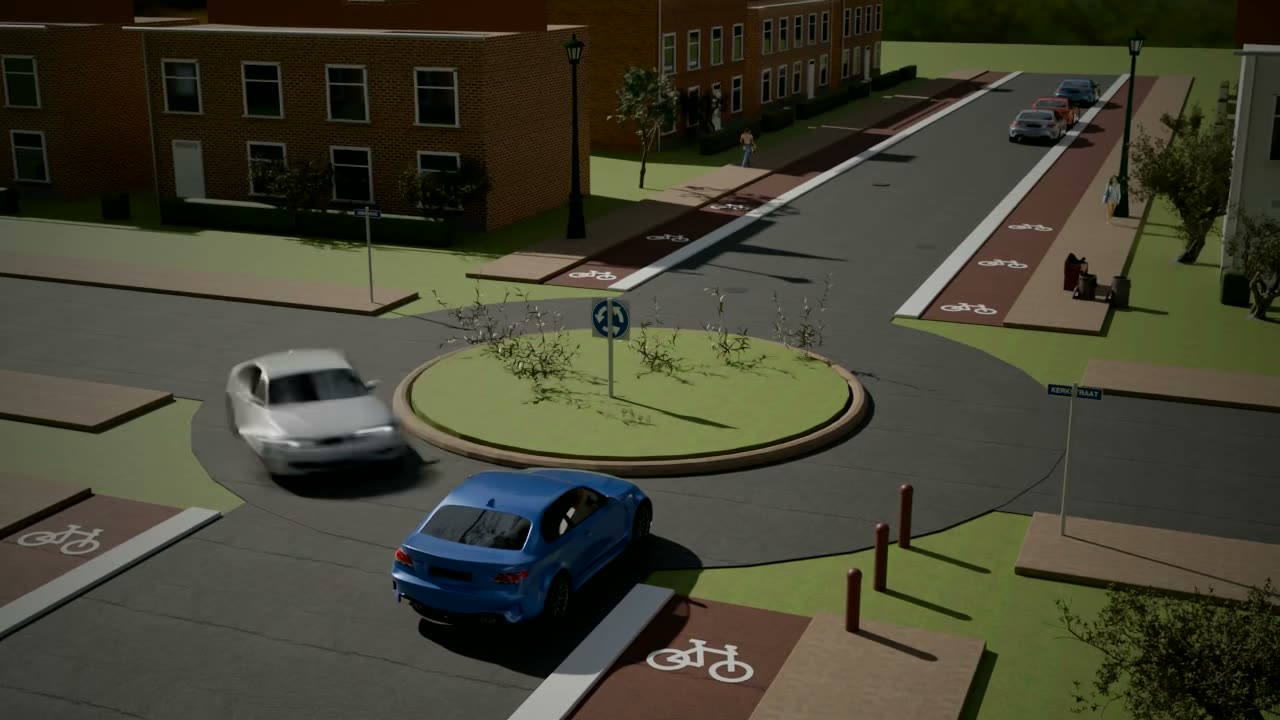
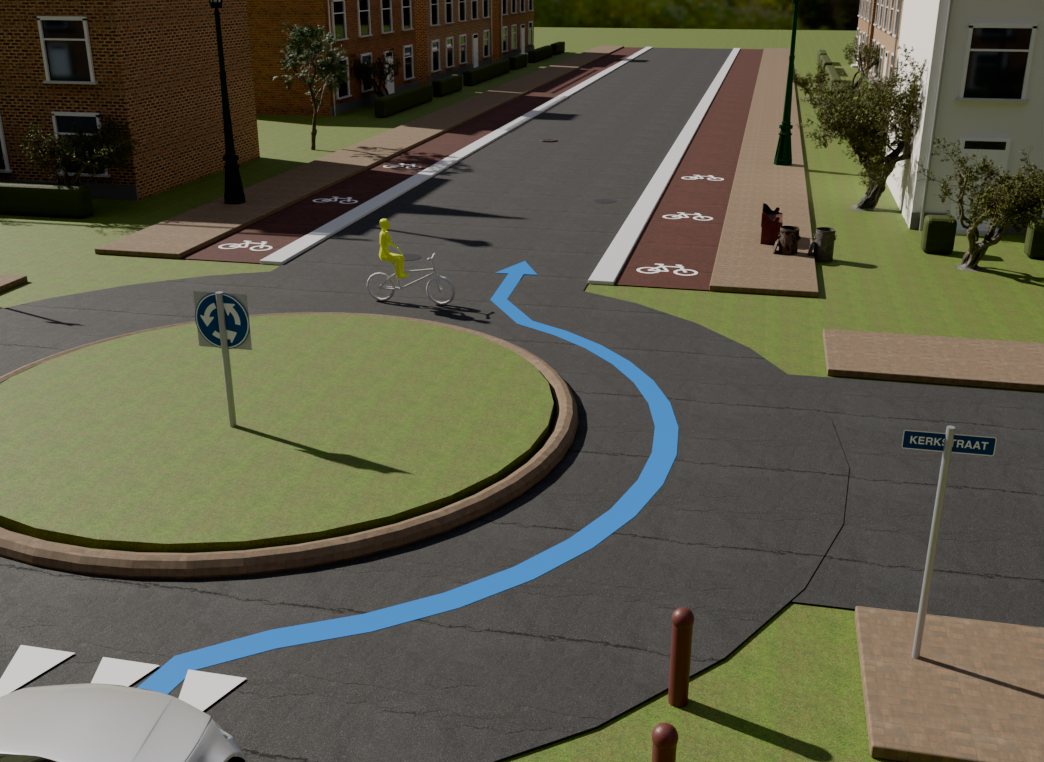
With give-way lines, traffic on the roundabout goes first; at the cycle path around it, the signs and give-way lines decide. Rules for entering, turning off and signalling, with animations.
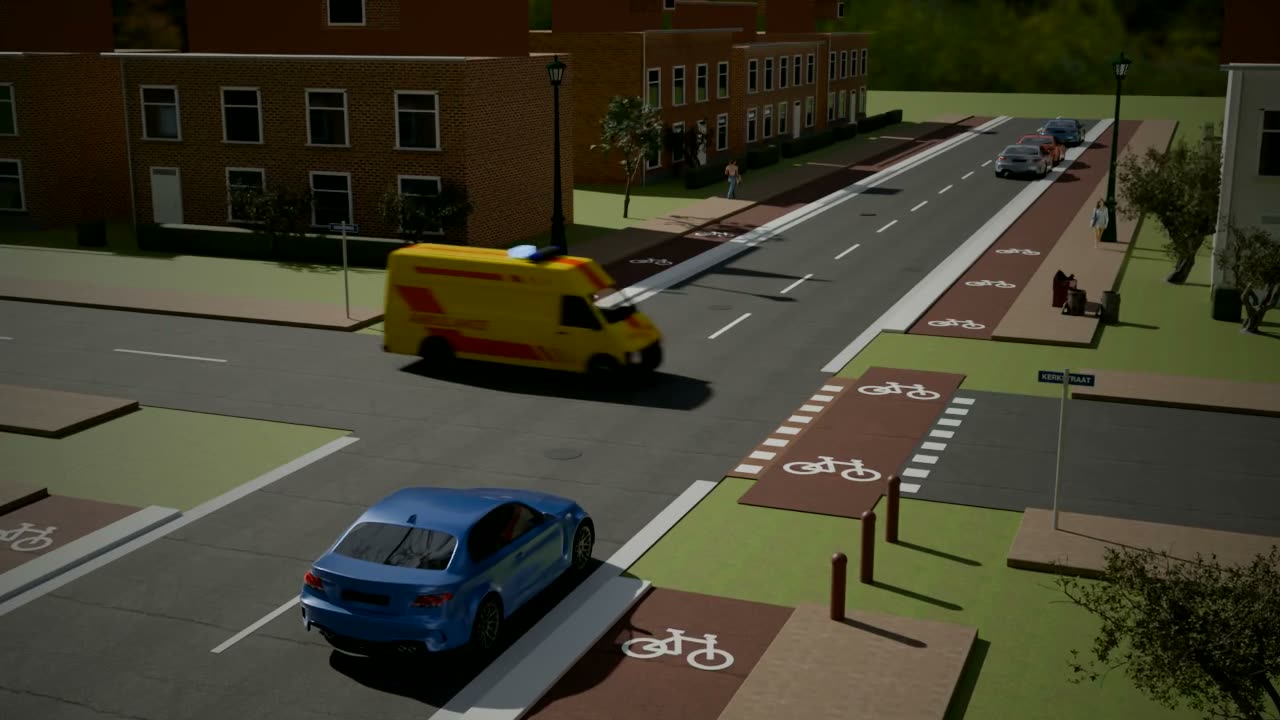
An emergency vehicle with flashing lights and a siren always goes first. How do you make room safely, and what if there are only flashing lights?
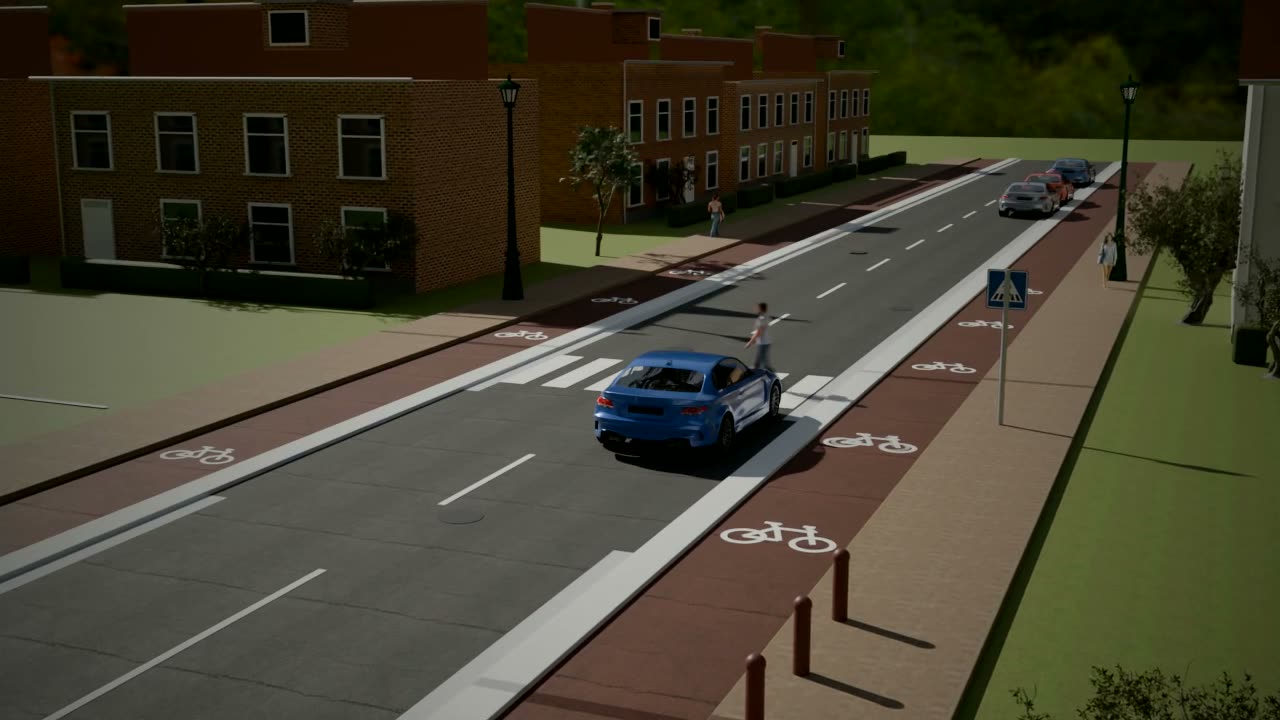
Pedestrians who clearly want to cross or are already on the zebra go first. So do blind pedestrians with a white cane. With animations.
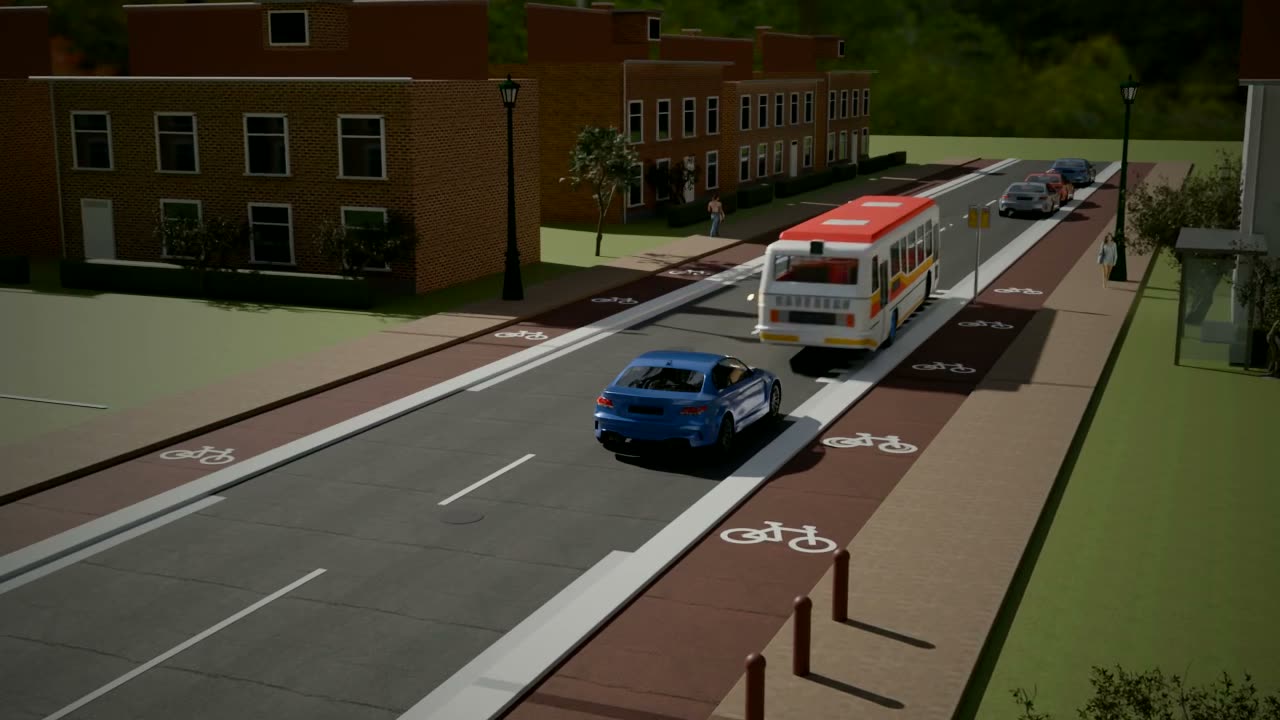
Inside a built-up area you let a bus that signals to pull away go first; outside a built-up area you do not. The rule, with animations.
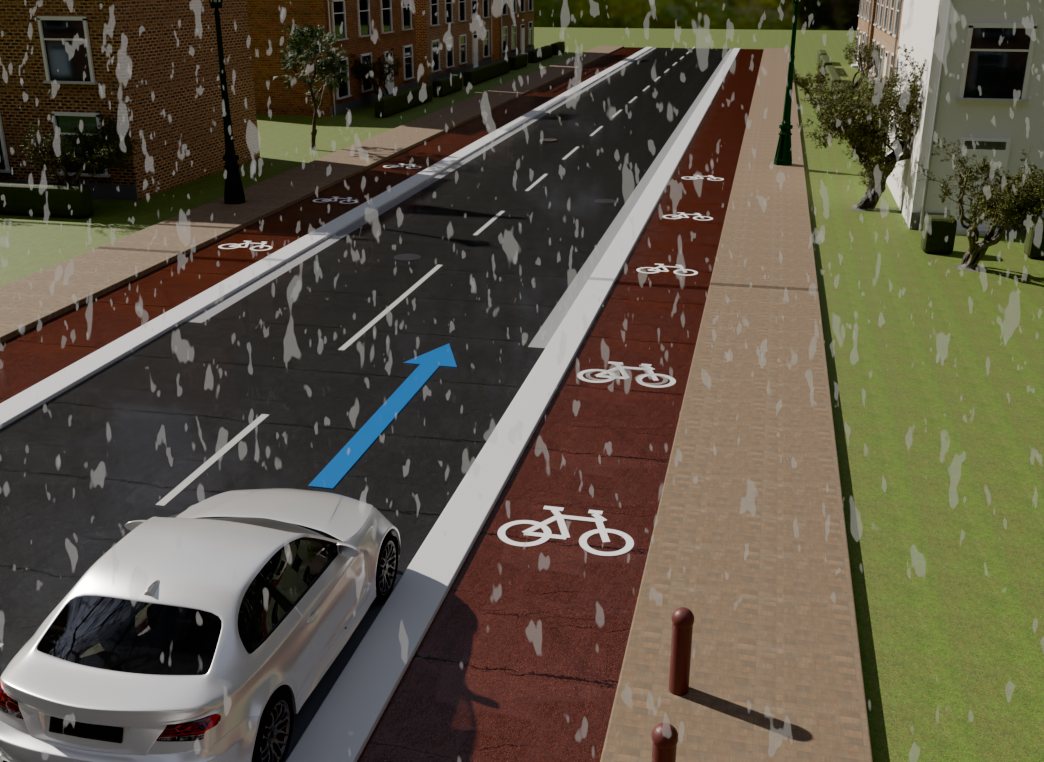
The alcohol limits for experienced and novice drivers, who counts as a novice, and the rules on medicines and tiredness. With memory hooks.
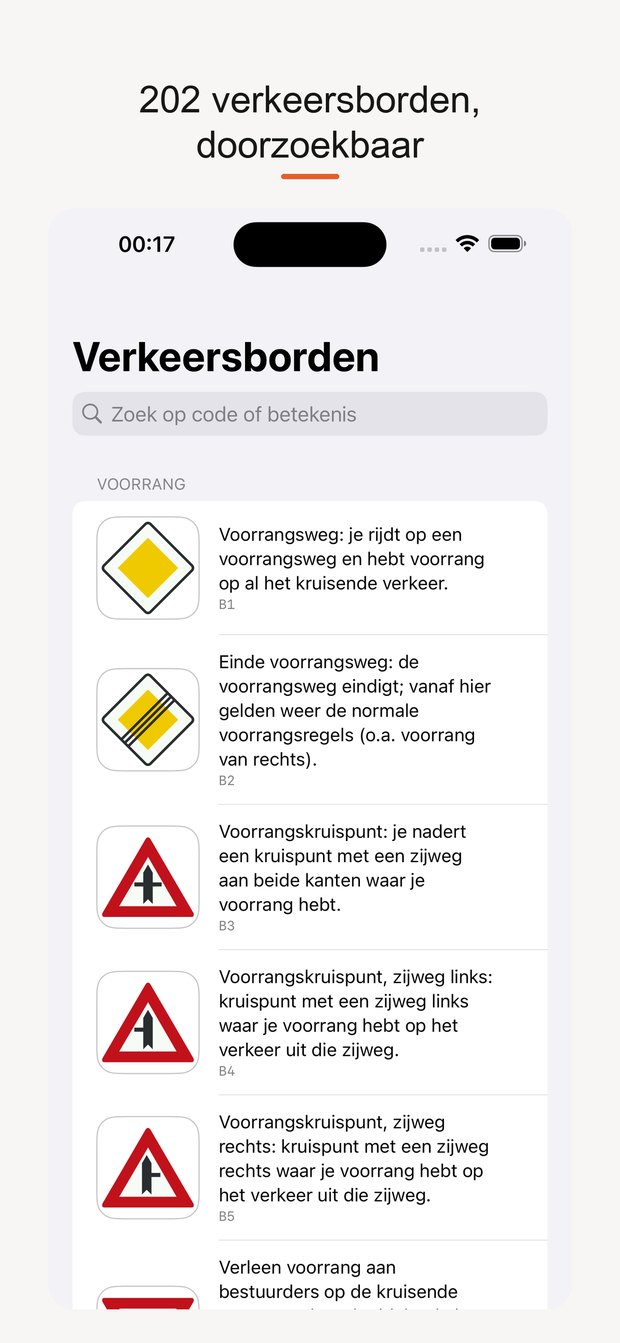
All 39 Dutch warning signs (J series) with their meaning, a memory hook for each sign and how the CBR asks about them. Plus: the warning triangle is not compulsory.
All Dutch prohibition signs with meaning and memory hook, plus the zone signs, end signs and sub-signs the CBR asks about.
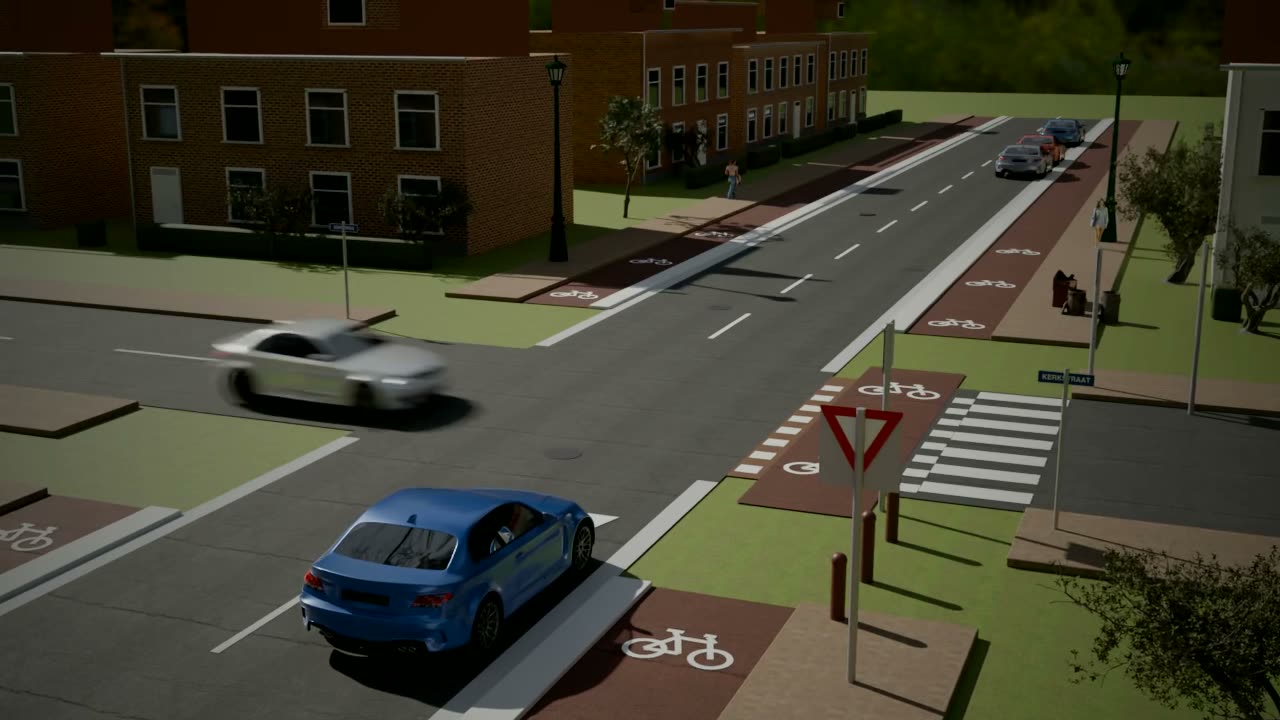
The nine priority signs with meaning and memory hook, the difference between give-way lines and the stop sign, and the exceptions for cyclists and trams.
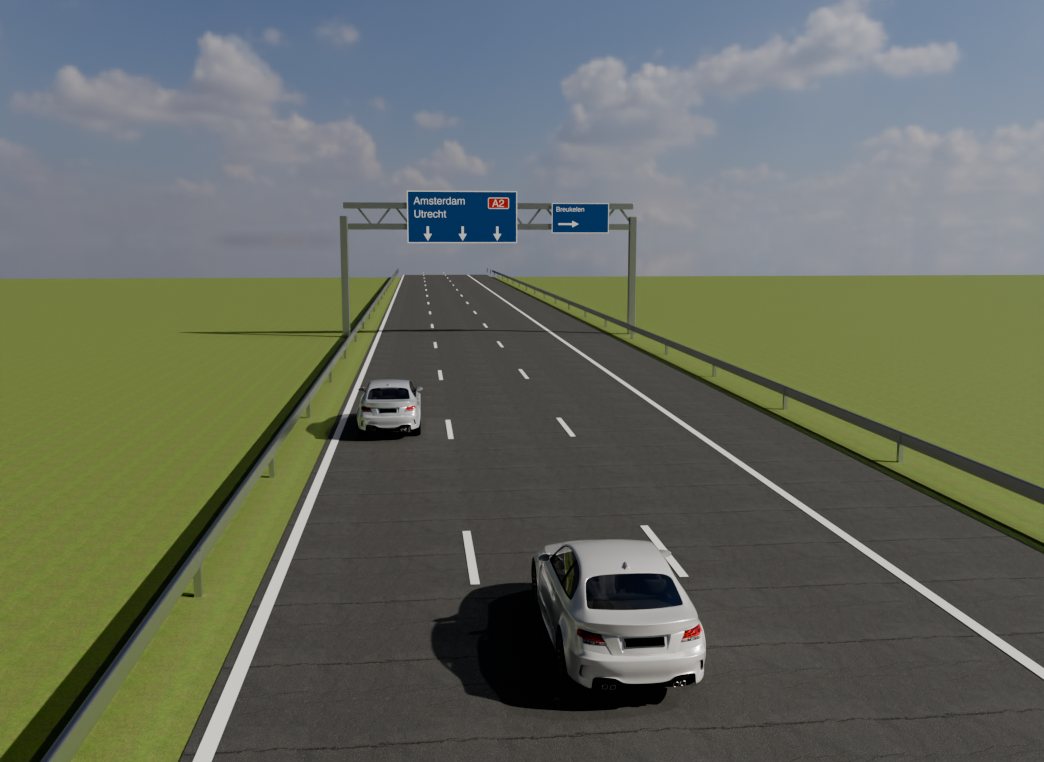
All signs that start or end a road type, with meaning and memory hook. Why the road type decides your speed and your manoeuvres.
All blue information signs with meaning and memory hook, and the difference between a rectangular information sign and a round mandatory sign that the CBR likes to test.
What does the Dutch no parking sign (E1) mean, and the no stopping sign (E2)? The difference, loading and unloading, yellow lines and the 5-metre rule.
What do a hatched area (verdrijvingsvlak), block marking, solid line, yellow lines and give-way lines mean? With the explanation and the article from the RVV 1990.