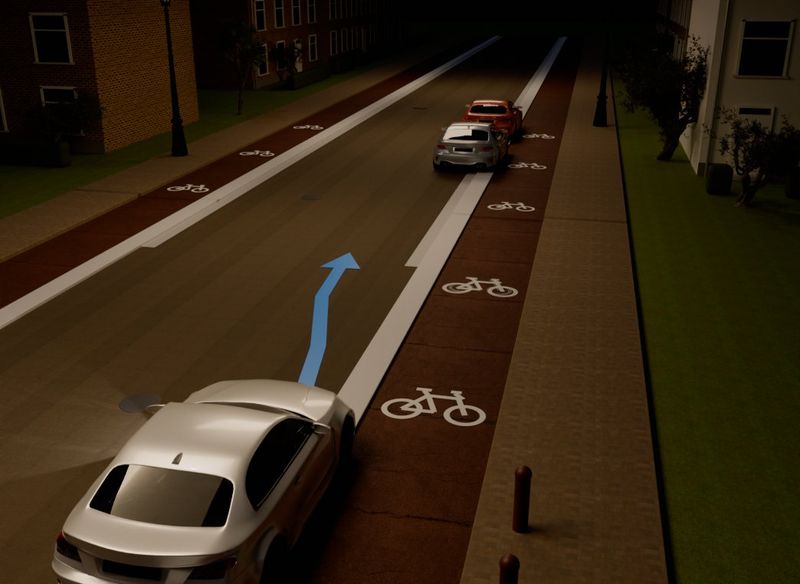
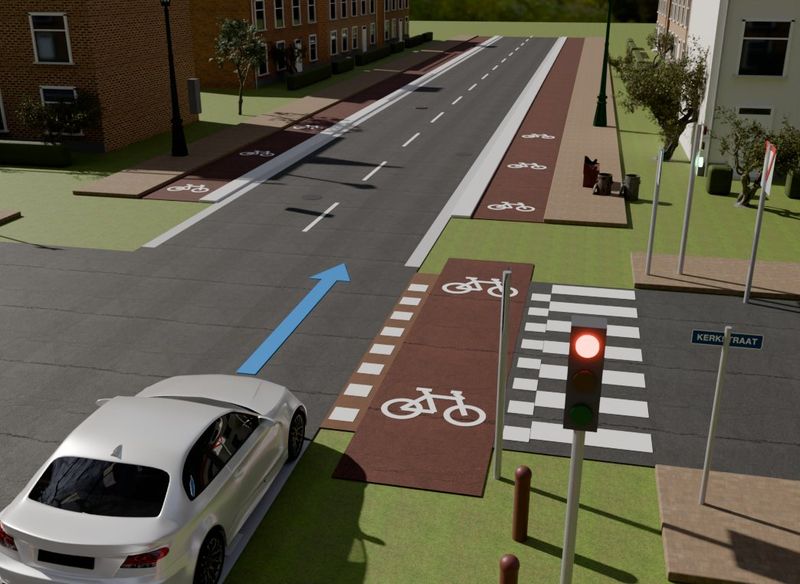
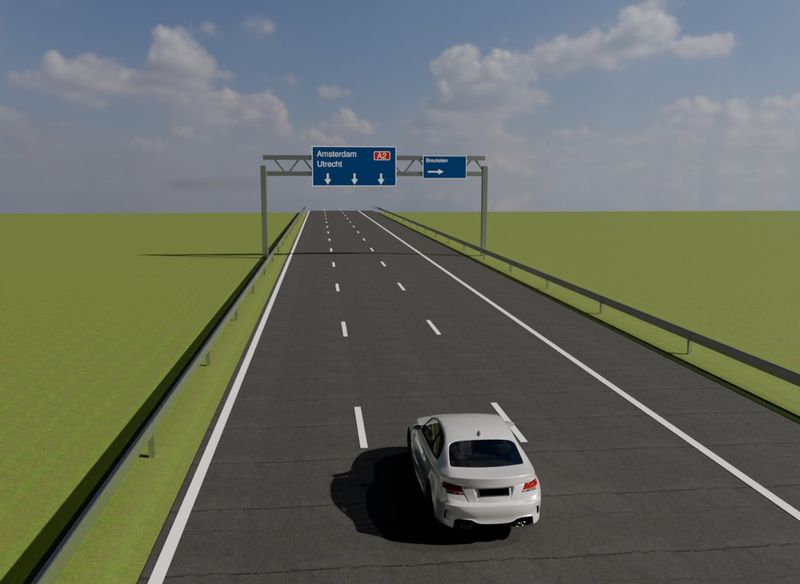
36 practice questions for the Dutch CBR car theory exam, from all 12 topics. Free, no account, right in your browser. Pick an answer and you see straight away whether it is right, with the explanation and the source.
The CBR car theory exam: 50 questions in 30 minutes. You pass with 44 correct answers, so you can get at most 6 wrong.
Since 7 April 2025 the CBR uses a renewed exam: hazard perception, knowledge and insight questions alternate in one continuous block. Read what the CBR car theory exam looks like.
36 free practice questions
Score: 0 of 0
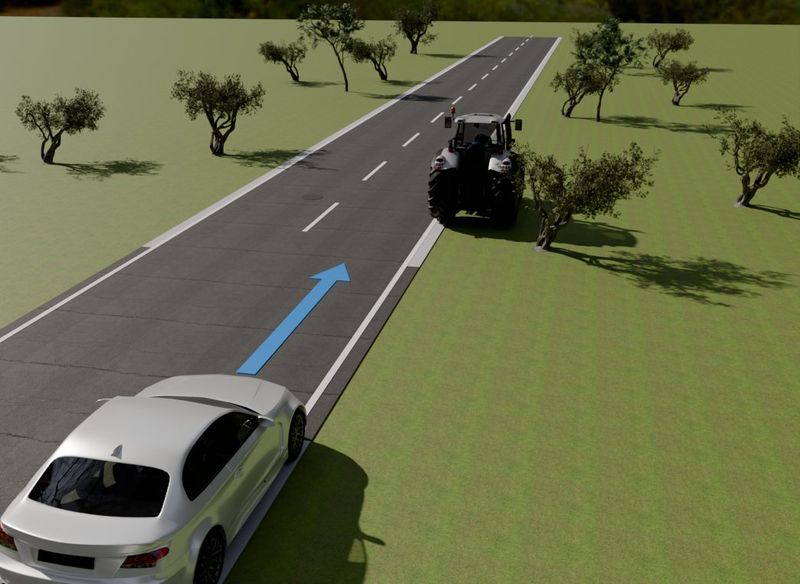
1. Outside the built-up area a tractor is standing on the verge on the right. The driver wants to drive onto the carriageway and so comes from the right. Must you give way to him?
Show in Dutch
Buiten de bebouwde kom staat rechts in de berm een tractor. De bestuurder wil de rijbaan oprijden en komt dus van rechts. Moet jij hem voorrang verlenen?
Explanation: No. 'Right goes first' applies only at junctions (art. 15(1)), and the verge is not a crossing road. Pulling away is a special manoeuvre: the tractor driver must let all other traffic, including you, go first (art. 54). Do allow for a tractor pulling away slowly.NL: NeeSource: RVV 1990 art. 54; RVV 1990 art. 15 lid 1
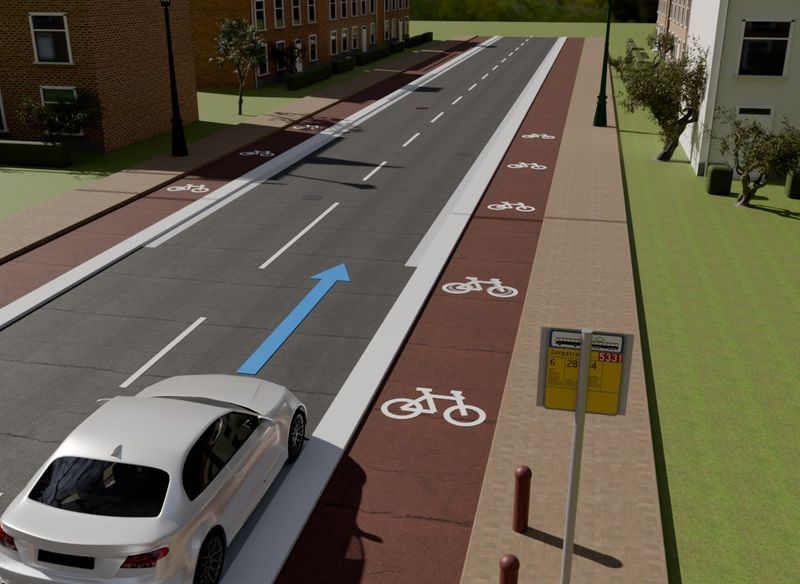
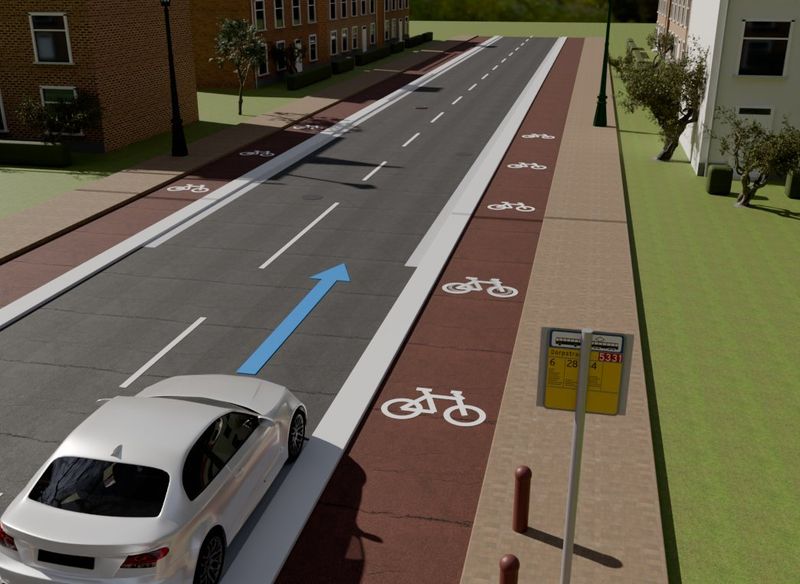
2. There is no marked bus stop bay on the road. Within how many metres of the bus stop sign may you not stop?
Show in Dutch
Er is geen bushalte-vak op de weg aangegeven. Binnen hoeveel meter van het bushalte-bord mag je niet stilstaan?
Explanation: At a bus stop without a marked bay, stopping is forbidden within 12 metres of the sign (art. 23 para. 1 RVV 1990).NL: 12 meterSource: RVV 1990 art. 23 lid 1
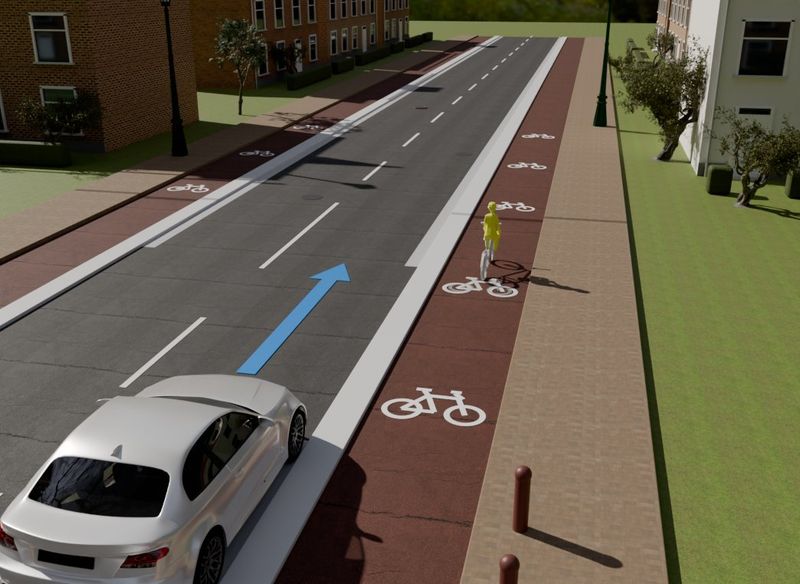
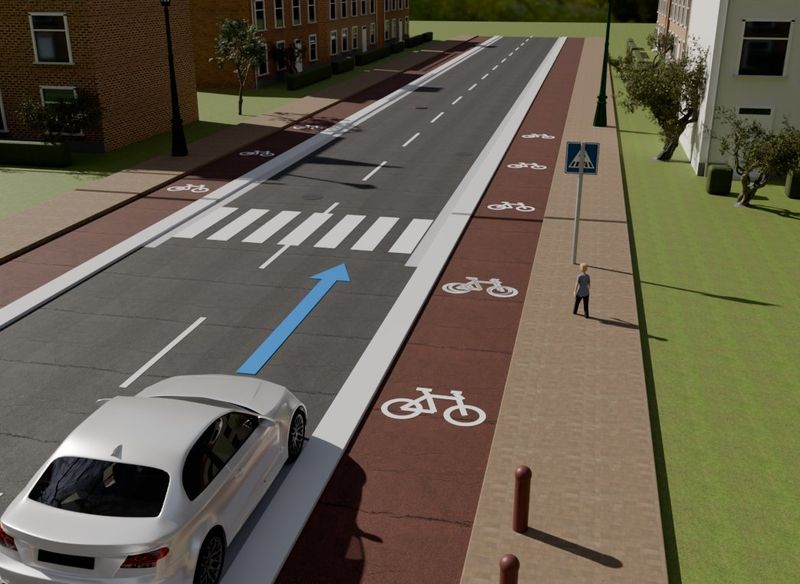
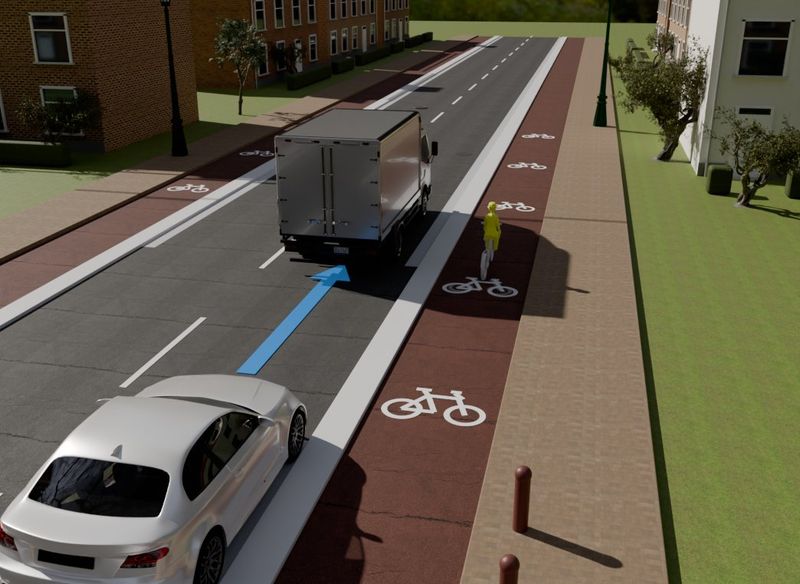
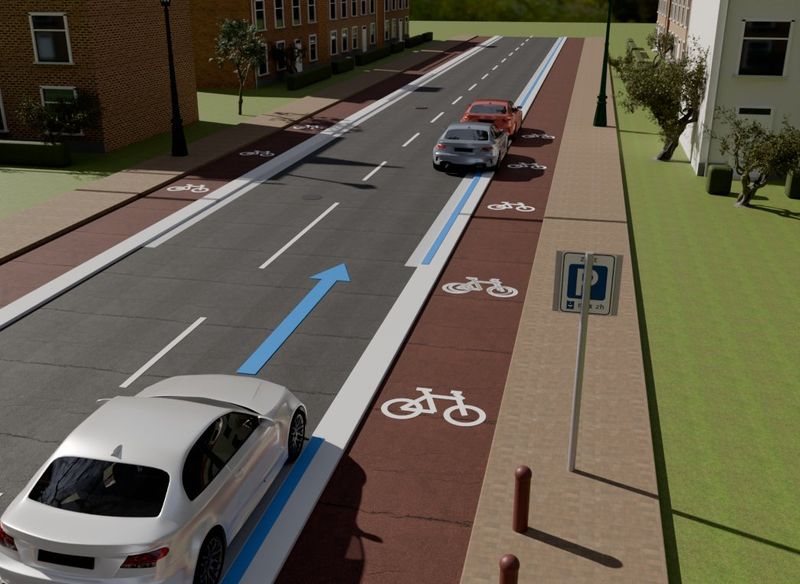
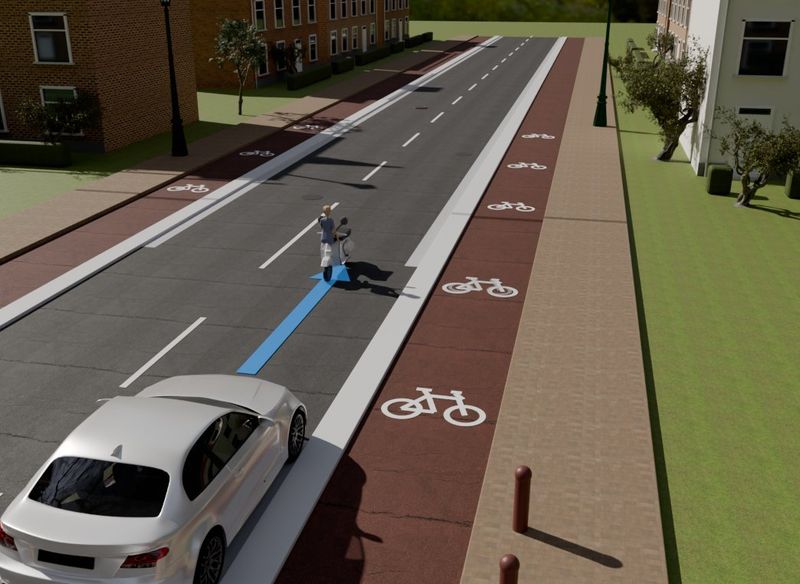
3. You are driving 50 km/h inside the built-up area. On the cycle path ahead on your right a cyclist with earphones in is looking at her phone and wobbling slightly. What do you do?
Show in Dutch
Je rijdt 50 km/u in de bebouwde kom. Op het fietspad rechts voor je rijdt een fietser met oortjes in, die op haar telefoon kijkt en licht slingert. Wat doe je?
Explanation: She neither hears nor sees you and could swerve onto the carriageway at any moment. No collision is imminent yet, so ease off and keep your distance so that, under article 19, you can stop within the road you can see to be clear.NL: Gas loslatenSource: RVV 1990 art. 19
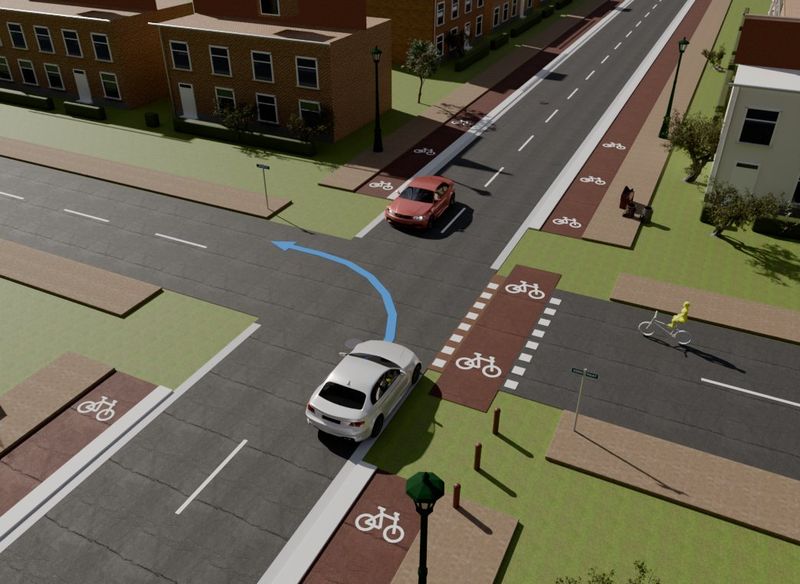
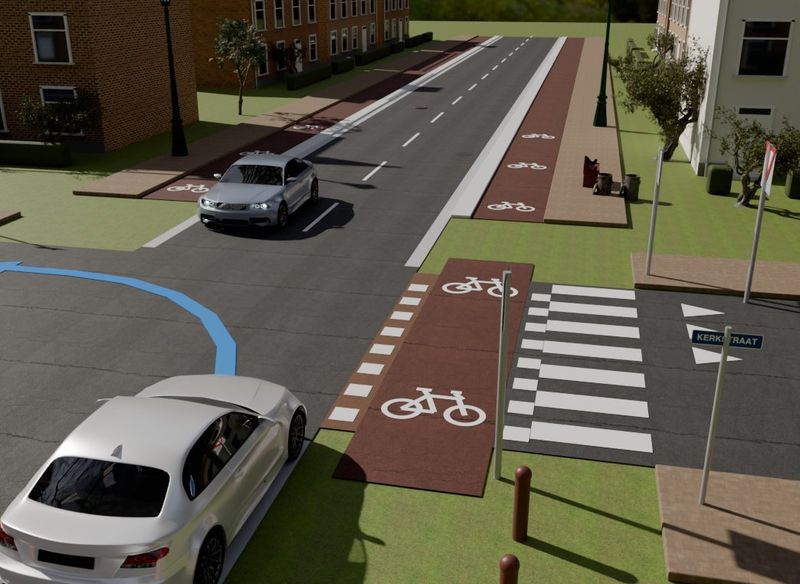
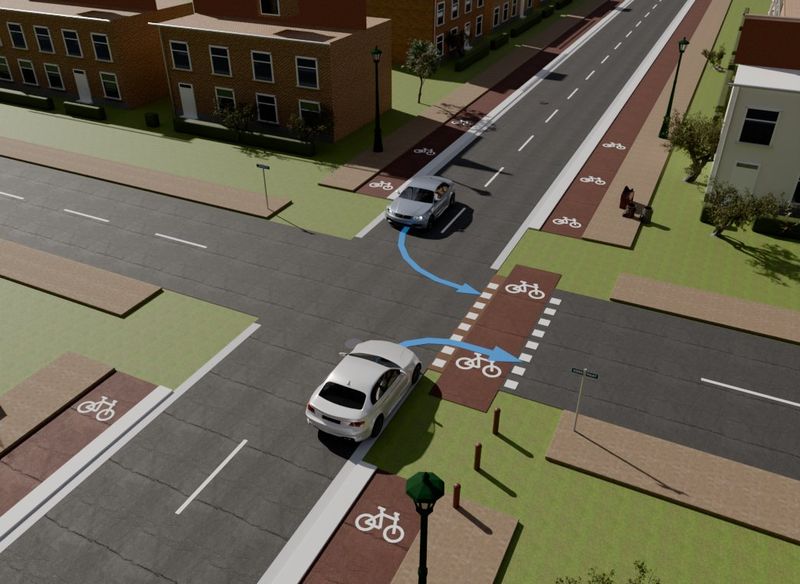
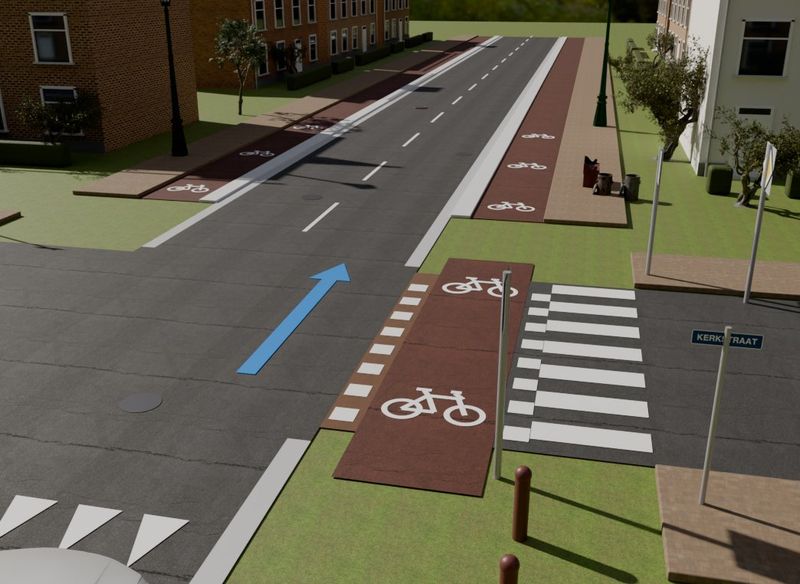
4. You are turning left at this uncontrolled junction. A cyclist is approaching from the right and a car is coming towards you. Whom do you let go first?
Show in Dutch
Je slaat linksaf op dit gelijkwaardige kruispunt. Van rechts nadert een fietser en een auto komt je tegemoet. Wie laat je voorgaan?
Explanation: The cyclist comes from the right and has priority at an uncontrolled junction (RVV 1990 art. 15(1)); you let the oncoming car go first because you are turning left (art. 18(1)). So you wait for both; who was first does not count.NL: Zowel de fietser van rechts als de tegemoetkomende autoSource: RVV 1990 art. 15 lid 1, art. 18 lid 1
5. At a pedestrian crossing a child comes running and is clearly about to cross straight away, without having stepped onto the crossing yet. Must you give way?
Show in Dutch
Bij een voetgangersoversteekplaats komt een kind aanrennen en is duidelijk van plan meteen over te steken, zonder al een stap op de oversteekplaats te hebben gezet. Moet u voorrang verlenen?
Explanation: Yes. Pedestrians who are clearly about to cross at a pedestrian crossing must also be given way (RVV 1990 art. 49 lid 2).NL: JaSource: RVV 1990 art. 49 lid 2
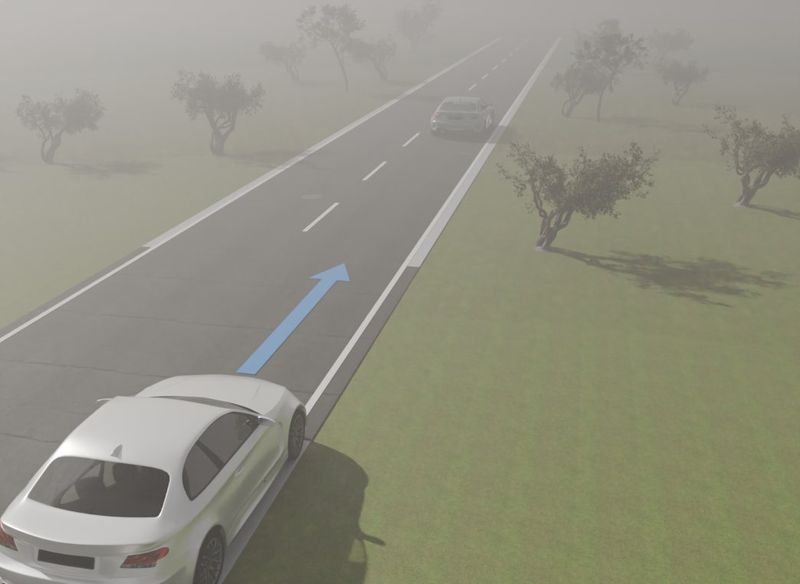
6. In dense fog you want to see better and consider using your main beam. What is both sensible and allowed?
Show in Dutch
In dichte mist wil je beter zien en overweeg je je groot licht te gebruiken. Wat is verstandig en toegestaan?
Explanation: Main beam reflects off the water droplets in the fog and actually dazzles you. Use dipped beam or the front fog light. Parking lights alone give too little light and are inadequate in poor visibility.NL: Geen groot licht gebruiken; het licht weerkaatst op de mist en verblindt jezelf - gebruik dimlicht of mistvoorlicht.Source: RVV 1990
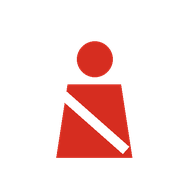
7. What should you do if the seatbelt light comes on after you have started driving?
Show in Dutch
Wat moet je doen als het gordel-lampje gaat branden nadat je bent gaan rijden?
Explanation: As soon as you notice the seatbelt light or chime, fasten the belt as soon as it is safe to do so. Not wearing the seatbelt is not only unsafe but also a finable offence. Source: RVV 1990 art. 59.NL: Zo snel mogelijk veilig de gordel vastmaken, eventueel na even veilig te zijn gestopt.Source: RVV 1990 art. 59 — gordelplicht
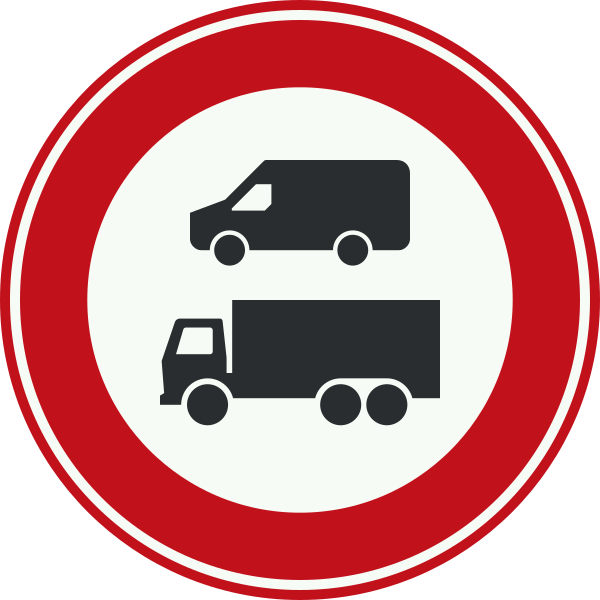
8. What does this sign mean?
Show in Dutch
Wat betekent dit bord?
Explanation: This is sign C22c: closed to vans and lorries because of a zero-emission zone. Since 1 January 2025 only zero-emission vans and lorries (emission class Z) may enter; existing vans and lorries still have transitional periods (RVV 1990 art. 86e). In a passenger car you may simply drive on, whatever fuel you use. Keeping out older diesels by emission class belongs to the low-emission zone (sign C22a), which continues to exist alongside the zero-emission zone.NL: Nul-emissiezone: gesloten voor bedrijfs- en vrachtauto's die niet emissieloos zijn; personenauto's vallen er niet onder.Source: RVV 1990 art. 86e; bijlage 1 bord C22c
9. A ball suddenly rolls onto the road from between parked cars. What does an anticipating driver do?
Show in Dutch
Tussen geparkeerde auto's rolt plotseling een bal de weg op. Wat doet een anticiperende bestuurder?
Explanation: Anticipating means thinking ahead about what could happen. A ball rolling onto the road is a signal that a child may follow. You ease off the accelerator, are ready to brake and reduce speed. Slamming the brakes without a mirror check can cause a rear-end collision.NL: Gas loslaten, remklaar zijn en snelheid minderen, want er kan een kind achter de bal aan komenSource: RVV 1990
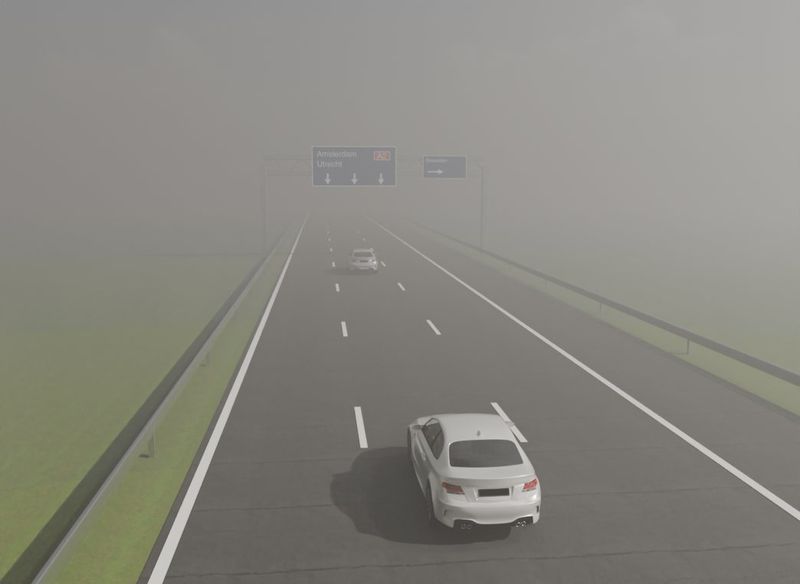
10. There is dense fog on the motorway and you have adapted your speed to the visibility. The car in front of you is driving slightly faster and its tail lights are getting fainter and fainter. Do you close up behind it, so that you can keep following its tail lights?
Show in Dutch
Op de autosnelweg hangt dichte mist en je hebt je snelheid aangepast aan het zicht. De auto vóór je rijdt iets sneller en zijn achterlichten worden steeds vager. Ga je dichter achter hem rijden, zodat je zijn achterlichten kunt blijven volgen?
Explanation: No. You must always be able to stop within the distance that you yourself can see and that is clear (art. 19 RVV). A driver who follows tail lights in fog is driving on someone else's sight: if that car brakes suddenly, you run into it. Keep your own adapted speed and let it calmly disappear from view.NL: NeeSource: RVV 1990 art. 19
11. Clearly drunk, you walk with your car keys towards your parked car, but you have not driven a single metre yet. Can the police already impose a driving ban on you?
Show in Dutch
Je loopt duidelijk dronken met je autosleutels naar je geparkeerde auto, maar je hebt nog geen meter gereden. Kan de politie je nu al een rijverbod opleggen?
Explanation: Yes. Art. 162(1) WVW applies the driving ban equally to 'anyone who is about to drive a vehicle'. So the police do not have to wait until you actually drive; the ban (max. 24 hours) covers all vehicles.NL: JaSource: WVW 1994 art. 162 lid 1
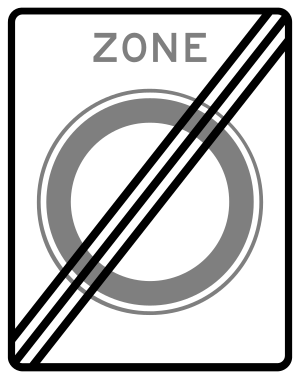
12. What does this road sign indicate?
Show in Dutch
Wat geeft dit verkeersbord aan?
Explanation: This is sign A2ZE. End of the maximum-speed zone.NL: Einde maximumsnelheidszone.Source: RVV 1990 — bord A2ZE
13. You are driving on a priority road (sign B1) and want to turn left into a side road. A car on the same priority road is coming towards you and going straight on. Who goes first?
Show in Dutch
Je rijdt op een voorrangsweg (bord B1) en wilt linksaf een zijweg in. Een auto op dezelfde voorrangsweg komt je tegemoet en gaat rechtdoor. Wie gaat voor?
Explanation: Drivers who turn must let traffic coming towards them on the same road go first (art. 18(1)). Sign B1 only regulates priority over the side roads; between drivers on the same priority road the ordinary turning rule applies. Indicating gives no priority.NL: De tegemoetkomende auto: wie afslaat, laat tegemoetkomend rechtdoorgaand verkeer op dezelfde weg voorgaan, ook op een voorrangswegSource: RVV 1990 art. 18 lid 1
14. At a bus stop, despite the stopping ban, you may still briefly stop to let a passenger get in or out immediately. Is this correct?
Show in Dutch
Bij een bushalte mag je toch heel even stoppen om een passagier direct te laten in- of uitstappen, ondanks het stopverbod. Klopt dit?
Explanation: The stopping ban at a bus stop does not apply to letting passengers get in or out immediately (art. 23 para. 2 RVV 1990).NL: JaSource: RVV 1990 art. 23 lid 2
15. You are behind a lorry that wants to turn right and has its indicator on. To the right of the lorry a cyclist is going straight on into the junction. What do you do?
Show in Dutch
Je staat achter een vrachtauto die rechtsaf wil en zijn richtingaanwijzer aan heeft. Rechts naast de vrachtauto rijdt een fietser rechtdoor het kruispunt op. Wat doe je?
Explanation: The cyclist is in the lorry's blind spot. You are not about to collide yourself, but you must keep space and not press on: the lorry is turning and under article 18(1) must give way to the cyclist going straight ahead. Ease off and wait.NL: Gas loslatenSource: RVV 1990 art. 18 lid 1
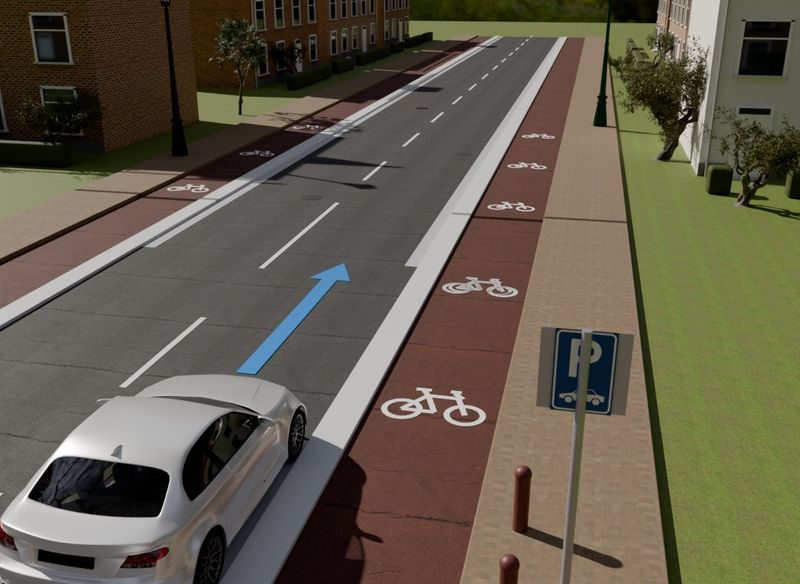
16. This parking facility has sign E8 showing a passenger car. What applies here?
Show in Dutch
Bij deze parkeergelegenheid staat bord E8 met daarop een personenauto. Wat geldt hier?
Explanation: Sign E8 indicates a parking facility intended only for the vehicle category shown on the sign, here passenger cars (Annex 1 RVV 1990). Parking with a vehicle not in that category is prohibited (art. 24(1)(d)). A permit belongs to sign E9, not E8.NL: Alleen personenauto's mogen hier parkeren; andere voertuigen nietSource: RVV 1990 art. 24 lid 1 onder d; Bijlage 1 bord E8
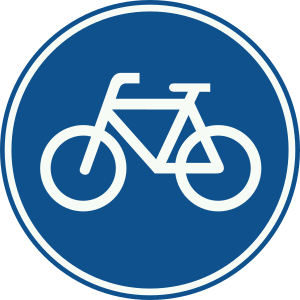
17. What does this sign mean for you as a car driver?
Show in Dutch
Wat betekent dit bord voor jou als automobilist?
Explanation: This sign (G11) marks a compulsory cycle path for cyclists (and 'snorfietsen') only, not for mopeds. Cars may not drive, stop or park on it.NL: Verplicht fietspad; je mag er met de auto niet op rijden, stilstaan of parkerenSource: Verkeersbord G11 (verplicht fietspad)
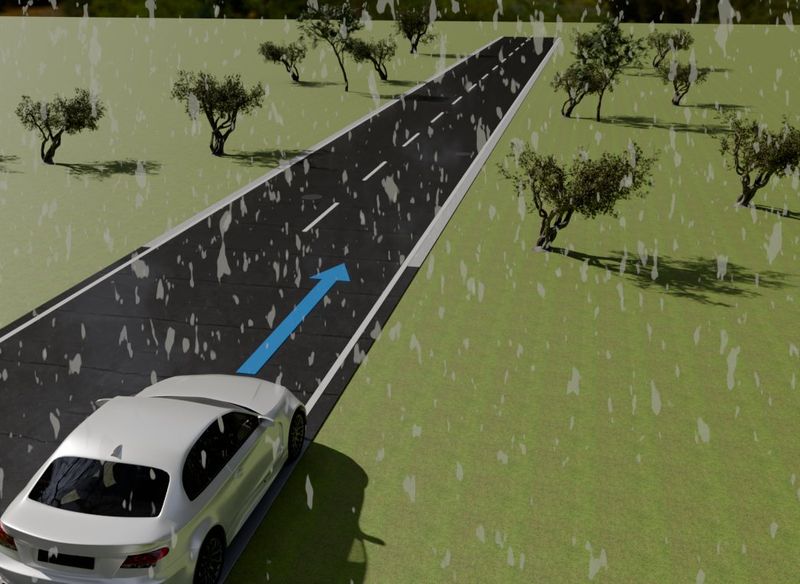
18. It is raining hard and the road is wet. What must you adjust compared to dry weather?
Show in Dutch
Het regent hard en de weg is nat. Wat moet je aanpassen ten opzichte van droog weer?
Explanation: On a wet road, grip is lower and braking distance longer. You must adjust your speed and following distance so you can still stop in time within the distance that is clear and visible to you (RVV 1990 art. 19).NL: Je snelheid verlagen en meer volgafstand houden, omdat je remweg langer wordtSource: RVV 1990 art. 19
19. What is the risk of continuing to drive with too low tyre pressure?
Show in Dutch
Wat is het risico van doorrijden met te lage bandenspanning?
Explanation: Too low tyre pressure increases contact patch deformation and rolling resistance, leading to a longer braking distance, more fuel use, uneven wear and a higher risk of tyre overheating and a blow-out. Source: Regeling voertuigen — tyre requirements.NL: Langere remweg, verhoogd brandstofverbruik, versnelde bandenslijtage en kans op een klapband.Source: Regeling voertuigen — eisen aan banden
20. Late in the evening you are waiting for a friend, parked at the kerb in a residential street. To 'keep the engine warm' you rev it hard now and then while stationary; the neighbours complain about the noise. What applies?
Show in Dutch
Je staat 's avonds laat langs de stoeprand in een woonstraat te wachten op een vriend. Om de motor 'warm te houden' geef je in stilstand af en toe flink gas; de buren klagen over het lawaai. Wat geldt?
Explanation: RVV art. 57: drivers of a motor vehicle must not cause unnecessary noise with their vehicle — that applies at any time, not just at night, and covers more than the horn. Revving while stationary does not keep the engine 'warm'; it only wastes fuel and produces emissions and noise. When waiting for longer, switch the engine off.NL: Dit is onnodig geluid en dus verboden; bovendien is het zinloos en vervuilend: zet de motor uit tijdens het wachtenSource: RVV 1990 art. 57; CBR theorie: het nieuwe rijden (stilstaan)
21. You are driving on a priority road (sign B1). At a junction the traffic light is working and shows red. What applies to you?
Show in Dutch
Je rijdt op een voorrangsweg (bord B1). Bij een kruispunt werkt het verkeerslicht en het staat op rood. Wat geldt voor jou?
Explanation: Art. 64 RVV: traffic lights override signs that regulate priority. As long as the light works, sign B1 does not count and red means stop (art. 68). Only when the light is switched off or flashes amber do the priority signs apply again.NL: Je stopt voor het rode licht; het verkeerslicht gaat boven het voorrangsbordSource: RVV 1990 art. 64 en 68; bord B1
22. You are unsure whether your vehicle is allowed on the motorway. Which speed requirement must it meet?
Show in Dutch
Je twijfelt of je voertuig de autosnelweg op mag. Aan welke snelheidseis moet het voldoen?
Explanation: Only vehicles able and permitted to drive at least 60 km/h may use the motorway; slower vehicles are not allowed there. For the expressway (autoweg, sign G3) the threshold is 50 km/h (RVV 1990 art. 42).NL: Het moet ten minste 60 km/h kunnen én mogen rijdenSource: RVV 1990 art. 42 (minimumsnelheid autosnelweg/autoweg)
23. At 02:00 you were given a 12-hour driving ban. At 10:00 you feel completely sober again and want to drive to work. What applies?
Show in Dutch
Je hebt om 02:00 uur een rijverbod van 12 uur gekregen. Om 10:00 uur voel je je weer helemaal nuchter en wilt naar je werk rijden. Wat geldt?
Explanation: Art. 162(3) WVW forbids driving a vehicle during the period for which the driving ban applies; the duration is stated in the decision. Violation is punishable (art. 176(5)). How you feel or what your own breath test says is irrelevant.NL: Rijden tijdens het rijverbod is strafbaar, ook als je je nuchter voelt; je moet wachten tot 14:00 uurSource: WVW 1994 art. 162 lid 3; art. 176 lid 5
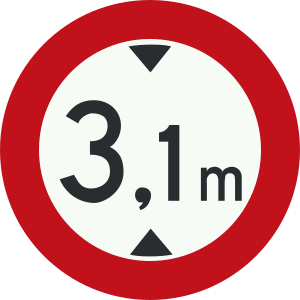
24. Driving a delivery van, you approach a viaduct with this sign. What does it mean?
Show in Dutch
Je nadert met een bestelbus een viaduct met dit bord. Wat betekent het?
Explanation: This round sign (C19) indicates the maximum passage height; vehicles taller than that (including load) may not pass under it. For an ordinary passenger car this is usually no problem.NL: Voertuigen die hoger zijn dan de aangegeven hoogte mogen er niet doorSource: RVV 1990, verkeersbord C19
25. At a crossroads without signs you turn right. An oncoming car turns left into the same side road. Who may go first?
Show in Dutch
Op een kruispunt zonder borden sla jij rechtsaf. Een tegemoetkomende auto slaat linksaf dezelfde zijweg in. Wie mag als eerste?
Explanation: Drivers turning left must let oncoming drivers turning right at the same junction go first (art. 18(2)). You turn right and stay on your own side; the car turning left crosses your path and waits. So the law does regulate this, and who indicated first is irrelevant.NL: Jij: wie linksaf slaat, moet tegemoetkomend verkeer dat rechtsaf slaat voor laten gaanSource: RVV 1990 art. 18 lid 2
26. What do you set on your parking disc when you park in a blue zone?
Show in Dutch
Wat zet je op je parkeerschijf als je in een blauwe zone parkeert?
Explanation: On the parking disc you display the time you started parking, in whole or half hours, rounded up if necessary (art. 25 paras. 3-4 RVV 1990).NL: Het tijdstip waarop je begon te parkeren (afgerond op heel/half uur)Source: RVV 1990 art. 25 lid 3-4
27. What is the safest reaction when, in a 30 km/h zone, a ball rolls onto the road between parked cars?
Show in Dutch
Wat is de veiligste reactie als in een 30-zone een bal tussen geparkeerde auto's de weg op rolt?
Explanation: A child often follows the ball. Slow down and be ready to stop; honking or swerving doesn't remove the danger (art. 19 RVV 1990).NL: Snelheid minderen en klaar zijn om te stoppen voor een kindSource: RVV 1990 art. 19
28. You are driving outside a built-up area on an ordinary 80 km/h road (not an expressway). You want to turn around to go back. What is correct?
Show in Dutch
Je rijdt buiten de bebouwde kom op een gewone 80 km/u-weg (geen autoweg). Je wilt keren om terug te rijden. Wat is juist?
Explanation: The ban on U-turns applies only on motorways and expressways (RVV 1990 art. 43(1)). On an ordinary road outside a built-up area you may turn around, but it is a special manoeuvre: you let all other traffic, including oncoming traffic, go first (art. 54).NL: Keren mag hier, als je al het overige verkeer voor laat gaan en het veilig kanSource: RVV 1990 art. 43 lid 1, art. 54
29. In town you are behind a moped with a yellow number plate (max 45 km/h) that rides on the roadway. How do you deal with this?
Show in Dutch
In de stad rijd je achter een bromfiets met een geel kentekenplaatje (maximaal 45 km/u) die op de rijbaan rijdt. Hoe ga je daarmee om?
Explanation: Within the built-up area a moped (yellow plate) often belongs on the roadway; treat it as a full road user and keep ample lateral distance when overtaking.NL: Je behandelt de bromfietser als medeweggebruiker op de rijbaan en houdt bij inhalen voldoende afstandSource: Bromfiets 45 km/h, geel kenteken
30. In fog you may drive closer behind the vehicle in front than usual, because you can use its rear lights for orientation.
Show in Dutch
Bij mist mag je dichter achter je voorganger gaan rijden dan normaal, omdat je zijn achterlichten dan als oriëntatie kunt gebruiken.
Explanation: Incorrect. Your speed and following distance must allow you, independently, to stop in time within the distance you can see (RVV 1990 art. 19). Tailgating your predecessor's lights is dangerous: if it suddenly brakes or stops, your distance is too short to react yourself.NL: NeeSource: RVV 1990 art. 19
31. If the tyre pressure light comes on, you should check the pressure of all tyres as soon as possible and top up where needed. Is this correct?
Show in Dutch
Als het bandenspanningslampje gaat branden, moet je zo snel mogelijk de bandenspanning van alle banden controleren en zo nodig bijvullen. Klopt dit?
Explanation: Correct tyre pressure is important for grip, braking distance and tyre lifespan. When the light is on, check all tyres as soon as possible, even though the system sometimes only flags one tyre. Source: Regeling voertuigen — tyre requirements.NL: Ja, klopt.Source: Regeling voertuigen — eisen aan banden
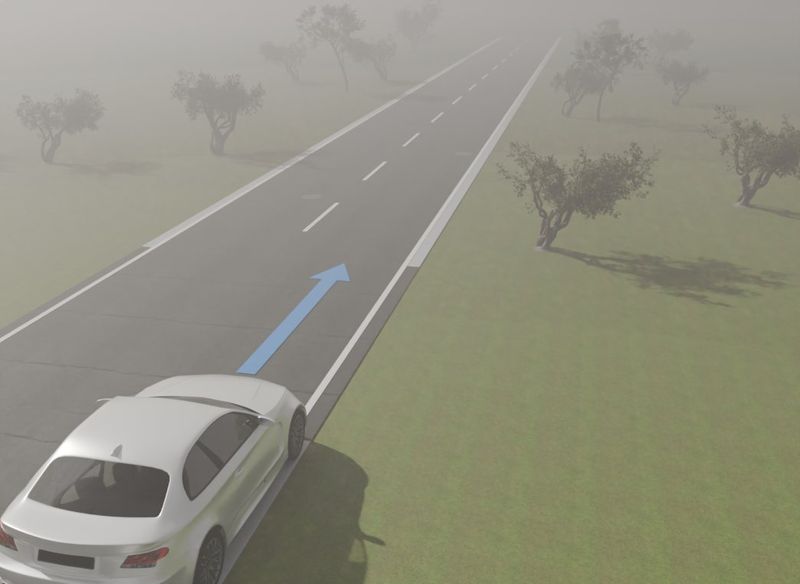
32. You are driving at a constant speed on a flat, quiet road outside the built-up area. What is correct about the relationship between your speed and fuel consumption per kilometre?
Show in Dutch
Je rijdt met constante snelheid op een vlakke, rustige weg buiten de bebouwde kom. Wat klopt over het verband tussen je snelheid en het verbruik per kilometer?
Explanation: Consumption per kilometre follows a curve: at very low speed you are in a low gear at relatively high revs (inefficient), and at high speed air resistance eats fuel. For most cars the low point is a moderate, steady speed in top gear, somewhere between roughly 60 and 80 km/h. Driving faster does not make the trip more economical, only shorter.NL: Het verbruik is het laagst bij een matige, constante snelheid in een hoge versnelling; bij hoge snelheid stijgt het sterk, en bij heel lage snelheid in een lage versnelling is het ook hogerSource: CBR theorie: het nieuwe rijden (snelheid en verbruik)
33. You approach a junction. On your carriageway there are shark's teeth (haaientanden) give-way markings. A car approaches from the left; nothing comes from the right. Under the basic rule 'right has priority' you would have priority. What do you do?
Show in Dutch
Je nadert een kruispunt. Op jouw rijbaan liggen haaientanden. Van links nadert een auto; van rechts komt niets. Volgens de hoofdregel 'rechts gaat voor' zou jij voorrang hebben. Wat doe je?
Explanation: Shark's teeth mean: give way to drivers on the crossing road, from both directions (art. 80). Traffic signs override traffic rules (art. 63), so 'right has priority' does not apply here. Stopping completely and waiting for a signal is not required; you only have to give way.NL: Je verleent voorrang aan de auto van links; de haaientanden gaan boven de verkeersregelSource: RVV 1990 art. 63 en 80
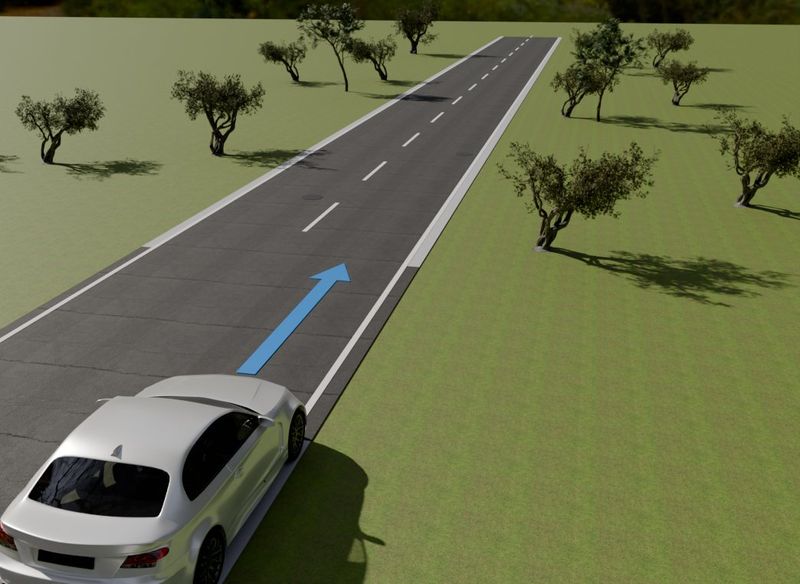
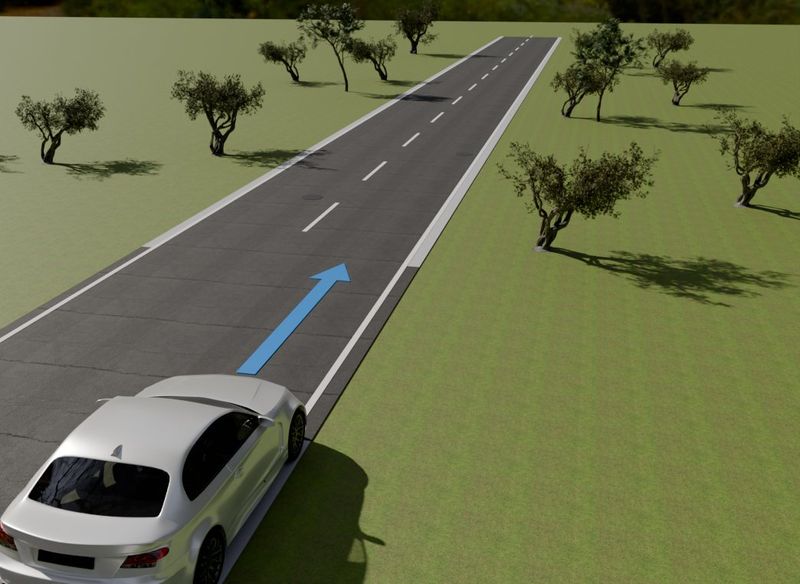
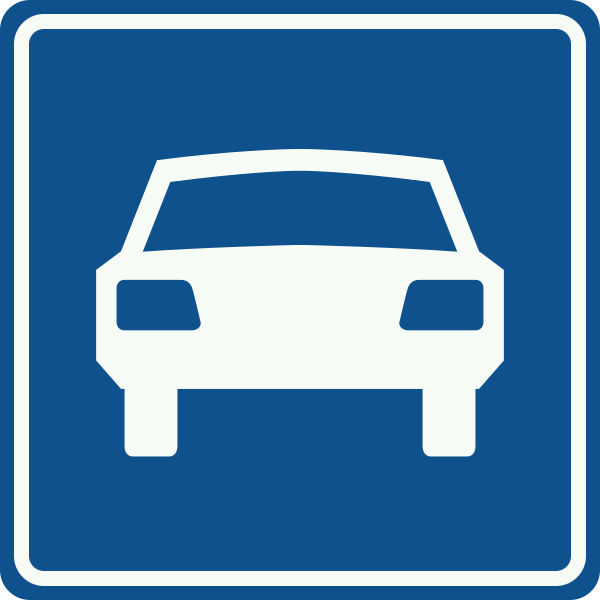
34. You come onto this road and there is no separate speed sign. What maximum speed applies here for your passenger car?
Show in Dutch
Je komt op deze weg en er staat geen apart snelheidsbord. Welke maximumsnelheid geldt hier voor jouw personenauto?
Explanation: On an expressway (blue sign with a white car) the default is 100 km/h, unless a sign shows a lower speed (often 80 km/h); a sign always takes precedence.NL: 100 km/uSource: Bord G3 (autoweg)
35. You have held your licence for 10 years. From which alcohol level are the police obliged to seize your licence on the spot?
Show in Dutch
Je hebt je rijbewijs al 10 jaar. Vanaf welk alcoholgehalte is de politie verplicht je rijbewijs direct in te vorderen?
Explanation: Art. 164(2)(a) WVW: at a breath alcohol level above 570 µg/l or a blood alcohol level above 1.3 per mille the licence is seized on first demand. The 0.8 per mille / 350 µg/l threshold applies only to novice drivers (under b). At a lower exceedance driving remains punishable, but seizure does not follow automatically.NL: Boven 1,3 promille (570 µg/l)Source: WVW 1994 art. 164 lid 2 onder a
36. This sign is on an obstacle in the middle of the road. What must you do?
Show in Dutch
Dit bord staat op een obstakel midden op de weg. Wat moet je doen?
Explanation: A round blue sign with an arrow (D2) prescribes which side to pass the obstacle; this arrow points to the right, so you keep to the right of it. It is a mandatory sign.NL: Het obstakel rechts passeren, aan de kant die de pijl aangeeftSource: RVV 1990, verkeersbord D2
Practise by topic
Every topic has its own page with free questions, the key rules from the theory guide and memory hooks.
The exam is in Dutch, or in English: when booking, choose 'Theorie-examen Engels auto'.
Any other language is possible with an interpreter. You book one through an approved interpreting service, at least 2 weeks before your exam. You may not bring your own interpreter.
Even then you may meet Dutch words that are not translated. Practise them in Dutch traffic words.
With extra time, you can have the questions read aloud through headphones.
2,609 questions across 12 exam topics, each with an explanation and its source
Mock exams in the renewed CBR format: 50 questions, 30 minutes, pass with 44 correct
Drag-and-drop and tap questions
19 animated right-of-way lessons in 3D
All questions, explanations and signs in 12 languages, with one tap back to Dutch
Online duel with friends
No account, no tracking, no ads
Free: 15 questions per topic, one mock exam, the full sign library and the duel. Unlock everything with a subscription or a one-time purchase. See the prices.
Frequently asked questions
Is practising on this page really free?
Yes. You need no account and you pay nothing. These questions come from the free version of the app.
Are these the real CBR exam questions?
No. They are Rijtheorie Hub’s own questions, based on the Dutch traffic regulations (RVV 1990) and the official meanings of the road signs, and checked against current Dutch law. Rijtheorie Hub is not affiliated with the CBR.
How many mistakes can I make in the Dutch car theory exam?
The exam has 50 questions and you pass with 44 correct answers, so you can make at most 6 mistakes. Read how the CBR car theory exam works.
Can I take a full mock exam too?
Yes, in the app: 50 questions in 30 minutes, just like the CBR exam, with your result per topic. One mock exam is free.
Which languages can I practise in?
In the app, every question, explanation and road sign is available in 12 languages: Dutch, English, Turkish, Polish, Arabic, Ukrainian, Spanish, Russian, Portuguese, Persian, Chinese and Romanian, and one tap shows the Dutch version. This site is available in all of these languages too: pick yours at the top of the page.
What does the app cost?
It is free to download. The free version includes 15 questions per topic, one mock exam, the full sign library and the duel. Everything else is unlocked with a subscription or a one-time purchase; the App Store shows the current price.
Practise this with 2,609 questions and 19 animations
Rijtheorie Hub practises exactly like the CBR exam: 50 questions, 30 minutes, pass with 44. Free to try, in 12 languages.