Green line on the road in the Netherlands: what does it mean and how fast may you drive?
A green line on the road, between two white centre lines, means that you may drive 100 km/h on this road, unless a sign shows something else. The green itself is not a ban and not an order. It helps you to recognise the road.
What does a green line on the road mean?
The green line in the middle of the road is one of the features that make roads outside the built-up area (bebouwde kom) recognisable. The Rijksoverheid gives the green line on the road this meaning:
| Centre line | Speed |
|---|---|
| Double white line with green in between | 100 km/h |
| Double white line without green | 80 km/h |
| No centre line | Officially 60 km/h, or 80 km/h if there are no signs with 60 |
According to the ANWB, the green colour comes from the idea of a central reservation. The double line keeps oncoming traffic a little further apart. On a road with a green line the edge lines are different too: they are solid.
Green line on the expressway and on an N road
The green stripe itself does not give you the right to drive 100 km/h. The speed comes from the law and the signs:
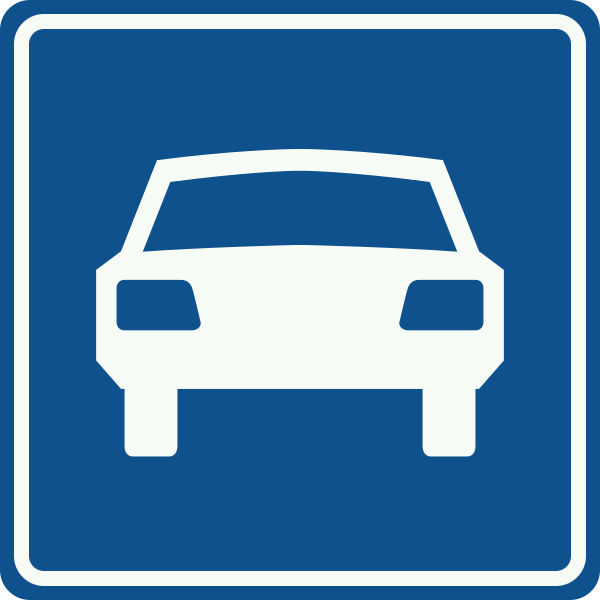
- Expressway (autoweg). On an expressway, marked with sign G3, the speed limit is 100 km/h (Article 21 of the RVV 1990). The green line on the expressway shows the same thing.
- Other roads. On other roads outside the built-up area the limit is 80 km/h. According to the ANWB you may also drive 100 km/h on some N roads (N-wegen), and you can see that from a sign with 100 and from the double line filled with green. The sign is what counts there.
May you overtake at a green line?
That depends on the white lines, not on the green:
- Solid green line. If the white lines on both sides of the green are solid, you may not overtake. You may not cross a solid line between lanes (Article 76).
- Broken lines. If the white lines are broken, you may overtake if it is safe and there is no sign with an overtaking ban.
You can read more about the lines themselves in solid line and broken line.
How fast may you drive on a road with a green line?
With a passenger car 100 km/h, if no sign says something else. If you tow a trailer or caravan of up to 3,500 kg, your maximum is 90 km/h (Article 22 of the RVV 1990). For a lorry and for a bus that is not a T100 bus, the limit is 80 km/h.
Which other rules apply on a road like this?
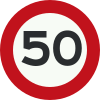
If the road with the green line is an expressway, the rules of the expressway apply. You may only drive there with a motor vehicle that may and can drive at least 50 km/h (Article 42). Turning round, reversing and stopping on the carriageway are banned (Article 43). The difference from the motorway is explained in expressway or motorway.
You can find all road types side by side in types of roads: recognising 60, 80 and 100 and in speed limit outside the built-up area. You can practise at traffic rules practice.
Frequently asked questions
What does a green line on the road mean?
Green between the double white centre lines means that you may drive 100 km/h on that road, unless a sign shows something else.
What does a green line on the road mean for overtaking?
Nothing. You can see from the white lines whether you may overtake. Solid: no overtaking. Broken: you may overtake if it is safe.
May you overtake at a green line?
Only if the white lines next to the green are broken and there is no overtaking ban. With solid lines it is not allowed (Article 76 of the RVV 1990).
Is a road with a green line always an expressway?
No. You recognise an expressway (autoweg) by sign G3. The green line can also be on another road where a sign allows 100 km/h.
How fast may you drive with a trailer on a road with a green line?
With a trailer or caravan of up to 3,500 kg behind a passenger car the maximum is 90 km/h (Article 22 of the RVV 1990), even if the road allows 100 km/h.
Is the green line on the road a traffic sign with its own rule?
No. According to the Rijksoverheid the lines change nothing about the traffic rules and speed limits. They make the type of road recognisable.
Want to practise? Try the free questions on traffic rules, with an explanation for every answer.
Practise this with 2,606 questions and 19 animations
Rijtheorie Hub practises exactly like the CBR exam: 50 questions, 30 minutes, pass with 44. Free to try, in 12 languages.
Download free Get it on Google Play