Sub-signs (onderborden): what do the plates under a Dutch road sign mean?
Sub-signs (onderborden) are the small plates under a road sign. They change or clarify the sign above: they give an explanation, limit the sign to certain road users or make an exception for someone. The Dutch word uitgezonderd (except) is the most important one to know here.
What is a sub-sign?
A sub-sign is a sign that is fixed under a road sign and is read together with it. You always read it together with the sign above. So with road signs with sub-signs, you first read the top sign and then the addition.
The three types of sub-signs in traffic
| What is on the sub-sign? | Meaning | Article 67 |
|---|---|---|
| Text or symbols with an explanation, such as times or a distance | Further explanation of the road sign | Paragraph 1 under a, paragraph 2 |
| Only a symbol | The road sign applies only to those road users or that behaviour | Paragraph 1 under b |
| The word uitgezonderd with a symbol | The road sign does not apply to those road users or that behaviour | Paragraph 1 under c |
The symbols on sub-signs mean the same as on the road signs in Annex 1 (Article 67, paragraph 3).
1. Only a symbol: the sign applies only to...
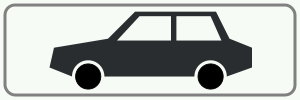
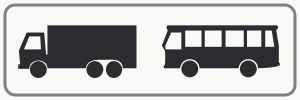
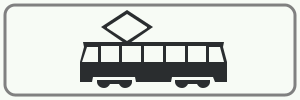
If the sub-sign shows only a car, a lorry with a bus or a tram, the sign above applies only to those vehicles. So a speed limit with the symbol of a lorry under it does not apply to you in a passenger car.
2. Uitgezonderd (except): the sign does not apply to...
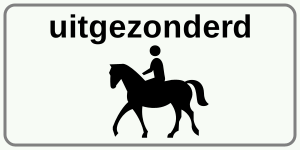
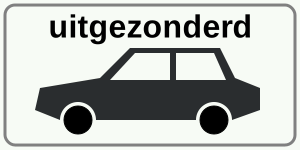
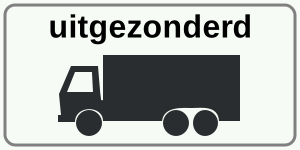
With uitgezonderd it is the other way round. Sub-sign OB51 makes an exception for horse riders: the ban above applies to everyone except them. One example is the one-way street. According to the ANWB, a sub-sign can say that certain road users, such as cyclists, may enter the road from both sides. So expect oncoming cyclists there.
3. Text: explanation, times and distances
Veilig Verkeer Nederland (the Dutch road safety organisation) describes these sub-signs, among others:
- Days or times. The top sign applies only in the period shown on the sub-sign. As an example, the ANWB gives a speed limit of 100 km/h between 6 and 19 hours. Outside those times the normal speed limit of the road applies.
- A distance. The top sign only starts after the distance on the sub-sign, or it applies over the distance shown on it.
- An arrow. The top sign applies in the direction of the arrow.
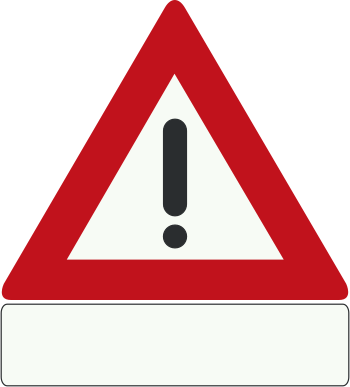
- The kind of danger. Under sign J37 (danger), the sub-sign says what you are being warned about.
- An exception in words. For example except local traffic (bestemmingsverkeer uitgezonderd), except scheduled buses (lijnbussen uitgezonderd) or except the verge (berm uitgezonderd).
Sub-signs for parking
With parking signs, the sub-sign often decides the most. The RVV 1990 names the sub-sign there explicitly:
- At a parking place you may not park if your vehicle does not belong to the category on the sign or the sub-sign, or in another way or for another purpose than is shown there (Article 24, paragraph 1 under d).
- If there are days or hours on the sub-sign, the orders or bans of the sign apply only on those days or hours (Article 24, paragraph 2).
- In a parking disc zone (parkeerschijfzone), the rules for the parking disc apply only on the days or hours of the sub-sign (Article 25, paragraph 5).
You can read more about these signs in parking ban and stopping ban.
Reading sub-signs: how to avoid mistakes
- Read the top sign: what is the ban, the order or the warning?
- Check whether it says uitgezonderd. If so: the sign applies to everyone except those who are named. If not, and there is only a symbol: the sign applies only to those who are named.
- Check whether the sub-sign gives a time, distance or direction.
The shapes and colours of the signs themselves are explained in types of road signs. You can look at all signs in the overview of road signs and practise them with the road sign quiz.
Frequently asked questions
What is a sub-sign?
A sign under a road sign that explains the sign above, limits it or makes an exception to it (Article 67 of the RVV 1990).
What does 'uitgezonderd' mean on a sub-sign under a road sign?
It means 'except'. The road sign then does not apply to the road users or the behaviour shown on the sub-sign. For everyone else the sign applies as normal.
What does a sub-sign with only a symbol mean?
Then the road sign applies only to the road users or the behaviour of that symbol, for example only to lorries.
Do you have to obey a sub-sign in traffic?
Yes, together with the sign above. The sub-sign decides for whom, when or where the order or ban of the road sign applies.
Which article covers sub-signs?
Article 67 of the RVV 1990. Articles 65 and 66 are about something else: whether signs apply per lane or side of the road, and zones.
Want to practise? Try the free questions on road signs and markings, with an explanation for every answer.
Practise this with 2,606 questions and 19 animations
Rijtheorie Hub practises exactly like the CBR exam: 50 questions, 30 minutes, pass with 44. Free to try, in 12 languages.
Download free Get it on Google Play