Types of road signs in the Netherlands: recognise them by shape and colour
There are many types of road signs, but you can quickly tell them apart by shape and colour. A round sign with a red border bans something, a round blue sign orders something, a triangle with a red border warns, and a blue square or rectangular sign gives information or a rule. You see yellow on the priority road (voorrangsweg) and in temporary situations.
Which types of road signs are there by law?
| Chapter | Subject | Example |
|---|---|---|
| A | Speed | A1 speed limit, A4 advisory speed |
| B | Priority | B1 priority road, B6 give way, B7 stop |
| C | Closure (geslotenverklaring) | C1 closed in both directions, C2 one-way street |
| D | Direction of travel | D1 roundabout, D4 mandatory direction |
| E | Parking and stopping | E1 parking ban, E4 parking place |
| F | Other orders and bans | F1 no overtaking, F7 no turning round |
| G | Traffic rules | G1 motorway (autosnelweg), G5 erf (home zone), G11 compulsory cycle path |
| H | Built-up area (bebouwde kom) | H1 and H2 |
| J | Warning | J8 dangerous junction, J16 roadworks |
| K | Direction signs | Signposts |
| L | Information | L2 pedestrian crossing, L8 dead end |
So which road signs are there in everyday use? In study material and on this site you usually find them in five groups: prohibition signs, mandatory signs, warning signs, priority signs and information signs. That grouping is a learning aid. The law uses the eleven chapters.
Round road sign: ban or order
Road signs that are round say what you must do or what you may not do. The colour makes the difference.
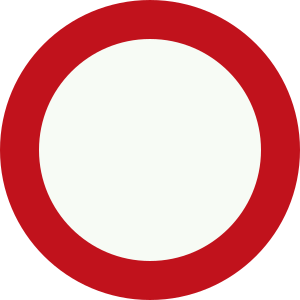
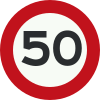
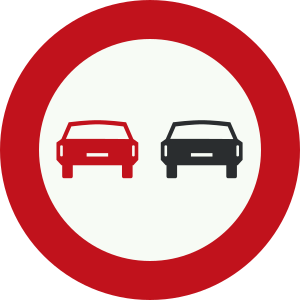
Round with a red border: a ban. Examples are C1 (closed in both directions), A1 (speed limit) and F1 (ban on overtaking).
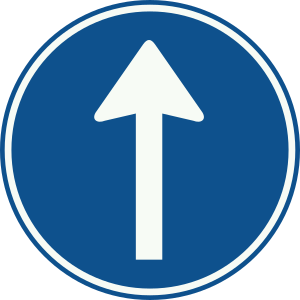
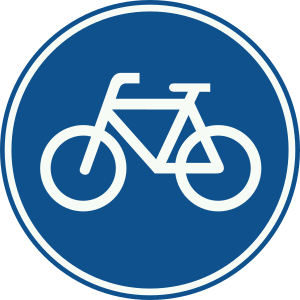
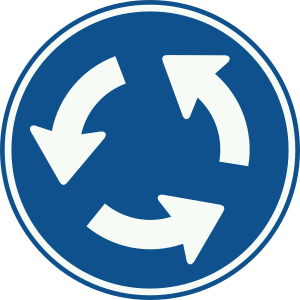
Blue round road sign: an order. Examples are D4 (order to follow the direction shown), G11 (compulsory cycle path) and D1 (roundabout, mandatory direction).
Round road sign with a stripe: what is the meaning?
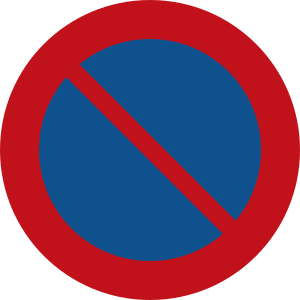
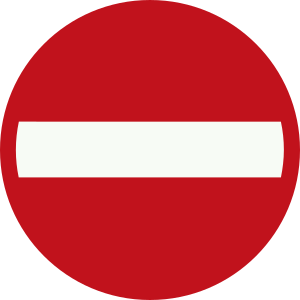
- Blue with a red border and one red stripe: E1, parking ban. With a red cross it is E2, stopping ban. See parking ban and stopping ban.
- Red with a white bar: C2, a one-way street that you may not enter from this side.
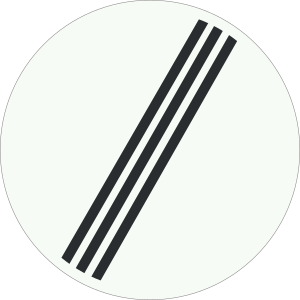
- White with diagonal stripes: an end sign. F8 means the end of all bans that were shown with road signs. A2 is the end of a speed limit.
Blue road signs: order or information
The meaning of blue road signs depends on the shape. Blue signs in traffic that are round give an order. Blue square road signs and blue rectangular signs give information or say which rules apply.
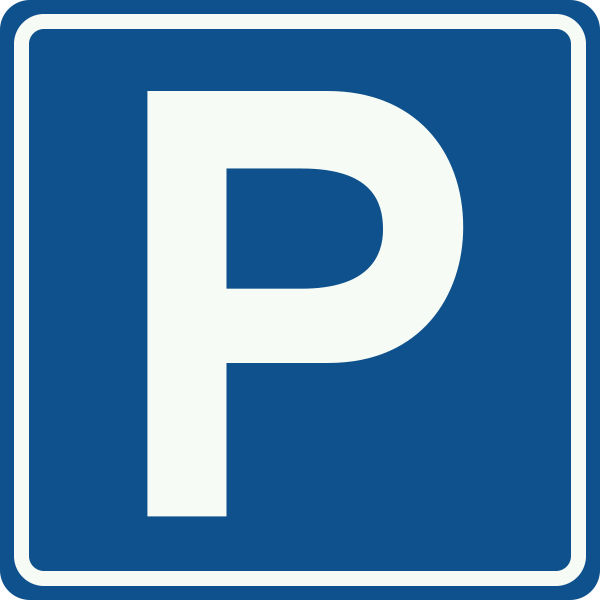
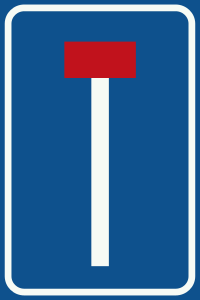
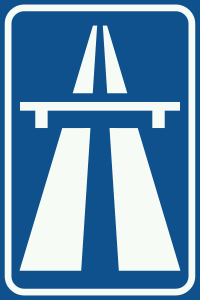
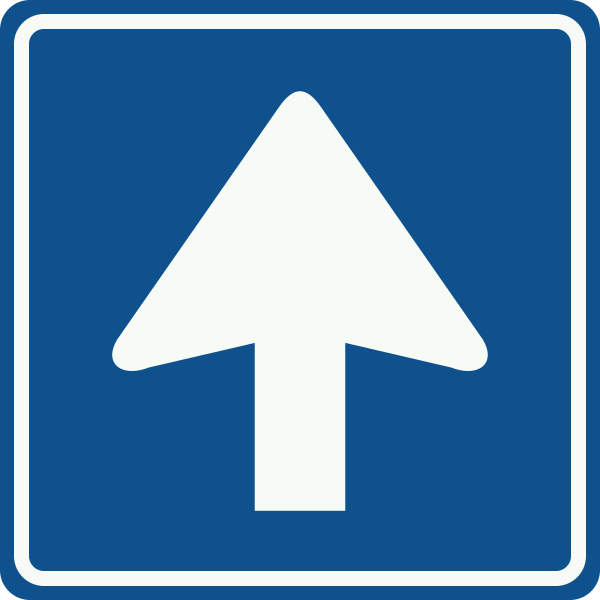
Examples of square road signs and rectangular signs in blue: E4 (parking place), L8 (dead end), G1 (motorway) and C3 (one-way street). Note: information can also bring a rule with it. Past sign G1 the rules of the motorway apply.
Triangle and special shapes: warning and priority
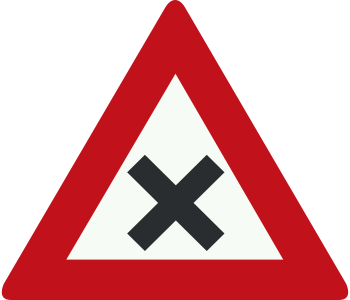
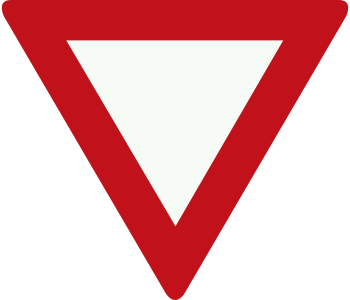
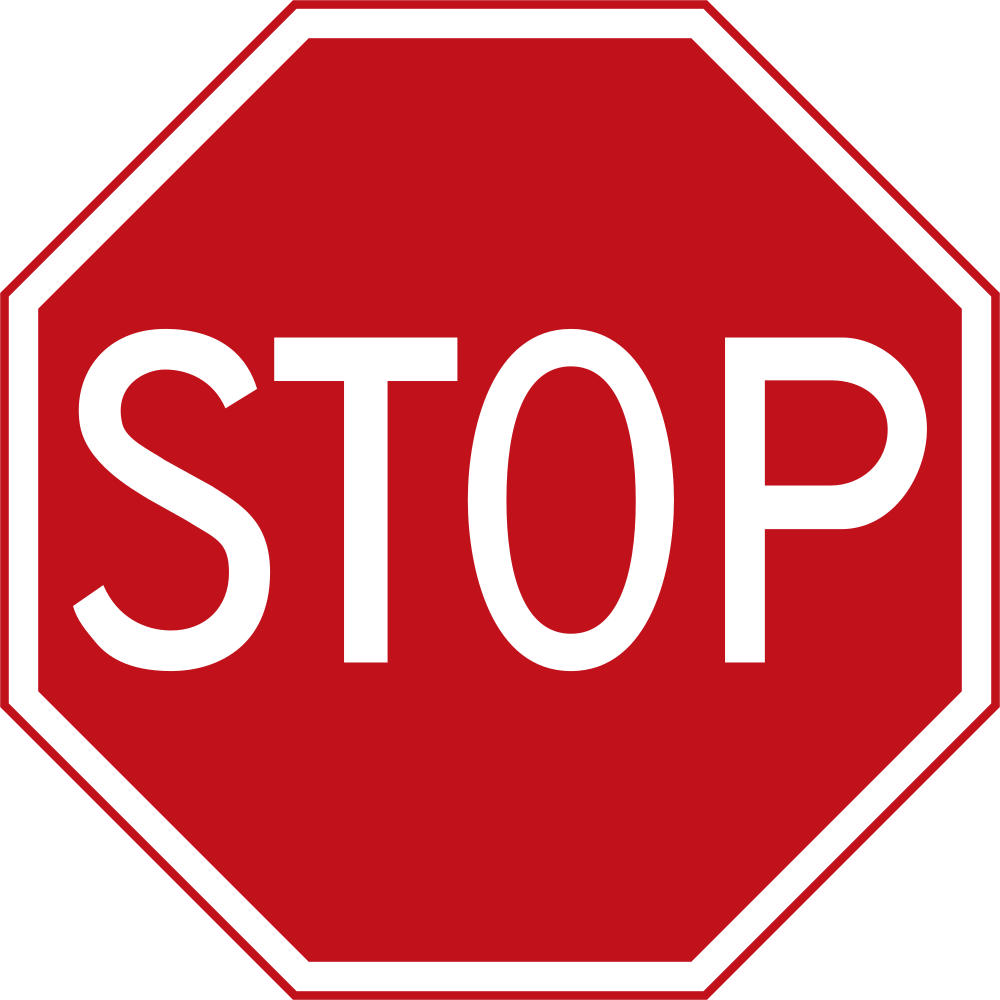
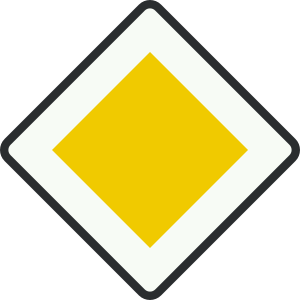
A triangular white sign with a red border warns of danger, for example J8 (dangerous junction). The priority signs have their own shape, so that you also recognise them from the back, says the ANWB: B6 is a triangle with the point down, B7 is the eight-sided stop sign and B1 is a yellow sign that stands on one corner.
Yellow road signs: meaning
Road signs in yellow come in two kinds:
- Signs B1 and B2. The yellow sign B1 means priority road. B2 shows the end of the priority road.
- Yellow signs at roadworks. Rijkswaterstaat (the national road authority) shows diversions with yellow signs along the road. Yellow road signs with black letters or arrows belong to a temporary route like that. Yellow lines on the road are temporary too: at roadworks they show the temporary lanes.
Temporary road signs
You see temporary road signs at roadworks and diversions. For the law it makes no difference whether a sign is permanent or temporary: you must obey a sign with an order or a ban. If a lower speed is shown at roadworks, that speed applies. A road sign may also be shown on an electronic sign (Article 64a). If a normal sign and an electronic sign show a different speed limit, the lowest one applies (Article 63b). Temporary markings on the road surface go before the permanent markings on the road surface (Article 63a).
Sub-signs
A sub-sign (onderbord) can hang under a road sign. It gives an explanation, limits the sign to certain road users or makes an exception for someone (Article 67). Read on in sub-signs.
Practise all types of road signs
Look at all road signs with their meaning and test yourself with the road sign quiz. There is a short selection in the most important road signs.
Frequently asked questions
Which types of road signs are there?
The RVV 1990 has eleven chapters: speed, priority, closure, direction of travel, parking and stopping, other orders and bans, traffic rules, built-up area, warning, direction signs and information.
What does a round road sign mean?
A round sign gives a ban or an order. With a red border it is a ban, a blue round sign is an order.
What is the meaning of blue road signs?
Round and blue is an order, such as a mandatory direction. Square or rectangular and blue gives information or a rule, such as parking place or motorway.
What do yellow road signs mean?
The yellow sign B1 means priority road. Yellow signs along the road at roadworks show a temporary diversion.
Do you have to obey temporary road signs?
Yes. You must obey every traffic sign that contains an order or a ban (Article 62 of the RVV 1990). That also applies to signs that have been placed temporarily.
What does a round road sign with a stripe mean?
That depends on the colour. Blue with a red stripe is a parking ban (E1). White with diagonal stripes is an end sign, such as F8: end of all bans.
Want to practise? Try the free questions on road signs and markings, with an explanation for every answer.
Practise this with 2,606 questions and 19 animations
Rijtheorie Hub practises exactly like the CBR exam: 50 questions, 30 minutes, pass with 44. Free to try, in 12 languages.
Download free Get it on Google Play