Rijtheorie HubPractise the CBR theory in 12 languagesFree on the App Store
Open
Home › Theory exam practice › Practise Vulnerable road users

Practise Vulnerable road users

8 free practice questions on vulnerable road users for the Dutch CBR car theory exam. Pedestrians, cyclists and moped riders, children, older people and blind or partially sighted pedestrians. After every answer you see the explanation and the source. The app has 191 questions on this topic.

What you need to know

From the theory guide: Pedestrians and vulnerable road users · Cyclists, mopeds and the blind spot
8 free questions on vulnerable road users

Score: 0 of 0
3D traffic situation for question 1

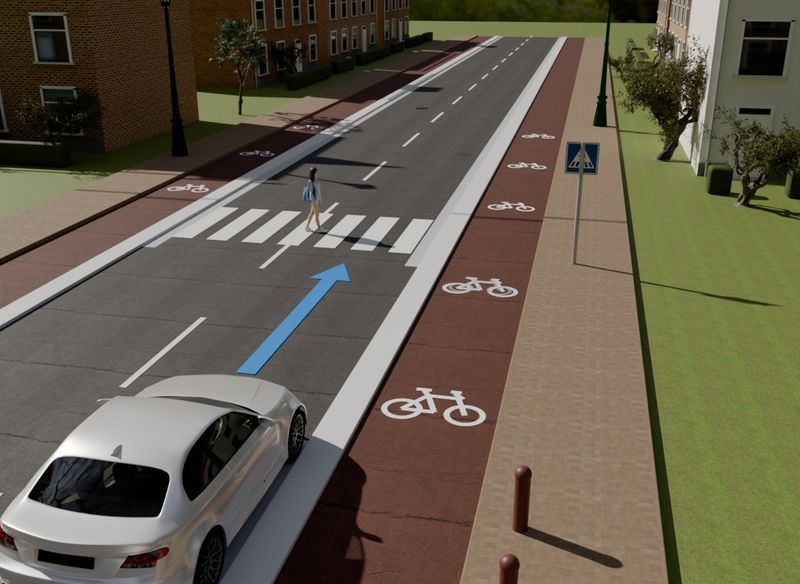
1. A pedestrian has already started crossing at a pedestrian crossing and is now on your side of the road. Must you wait until this pedestrian has fully crossed?

Show in Dutch

Een voetganger is al begonnen over te steken op een voetgangersoversteekplaats en bevindt zich nu op je weghelft. Moet u wachten tot deze voetganger volledig is overgestoken?
Explanation: Yes. As long as the pedestrian is on the crossing, you must let them go first (RVV 1990 art. 49 lid 2).NL: Ja Source: RVV 1990 art. 49 lid 2
3D traffic situation for question 2

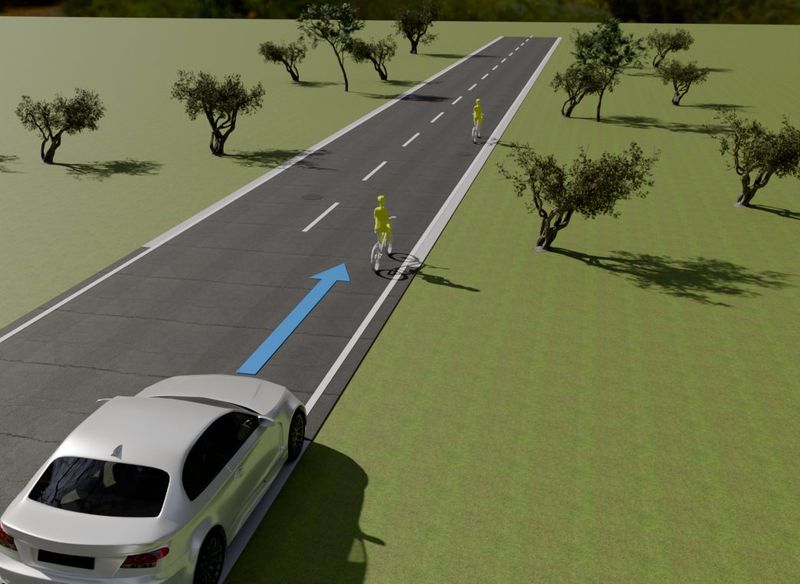
2. You approach from behind a small group of children on bicycles who are wobbling a bit. What is the best approach?

Show in Dutch

Je nadert van achteren een groepje kinderen op de fiets dat wat slingert. Wat is de beste aanpak?
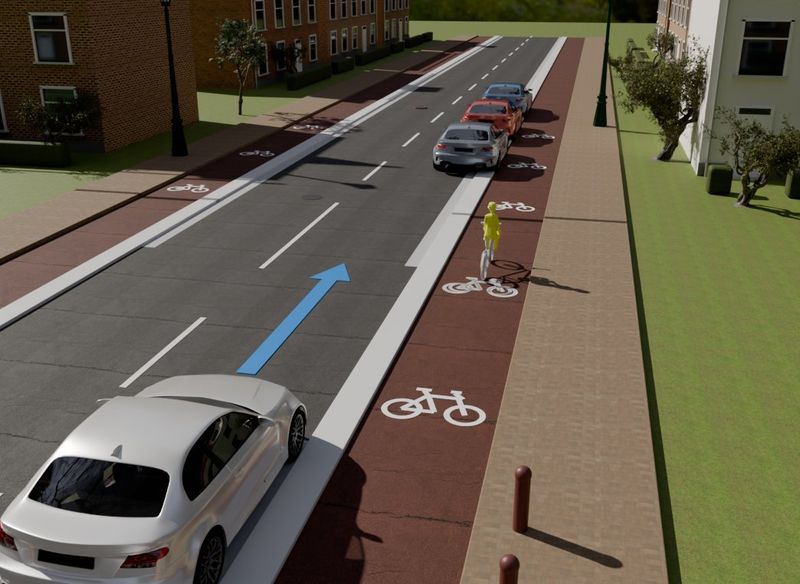
Explanation: Children on bikes are unpredictable and may suddenly swerve. Reduce speed, keep distance and only overtake with ample lateral clearance.NL: Snelheid minderen, extra afstand houden en pas inhalen als het ruim en veilig kan Source: CBR inzicht / anticiperen op fietsers
3D traffic situation for question 3

3. In a built-up area you pass a row of parked cars; to your right a cyclist rides past them. Which hazard do you anticipate most?

Show in Dutch

Binnen de bebouwde kom haal je een rij geparkeerde auto's in; rechts van je fietst iemand langs die auto's. Op welk gevaar anticipeer je vooral?
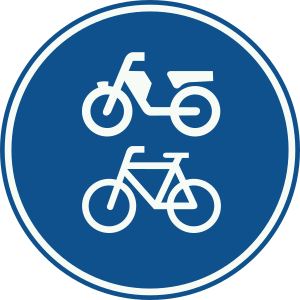
Explanation: Beside parked cars a door may suddenly open; the cyclist swerves left to avoid it, into your path. Keep extra distance and control your speed.NL: Een openslaand portier waardoor de fietser naar links, jouw kant op, uitwijkt Source: CBR gevaarherkenning / geparkeerde auto's
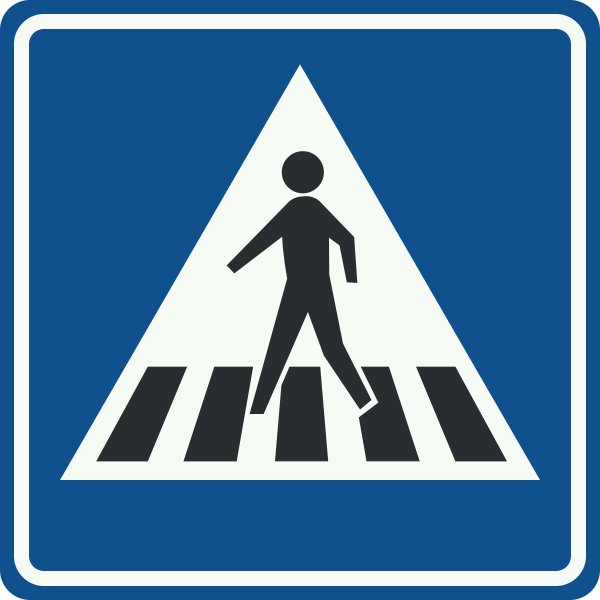
Road sign G12a

4. What does this sign mean for you?

Show in Dutch

Wat betekent dit bord voor jou?

Explanation: This sign (G12a) marks a compulsory moped/cycle path for both cyclists and mopeds. As a driver you should therefore also expect faster mopeds here and allow for them.NL: Verplicht (brom)fietspad; zowel fietsers als bromfietsers moeten dit pad gebruiken Source: Verkeersbord G12a ((brom)fietspad)
3D traffic situation for question 5

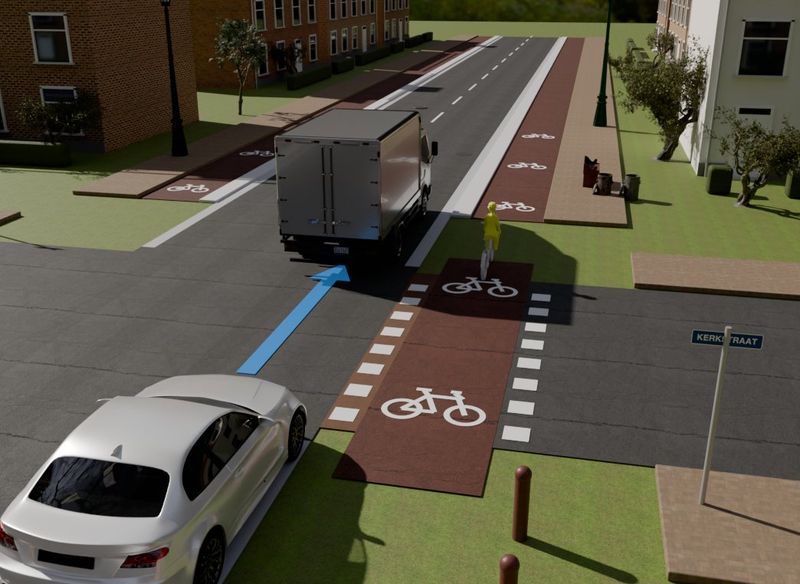
5. At a junction a cyclist who wants to go straight stands beside a right-turning truck; you are behind. What should you bear in mind?

Show in Dutch

Bij een kruispunt staat naast een rechtsafslaande vrachtwagen een fietser die rechtdoor wil; jij staat erachter. Waar houd je rekening mee?
Explanation: The straight-through cyclist has priority but may sit in the truck's blind spot and be invisible to the driver. Anticipate this, stay back and do not push forward on the right.NL: De fietser kan onzichtbaar zijn voor de vrachtwagenchauffeur; anticipeer op een gevaarlijke situatie en houd afstand Source: RVV 1990 Art. 18 / dode hoek vrachtwagen
Road sign L2

6. At this crossing a pedestrian is clearly waiting, ready to cross. What must you do?

Show in Dutch

Bij deze oversteekplaats staat een voetganger duidelijk klaar om over te steken. Wat moet je doen?
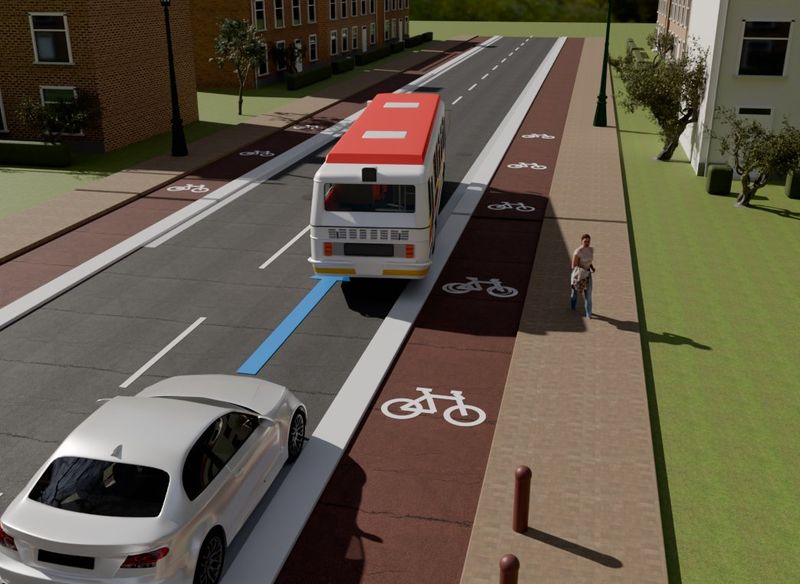
Explanation: At a zebra crossing you must give way to pedestrians who are crossing or clearly intend to cross. A raised hand is not required.NL: Voetganger laten oversteken; zo nodig stoppen Source: RVV 1990 art. 49 lid 2 / bord L2
3D traffic situation for question 7

7. In a built-up area a service bus at a stop signals to pull away. Must you let the bus go first?

Show in Dutch

Binnen de bebouwde kom geeft een lijnbus bij een halte richting aan om weg te rijden. Moet je de bus voor laten gaan?
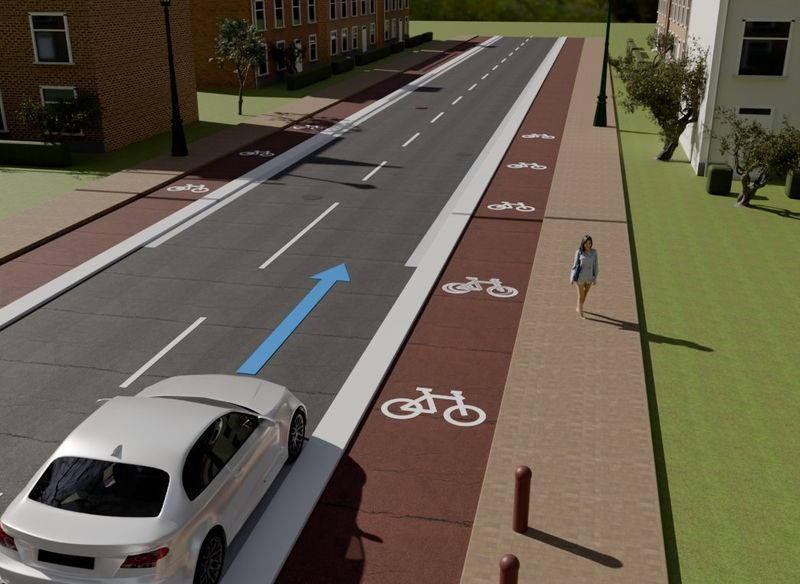
Explanation: On roads inside the built-up area (max 50 km/h) you must give way to a bus pulling away from a stop and indicating; also watch for passengers getting on and off.NL: Ja Source: RVV 1990 art. 56
3D traffic situation for question 8

8. A pedestrian with a white cane with red rings wants to cross, but there is no zebra crossing nearby. Must you stop and let them go first?

Show in Dutch

Een voetganger met een witte stok met rode ringen wil oversteken, maar er is geen zebrapad in de buurt. Moet je stoppen en hem voor laten gaan?

Explanation: A white cane with red rings means the pedestrian is blind or partially sighted; you must always let them go first, even away from a zebra crossing (RVV 1990 art. 49).NL: Ja Source: RVV 1990 Art. 49 (blinden met witte stok met rode ringen)

Memory hooks for this topic

🚗↔️🚲When passing a cyclist, keep at least 1.5 metres of side clearance.

Picture a 1.5-metre door lying flat between your car and the bike. If the door touches the cyclist, you were too close — 'one-and-a-half, or they take a bath!'

🚚➡️🚲🙈When turning right, cyclists and pedestrians going straight have priority; always check your blind spot.

The big truck turns right and 'forgets' the cyclist hiding in its blind spot — the classic killer. Twist your head like an owl to the right: turn your neck or wreck a life!

🦯🧑‍🦯🛑A person with a white cane is blind or visually impaired — always give priority and extra space.

The white cane is a magic wand: the moment it appears, all traffic freezes still. White = wait, always.

🚌🏫🧒💨Pass a stopped bus at a stop slowly; children and people may suddenly cross.

Behind every stopped bus a hidden child is crouched, ready to rocket onto the road. Bus = brake reflex.

All memory hooks for this topic

Read and practise more

Other topics

Practise Right of way

Who goes first: at uncontrolled junctions, at give-way lines and stop signs, on roundabouts and with trams, buses and emergency vehicles.

10 free questions here · 376 in the app

Practise Traffic rules

Speeds, overtaking, lanes, lights, parking and stopping: the rules you need everywhere.

10 free questions here · 297 in the app

Practise Hazard perception

You see a traffic situation and choose what you do: brake, release the accelerator or do nothing.

21 free questions here · 219 in the app

Practise Special manoeuvres

Reversing, turning round, pulling away, merging, parking and towing.

10 free questions here · 204 in the app

Practise Special conditions

Driving in rain, fog, slippery conditions, strong wind, low sun and in the dark.

9 free questions here · 196 in the app

Practise Vehicle knowledge

Dashboard warning lights, tyres, the APK (MOT), insurance and your documents.

10 free questions here · 143 in the app

Practise Environment and economical driving

Economical and clean driving, emissions, tyres and low-emission zones.

8 free questions here · 147 in the app

Practise Traffic insight

Looking ahead, keeping your distance, knowing your stopping distance and predicting what others will do.

10 free questions here · 189 in the app

Practise Motorway and autoweg

Merging and exiting, keeping right, overtaking, peak-hour lanes, matrix signs and breaking down.

10 free questions here · 157 in the app

Practise Alcohol and fitness to drive

Alcohol, drugs, medicines, tiredness, emotions and being able to see well.

10 free questions here · 138 in the app

Practise road signs

Recognising signs and road markings and knowing what they ask of you.

Quiz with all signs · 352 sign questions in the app

Practise this with 2,609 questions and 19 animations

Rijtheorie Hub practises exactly like the CBR exam: 50 questions, 30 minutes, pass with 44. Free to try, in 12 languages.

Download free