Rijtheorie HubPractise the CBR theory in 12 languagesFree on the App Store
Open
Home › Theory exam practice › Practise Special manoeuvres

Practise Special manoeuvres

10 free practice questions on special manoeuvres for the Dutch CBR car theory exam. Reversing, turning round, pulling away, merging, parking and towing. After every answer you see the explanation and the source. The app has 204 questions on this topic.

What you need to know

From the theory guide: Special maneuvers: reversing, parking, turning around, pulling away, hill starts and towing · Motorway Driving: Joining, Leaving, Keeping Right and the Exceptions
10 free questions on special manoeuvres

Score: 0 of 0
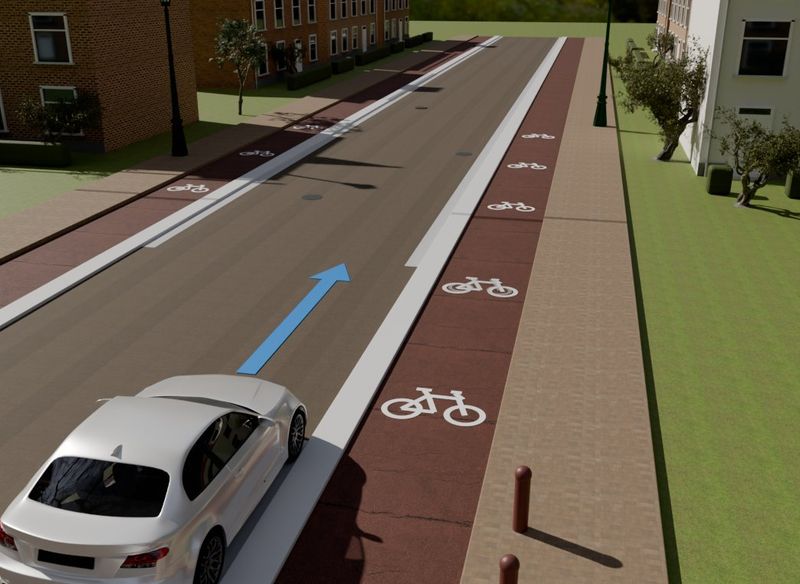
3D traffic situation for question 1

1. You are driving along this quiet 30 km/h street and want to turn around to go back. There is no sign prohibiting U-turns and no solid centre line. May you turn around here?

Show in Dutch

Je rijdt in deze rustige 30 km/u-straat en wilt keren om terug te rijden. Er staat geen bord dat keren verbiedt en er ligt geen doorgetrokken streep. Mag je hier keren?
Explanation: Yes. U-turns are prohibited only on motorways and expressways (RVV 1990 art. 43(1)) or where a sign or solid line prevents it. Otherwise it is allowed, provided that as the turning driver you let all other traffic go first (art. 54).NL: Ja Source: RVV 1990 art. 54, art. 43 lid 1
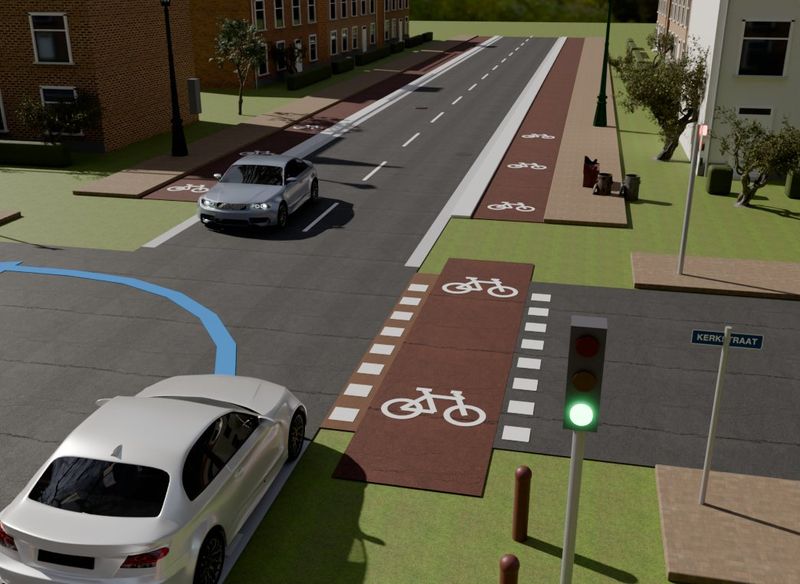
3D traffic situation for question 2

2. The traffic light is green and you are turning left. An oncoming car, which also has green, is going straight on. Who goes first?

Show in Dutch

Het verkeerslicht staat op groen en je slaat linksaf. Een tegenligger, die ook groen heeft, rijdt rechtdoor. Wie gaat voor?

Explanation: A green light means 'proceed' (RVV 1990 art. 68(1)), but it does not settle priority between you and the oncoming car, which also has green. As a left-turning driver you let the oncoming traffic going straight on go first (art. 18(1)).NL: De tegenligger; groen betekent dat je mag doorgaan, maar bij afslaan laat je tegemoetkomend verkeer voorgaan Source: RVV 1990 art. 18 lid 1, art. 68 lid 1

3. You are on a priority road and turn right into a side street. On the cycle/moped path next to you a moped rider is going straight on. Who goes first?

Show in Dutch

Je rijdt op een voorrangsweg en slaat rechtsaf een zijstraat in. Op het fiets/bromfietspad naast je rijdt een bromfietser rechtdoor. Wie gaat voor?
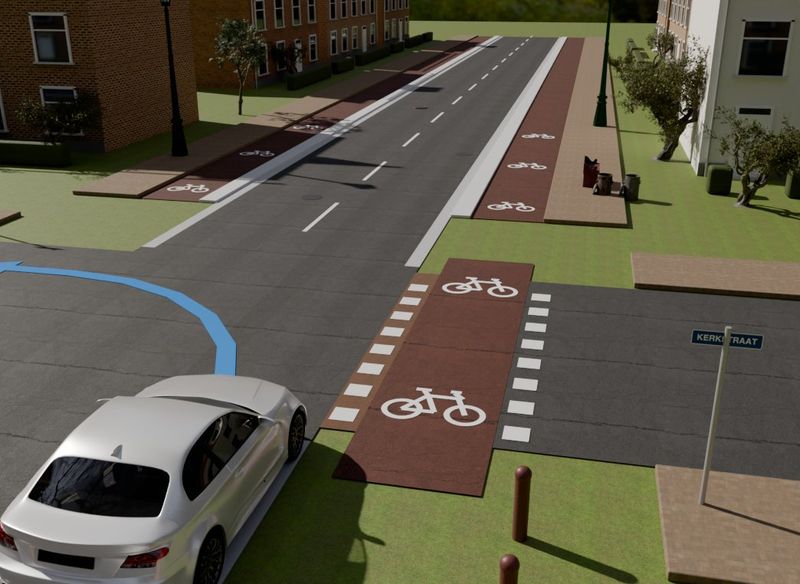
Explanation: Drivers who turn must let traffic beside them or close behind them on the right go first (RVV 1990 art. 18(1)). Being on a priority road changes nothing: the priority of sign B1 concerns crossing traffic from the side road, not the moped rider beside you.NL: De bromfietser; als afslaande bestuurder laat je verkeer naast je voorgaan, ook op een voorrangsweg Source: RVV 1990 art. 18 lid 1
3D traffic situation for question 4

4. You are turning left at this uncontrolled junction. A car is approaching from the left. Who must give way?

Show in Dutch

Je slaat linksaf op dit gelijkwaardige kruispunt. Van links nadert een auto. Wie moet voorrang verlenen?
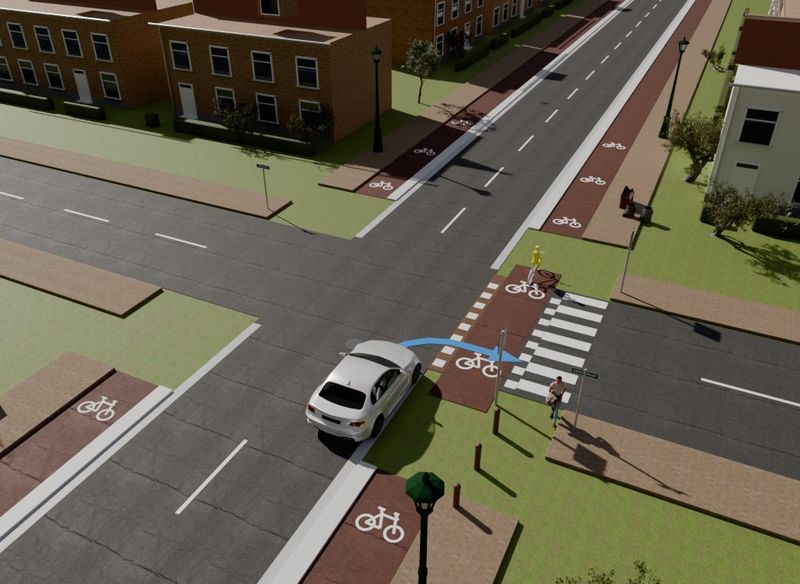
Explanation: At an uncontrolled junction you give way to drivers from the right (RVV 1990 art. 15); so the car from the left must wait for you. Turning is not on the list of special manoeuvres (art. 54); when turning left you only let oncoming traffic and traffic beside or close behind you go first (art. 18).NL: De auto van links; afslaan is geen bijzondere manoeuvre en jij komt voor hem van rechts Source: RVV 1990 art. 15, art. 18, art. 54
3D traffic situation for question 5

5. You are turning right. On the cycle path next to you a cyclist is riding straight on, and on the zebra crossing of the side street a pedestrian is crossing. Whom do you let go first?

Show in Dutch

Je slaat rechtsaf. Op het fietspad naast je rijdt een fietser rechtdoor en op het zebrapad van de zijstraat steekt een voetganger over. Wie laat je voorgaan?
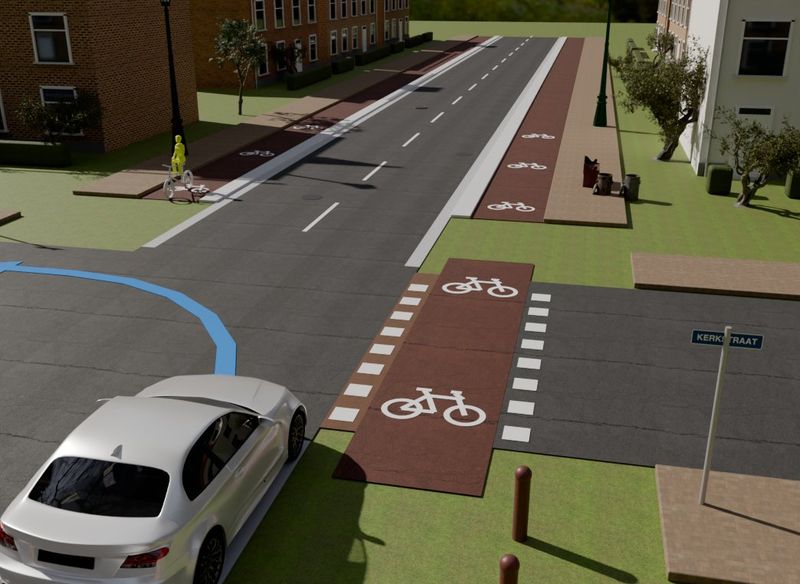
Explanation: As a turning driver you let traffic beside you or close behind you on the right go first (RVV 1990 art. 18(1)), and pedestrians crossing on a zebra must always be given way (art. 49(2)). So you wait for both.NL: Zowel de fietser als de voetganger Source: RVV 1990 art. 18 lid 1, art. 49 lid 2
3D traffic situation for question 6

6. You are turning left at this uncontrolled junction. A cyclist is coming towards you and riding straight on. Who goes first?

Show in Dutch

Je slaat linksaf op dit gelijkwaardige kruispunt. Een fietser komt je tegemoet en rijdt rechtdoor. Wie gaat voor?
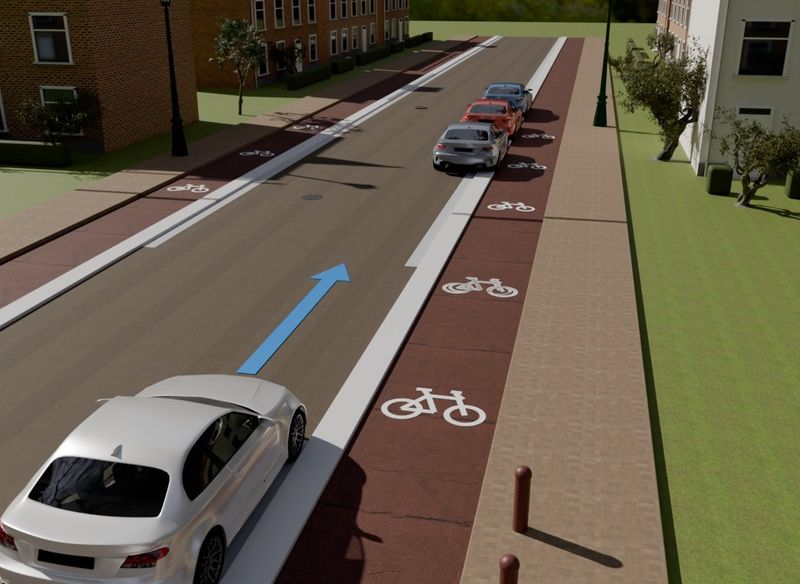
Explanation: Drivers who turn must let traffic coming towards them on the same road go first (RVV 1990 art. 18(1)). That also applies to cyclists; who reached the junction first is irrelevant.NL: De fietser; als afslaande bestuurder laat je tegemoetkomend verkeer voorgaan Source: RVV 1990 art. 18 lid 1
3D traffic situation for question 7

7. In this residential street many cars are already parked at the kerb. May you park your car with two wheels on the pavement to keep the road clear?

Show in Dutch

In deze woonstraat staan al veel auto's langs de stoep. Mag je je auto met twee wielen op het trottoir parkeren om de rijbaan vrij te houden?
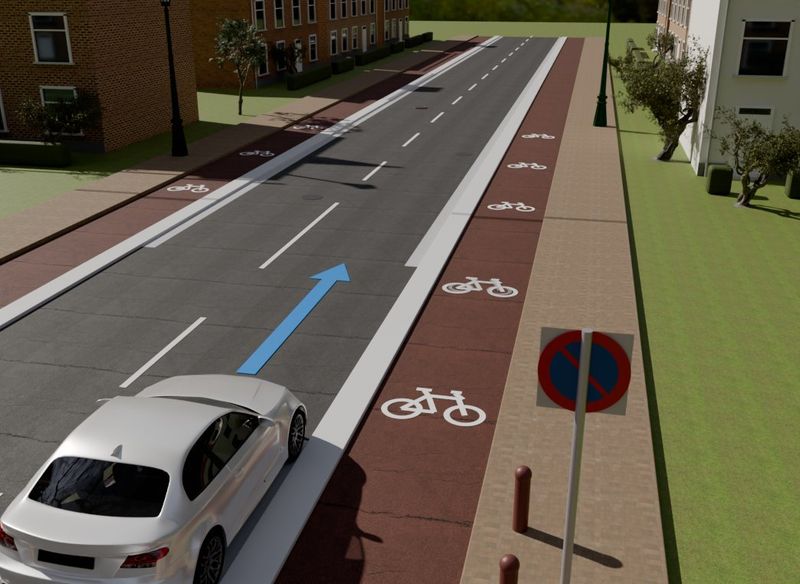
Explanation: Drivers of motor vehicles may use other parts of the road for parking, but not the pavement, footpath or cycle path (RVV 1990 art. 10(1)). Only where sign E8b is placed (parking with two wheels on the pavement) is it allowed.NL: Nee, parkeren op het trottoir is verboden, ook gedeeltelijk Source: RVV 1990 art. 10 lid 1; Bijlage 1 bord E8b
3D traffic situation for question 8

8. You see sign E1 (no parking). You want to stop here for a few minutes to unload boxes from your car straight away. Is that allowed?

Show in Dutch

Je ziet bord E1 (parkeerverbod). Je wilt hier een paar minuten stilstaan om meteen dozen uit je auto te laden. Mag dat?
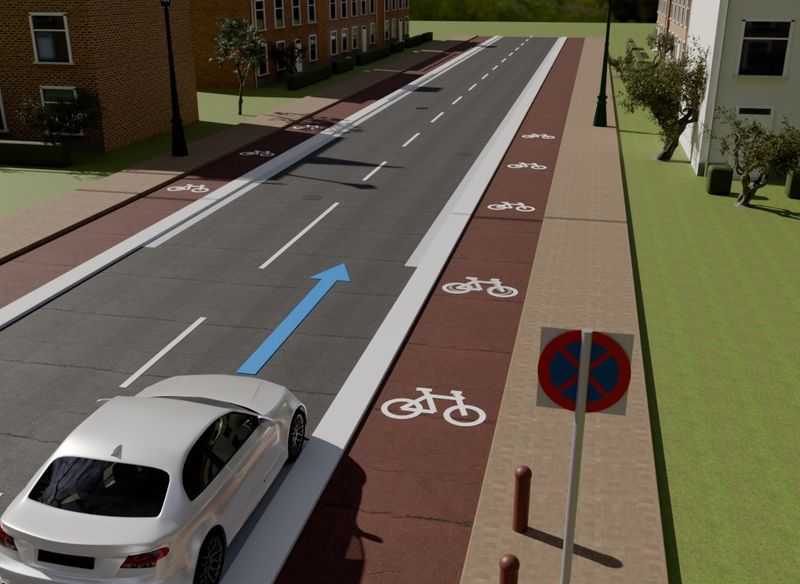
Explanation: Yes. Immediate loading and unloading is not parking: parking is stopping other than for immediately letting passengers in or out or loading and unloading (RVV 1990 art. 1). Sign E1 only prohibits parking; under E2 (no stopping) it would not be allowed.NL: Ja Source: RVV 1990 art. 1 (parkeren); Bijlage 1 bord E1
3D traffic situation for question 9

9. You see sign E2 (no stopping). May you stop here briefly to let your passenger get out?

Show in Dutch

Je ziet bord E2 (verbod stil te staan). Mag je hier even stoppen om je passagier te laten uitstappen?
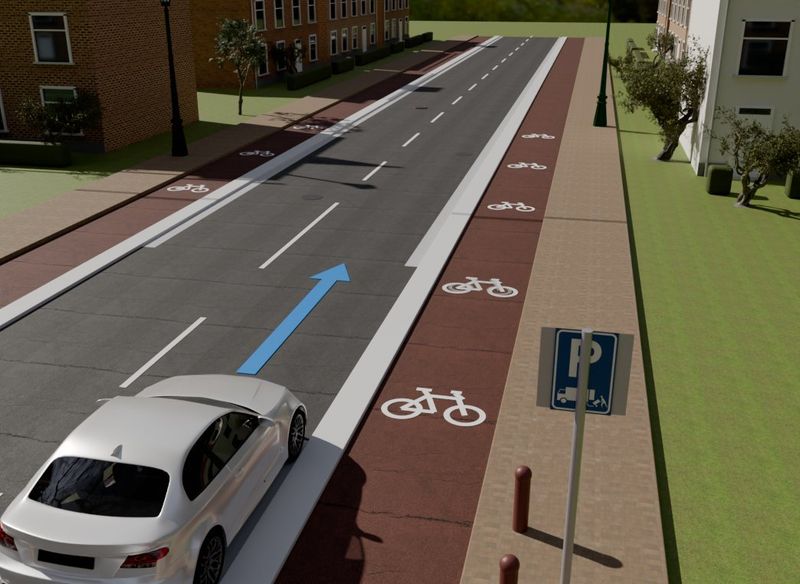
Explanation: No. Sign E2 prohibits stopping, and even letting a passenger out immediately counts as stopping (RVV 1990 art. 62; Annex 1, sign E2). Under a no-parking sign (E1) it would be allowed.NL: Nee Source: RVV 1990 art. 62; Bijlage 1 bord E2
3D traffic situation for question 10

10. You see sign E7. You want to stop here to immediately unload a heavy cabinet from your car and carry it into the shop. Is that allowed?

Show in Dutch

Je ziet bord E7. Je wilt hier stoppen om meteen een zware kast uit je auto te laden en de winkel in te dragen. Mag dat?

Explanation: Yes. Sign E7 indicates a place for the immediate loading and unloading of goods; that is exactly what you are doing, and it is not parking (RVV 1990 art. 1). Parking on such a place is prohibited, though (art. 24(1)(f)).NL: Ja Source: RVV 1990 art. 24 lid 1 onder f, art. 1; Bijlage 1 bord E7

Memory hooks for this topic

🚗↩️🙇🌍When reversing, you give way to ALL other road users.

Reversing means going backwards into the world with no eyes in the back of your head, so you bow to EVERYONE. Going in reverse? You're the humblest driver on the road.

👀🫣🚗↔️Check the blind spot (over your shoulder) before pulling away and at EVERY lane change.

The blind spot is an invisible motorcyclist floating exactly where your mirror can't see. Turn your head, or he 'dies' against your door — that's why it's the DEAD angle.

🛣️🏃💨🤝On the motorway: match your speed on the acceleration lane (speed up) BEFORE you merge.

The acceleration lane is a long-jumper's run-up: sprint until you match their speed, THEN leap into the traffic. Jump too slow and you crash into the sandpit.

🅿️➡️🚦🙇Pulling away from the curb is a 'special manoeuvre': you give way to all traffic.

You were parked, so you're the newcomer crashing the party: wait politely until everyone passes, only THEN step onto the dance floor (the road). Newcomer = back of the queue.

All memory hooks for this topic

Read and practise more

Other topics

Practise Right of way

Who goes first: at uncontrolled junctions, at give-way lines and stop signs, on roundabouts and with trams, buses and emergency vehicles.

10 free questions here · 376 in the app

Practise Traffic rules

Speeds, overtaking, lanes, lights, parking and stopping: the rules you need everywhere.

10 free questions here · 297 in the app

Practise Hazard perception

You see a traffic situation and choose what you do: brake, release the accelerator or do nothing.

21 free questions here · 219 in the app

Practise Vulnerable road users

Pedestrians, cyclists and moped riders, children, older people and blind or partially sighted pedestrians.

8 free questions here · 191 in the app

Practise Special conditions

Driving in rain, fog, slippery conditions, strong wind, low sun and in the dark.

9 free questions here · 196 in the app

Practise Vehicle knowledge

Dashboard warning lights, tyres, the APK (MOT), insurance and your documents.

10 free questions here · 143 in the app

Practise Environment and economical driving

Economical and clean driving, emissions, tyres and low-emission zones.

8 free questions here · 147 in the app

Practise Traffic insight

Looking ahead, keeping your distance, knowing your stopping distance and predicting what others will do.

10 free questions here · 189 in the app

Practise Motorway and autoweg

Merging and exiting, keeping right, overtaking, peak-hour lanes, matrix signs and breaking down.

10 free questions here · 157 in the app

Practise Alcohol and fitness to drive

Alcohol, drugs, medicines, tiredness, emotions and being able to see well.

10 free questions here · 138 in the app

Practise road signs

Recognising signs and road markings and knowing what they ask of you.

Quiz with all signs · 352 sign questions in the app

Practise this with 2,609 questions and 19 animations

Rijtheorie Hub practises exactly like the CBR exam: 50 questions, 30 minutes, pass with 44. Free to try, in 12 languages.

Download free