10 free practice questions on traffic insight for the Dutch CBR car theory exam. Looking ahead, keeping your distance, knowing your stopping distance and predicting what others will do. After every answer you see the explanation and the source. The app has 189 questions on this topic.
What you need to know
Turning right across a cycle path, you must always give priority to straight-going cyclists and light-mopeds.
Open your door with your far hand ('Dutch reach') so you naturally look back at the cyclist.
Snorfiets (blue, 25 km/h) rides the cycle path; bromfiets (yellow, 45 km/h) rides the roadway.
On a bicycle street the car is a guest: stay behind cyclists and drive defensively, they are vulnerable.
Give cargo bikes and children extra room, and never sit on a truck's right side at a junction.
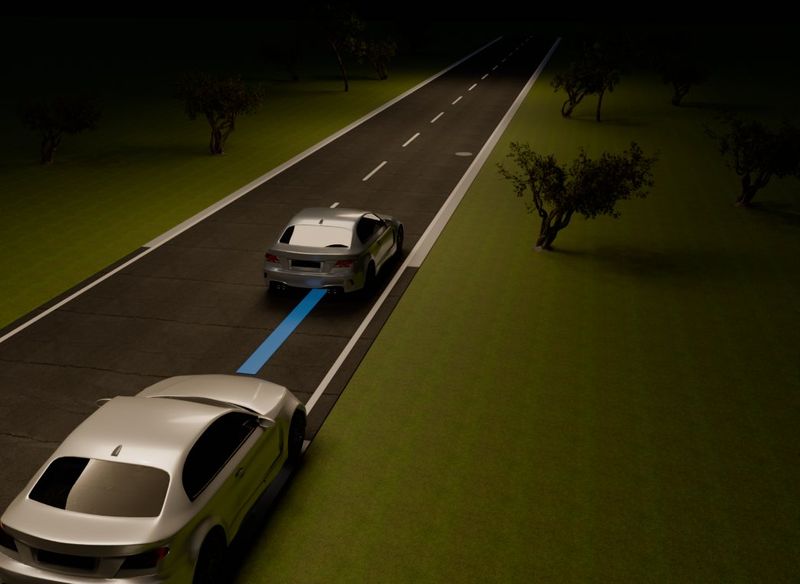
1. At night you drive with high beam on a rural road. You catch up with a slower car and approach it from behind. What do you do with your lights?
Show in Dutch
's Nachts rijd je met groot licht op een buitenweg. Je haalt een langzamere auto in en nadert hem van achteren. Wat doe je met je verlichting?
Explanation: Art. 32(2) RVV: high beam is not permitted when following another vehicle at a short distance (nor when meeting another road user). Flashing the high beam is only allowed to avert imminent danger (art. 28), not to announce an overtake; switching lights off at night is prohibited (art. 32(1)).NL: Je schakelt over op dimlicht zodra je hem op korte afstand volgt, zodat je hem niet via zijn spiegels verblindtSource: RVV 1990 art. 32 lid 2 en art. 28
2. At night an oncoming driver forgets to dip his high beam and you are dazzled. What is the safest reaction?
Show in Dutch
's Nachts vergeet een tegenligger zijn groot licht te dimmen en je wordt verblind. Wat is de veiligste reactie?
Explanation: Art. 19 RVV: you must be able to stop within the distance you can see; dazzled, you see less, so your speed must come down. Using your own high beam when meeting him is prohibited (art. 32(2)) and dazzles him too. Looking into his lights makes the dazzle worse, and stopping abruptly on the carriageway is dangerous for the traffic behind you.NL: Snelheid minderen, rechts houden en langs de rechter wegrand kijken tot je weer goed zicht hebtSource: RVV 1990 art. 19 en art. 32 lid 2
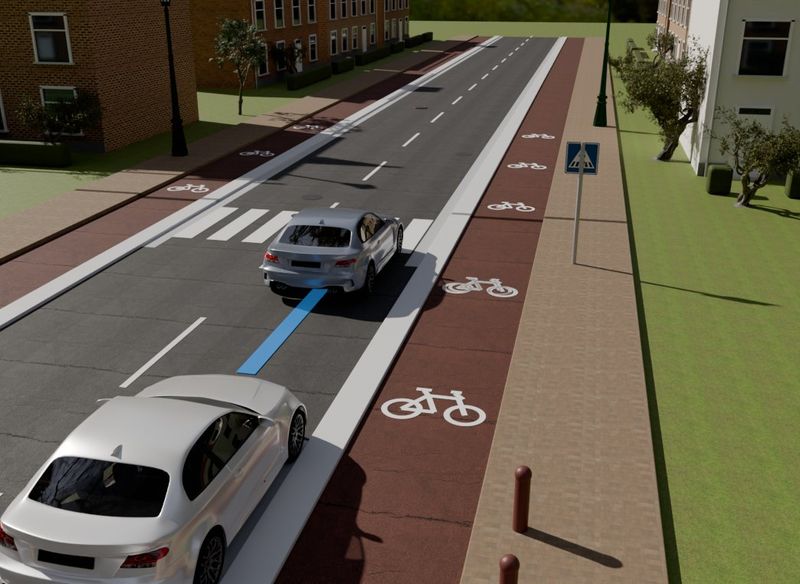
3. The car ahead of you slows down just before a zebra crossing, while you yourself cannot see any pedestrian. What is the right choice?
Show in Dutch
De auto vóór je mindert vaart vlak voor een zebrapad, terwijl je zelf geen voetganger ziet. Wat is de juiste keuze?
Explanation: Art. 12 RVV prohibits overtaking just before or on a pedestrian crossing. The braking car ahead is also a signal: he probably sees a pedestrian who is still hidden from you and whom you must let cross (art. 49(2)). The horn is only allowed to avert imminent danger (art. 28), and passing on the right via the cycle lane is not permitted here either (art. 11 and 12).NL: Niet inhalen, snelheid minderen en rekening houden met een voetganger die achter de auto vandaan komtSource: RVV 1990 art. 12 en art. 49 lid 2
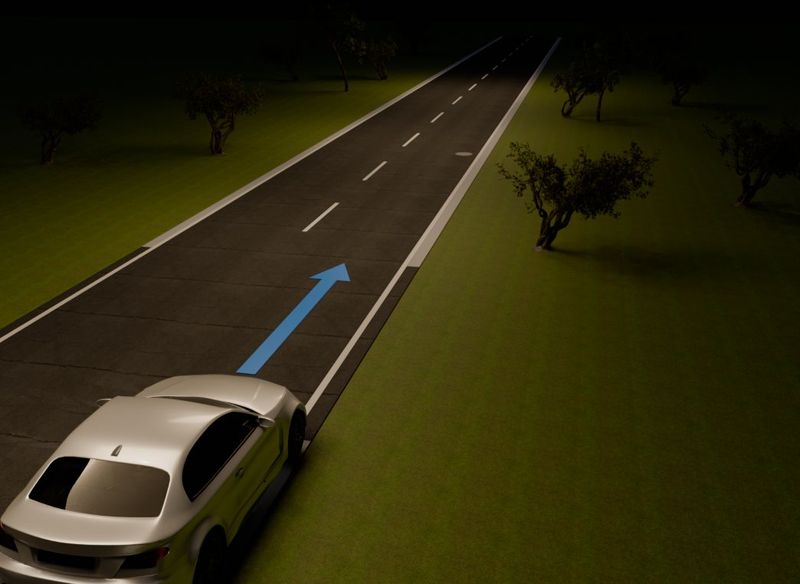
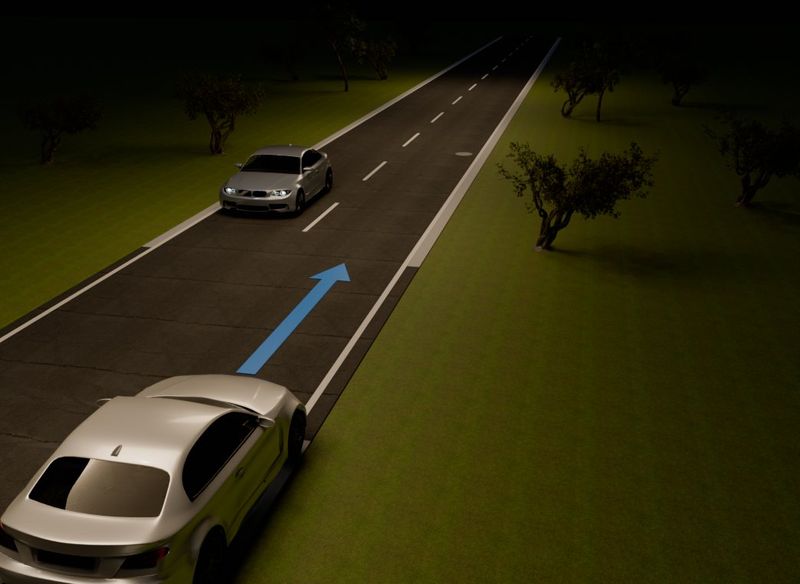
4. At night you are driving on a dark, unlit rural road. There is no oncoming traffic and nobody ahead of you. Which lights are the best choice?
Show in Dutch
Je rijdt 's nachts op een donkere, onverlichte buitenweg. Er is geen tegenligger en er rijdt niemand vóór je. Welke verlichting kies je het best?
Explanation: Art. 32(2) RVV: high beam instead of dipped beam is permitted, except by day, when meeting another road user and when following at a short distance. On an empty dark road high beam extends your sight distance and therefore your room to react (art. 19). Fog lights are only allowed in fog, snow or rain that seriously impairs visibility (art. 34); at night dipped or high beam is compulsory, side lights alone are not enough (art. 32(1)).NL: Groot licht, zodat je ver vooruit kunt kijken; je dimt zodra een andere weggebruiker nadertSource: RVV 1990 art. 32 en art. 34
5. At a junction without traffic lights you want to turn left. An oncoming driver wants to turn right at the same junction, into the same street as you. Who goes first?
Show in Dutch
Op een kruispunt zonder verkeerslichten wil jij linksaf. Een tegenligger wil op hetzelfde kruispunt rechtsaf, dezelfde straat in als jij. Wie gaat voor?
Explanation: Art. 18(2) RVV: drivers turning left must give way to oncoming drivers turning right at the same junction ('the short turn goes before the long turn'). Who arrived at the junction first is irrelevant.NL: De tegenligger die rechtsaf slaat; als linksaf slaande bestuurder moet jij hem voor laten gaanSource: RVV 1990 art. 18 lid 2
6. During the day a heavy rain shower breaks; visibility becomes seriously impaired. Your car has automatic daytime running lights. What is correct?
Show in Dutch
Overdag breekt een hevige regenbui los; het zicht wordt ernstig belemmerd. Je auto heeft automatisch dagrijlicht. Wat is juist?
Explanation: Art. 32(1) RVV: by day too, you must use dipped beam when visibility is seriously impaired. Daytime running lights only shine at the front; only with dipped beam do your rear light and number-plate light come on as well (paragraph 3), so you are visible from behind. The rear fog light is only allowed in fog or snow with visibility below 50 metres (art. 34(2)); high beam by day is prohibited (art. 32(2)).NL: Je schakelt dimlicht in; dagrijlicht is nu niet genoeg, ook omdat je achterlichten dan niet brandenSource: RVV 1990 art. 32 lid 1 en 3; art. 34 lid 2
7. At night you are driving with high beam on a rural road. An oncoming car approaches. May you keep your high beam on until it has passed?
Show in Dutch
's Nachts rijd je met groot licht op een buitenweg. Er nadert een tegenligger. Mag je je groot licht aan laten tot hij voorbij is?
Explanation: No. High beam is not allowed when meeting another road user (art. 32(2)(b)): you dip in good time so you do not dazzle the oncoming driver, and only switch back to high beam once it has passed.NL: NeeSource: RVV 1990 art. 32 lid 2
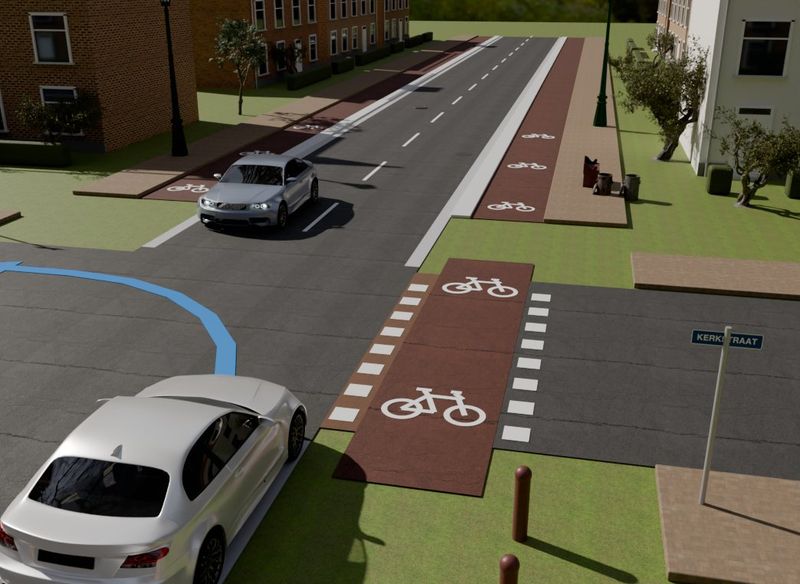
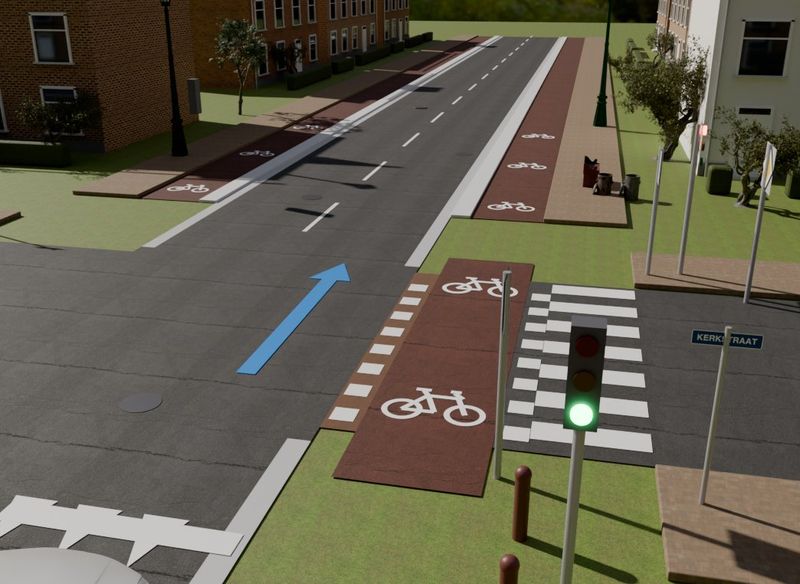
8. You approach a junction with sign B6 and shark teeth, but the traffic light is working and shows green for you. A car approaches from the left. May you drive on without giving way to it?
Show in Dutch
Je nadert een kruispunt met bord B6 en haaientanden, maar het verkeerslicht werkt en staat voor jou op groen. Van links nadert een auto. Mag je doorrijden zonder hem voor te laten gaan?
Explanation: Yes. Traffic lights override signs that regulate priority (art. 64): on green you may proceed (art. 68(1)) and the car from the left has red, so you need not give way to it. Do check that it really stops.NL: JaSource: RVV 1990 art. 64; art. 68 lid 1
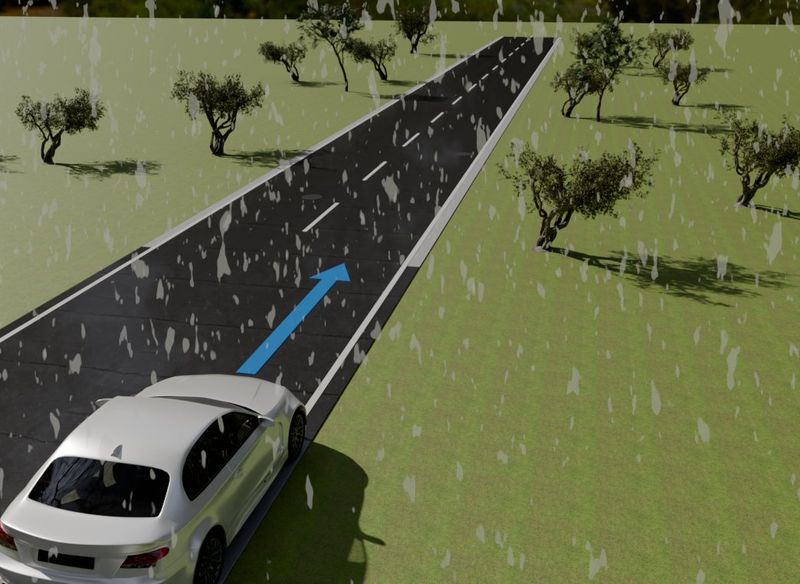
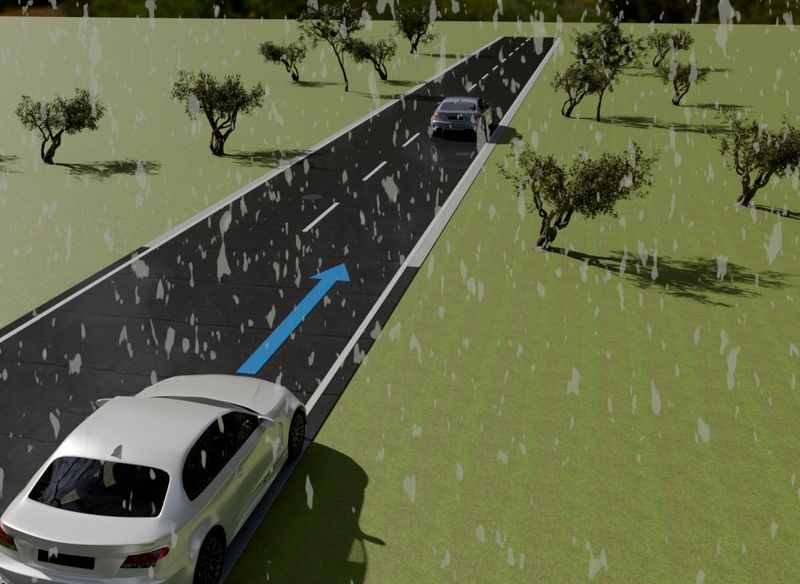
9. On this rural road (80 km/h) it is raining and the surface is wet. Does that automatically make the legal maximum speed lower than 80 km/h?
Show in Dutch
Op deze buitenweg (80 km/u) regent het en het wegdek is nat. Is de wettelijke maximumsnelheid daardoor automatisch lager dan 80 km/u?
Explanation: No. The maximum speed outside built-up areas remains 80 km/h (art. 21); rain does not change the limit. You must, however, adapt your speed so you can stop within the free, visible distance (art. 19), which on a wet road usually means clearly slower than 80.NL: NeeSource: RVV 1990 art. 21; art. 19
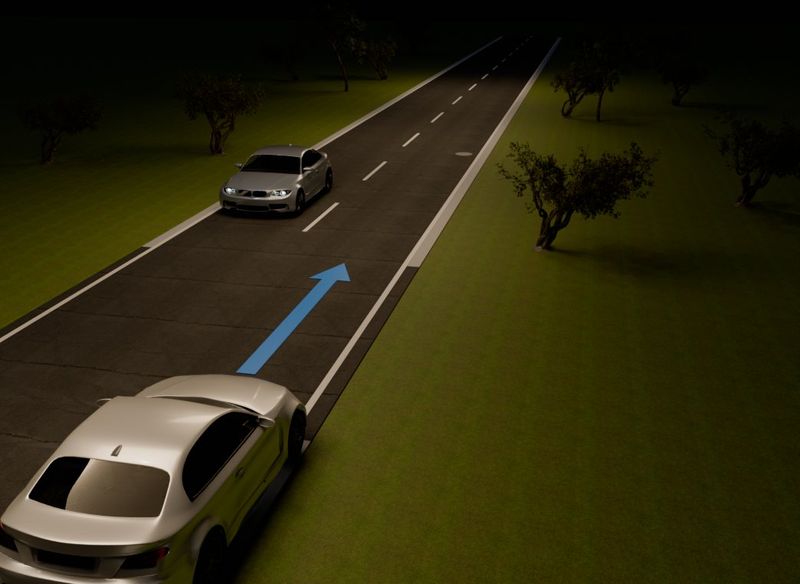
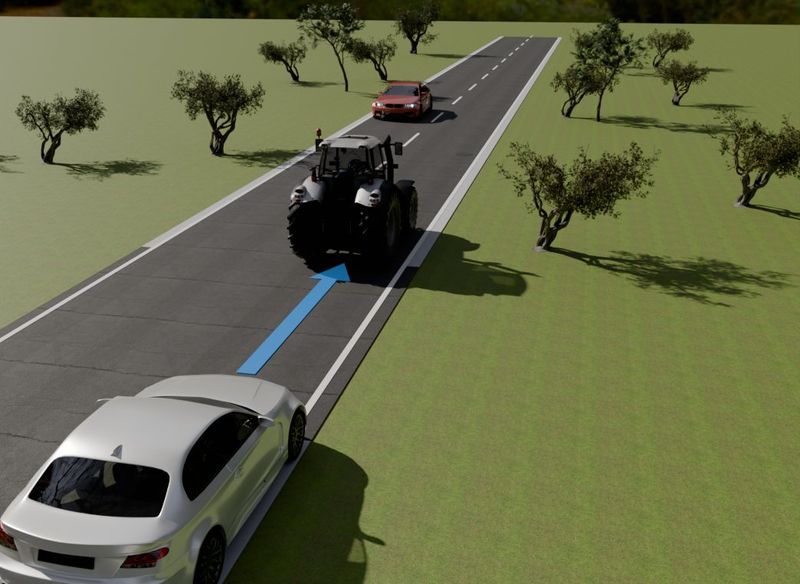
10. On an 80 km/h road you are driving behind a tractor. An oncoming car is approaching. May you overtake the tractor now?
Show in Dutch
Op een 80-weg rijd je achter een tractor. Er nadert een tegenligger. Mag je de tractor nu inhalen?
Explanation: No. You overtake on the left (art. 11(1)) and use the oncoming lane to do so; with oncoming traffic approaching you cause danger or obstruction (WVW 1994 art. 5). Wait until the oncoming car has passed and the road is clear for long enough.NL: NeeSource: WVW 1994 art. 5; RVV 1990 art. 11 lid 1