Home › Theory guide › Documents, insurance & roadworthiness
Documents, insurance & roadworthiness
Driving licence categories, 2toDrive and validity
A new licence is valid 10 years; via 2toDrive you drive B from 17, accompanied until 18.
- AM: moped, light moped, micro-car, from 16
- Motorcycle: A1 from 18, A2 from 20, A from 24
- B: car up to 3,500 kg, 8 seats, trailer to 750 kg
- C/C1 lorries; D/D1 buses
- 2toDrive: B from 17, coach required until 18
- From 75: shorter validity plus medical check
Watch out: exceptions and pitfalls
- A category B licence does not entitle you to ride a motorcycle: a motorcycle needs A1/A2/A. You do automatically get category AM with your B (moped, light moped, micro-car).
- With a B licence you may NOT ride a light motorcycle up to 125 cc in the Netherlands, not even after years of driving or with an extra course: you need at least an A1 licence.
- 2toDrive: driving without your coach (or with an unregistered one) counts as driving without a valid licence; the coach is also bound by the alcohol rules (max 0.5 per mille, Wvw art. 8) and must not be under the influence — the 17-year-old driver's own limit is 0.2.
- Novice rules: for the first 5 years (or 7 years if you got an AM or T licence before you turned 18) the alcohol limit is 0.2 per mille instead of 0.5 — Amsterdam has many checks on nightlife routes.
- A non-EU/EFTA foreign licence is usually valid only 185 days after you register with the municipality (BRP); after that you must exchange it or retake the exam.
Registration certificate and vehicle ownership
Since 2014 the kentekencard replaces paper; while a vehicle is yours, you are responsible.
- Card shows plate and data, not your name/address
- Separate ownership code needed to transfer
- Transfer at RDW outlet/post office or online with DigiD
- Registered to you = liable for insurance, road tax, APK
- End obligation: sell, export, suspend or scrap
- Scrapping gives an indemnity certificate (vrijwaringsbewijs)
Watch out: exceptions and pitfalls
- Never keep the ownership code in the car and never hand it over for a test drive — with that code someone can register the car in their name or misuse it.
- When selling, always obtain an indemnity certificate. Without it you remain liable for the new 'owner's' fines, tax and insurance.
- Suspension (schorsing) stops tax, insurance and APK duty, but the vehicle may then NOT stand on a public road — in Amsterdam that means a spot on private land or in a garage, not on the street.
- You need not carry the registration card physically if police can read the plate, but you MUST carry the driving licence — don't confuse the two obligations.
- A new or replacement card comes with a new ownership code; the old code from the previous card no longer works.
Third-party (WA) insurance under the WAM: the legal minimum
Every vehicle with a Dutch plate must carry at least WA liability cover.
- WA covers damage to others, not your own car
- WA+ (limited hull) and allrisk cover more
- Minimum: over €6M injury, over €1M material damage
- RDW auto-checks; uninsured = automatic fine
- Waarborgfonds pays victim, then recovers from you
Watch out: exceptions and pitfalls
- WA never covers your own damage: in a crash you caused with WA only, you pay your own repair yourself.
- You may suspend without insurance, but if you stop ONLY the insurance without suspending or transferring, the RDW register check strikes immediately with a fine.
- For travel abroad you need the green card (international insurance certificate); it may now be printed on white paper — check the country you drive to is not crossed out on it.
- A trailer runs under the tow vehicle's WA while coupled; if it stands uncoupled and causes damage, the position can differ.
- In Amsterdam, with many cyclists and pedestrians, injury claims escalate quickly; the statutory minimum is generous, but for serious injury higher or unlimited cover is wise.
APK inspection: schedule and exemptions
The APK is the mandatory technical test; the schedule depends on fuel and age.
- Petrol/electric/hydrogen: first at 4 yrs, then 2-yearly, yearly from 8
- Diesel/LPG: first at 3 yrs, then yearly
- Done at RDW-recognised station, reported digitally
- Expired APK = fine and weaker insurance position
- May test up to 2 months before expiry
Watch out: exceptions and pitfalls
- Motorcycles are APK-exempt in the Netherlands — there is NO APK for motorbikes (deliberately different from many other EU countries).
- Mopeds, light mopeds and most trailers up to 3,500 kg also have no APK duty; heavy trailers and semi-trailers over 3,500 kg do.
- The 2-month rule: test more than 2 months early and the new validity counts from the test date, so you lose part of the term.
- An APK is a snapshot: a pass does not mean everything is technically perfect — tread depth, brakes and lights remain your ongoing responsibility.
- In Amsterdam the pressure on older diesels is not only the APK but also the environmental zone; a car can be APK-passed yet still barred from the zone.
Tyres, tyre pressure, warning triangle and what to carry
Minimum tread depth is 1.6 mm; below that it's rejected and fined.
- 1.6 mm minimum, across full width and whole tyre
- Same minimum for winter tyres (grip drops below ~4 mm)
- Netherlands has no winter-tyre requirement
- Correct pressure on door-pillar or fuel-flap sticker
- Warning triangle: ~30 m behind a hard-to-see stationary car, not needed with hazard lights
- Carry licence and ID (identification duty from 14)
Watch out: exceptions and pitfalls
- A safety vest and first-aid kit are NOT legally required in the Netherlands — unlike France, Belgium and Spain, where the vest is mandatory; so pack one in good time for a trip abroad.
- Do not mix different tyre sizes or types on one axle, and with four different tyres never put the worst on the driven or steering axle; unequal tyres can fail the APK.
- Measure pressure cold (before driving); a warm tyre gives a higher, misleading reading. When heavily loaded or towing a caravan a higher pressure from the manual often applies.
- In Amsterdam's narrow streets, along canals and at loading bays, a warning triangle at about 30 m is often awkward — with flashing hazard lights the triangle isn't needed; otherwise place it as visibly as you can.
- Watch the tyre's age (DOT code): rubber ages even with enough tread; old tyres can crack and are dangerous despite adequate tread depth.
Importing, registering, taxes and trailers (BE)
Imports need RDW inspection and registration first; trailer weight sets your licence.
- On import: pay BPM, then periodic road tax
- B: trailer to 750 kg, or combination up to 3,500 kg
- Combination to 4,250 kg: code 96 course, no exam
- Heavier trailer/combination: BE licence plus practical exam
- Trailer over 750 kg needs its own plate
- Amsterdam: environmental/zero-emission zones, plate-based parking
Watch out: exceptions and pitfalls
- With a trailer think not only of your licence but of YOUR car's towing limits (on the registration/register): you may never tow more than the manufacturer allows, whatever your licence.
- On most roads outside built-up areas and on the motorway a trailer has a lower speed limit than the solo car; respect that trailer limit.
- Amsterdam environmental zone: it is about the diesel's build year/emission class, not the APK; a passed car can still be barred. Cameras check the plate, so slipping in unnoticed is impossible.
- Register-based parking: if your plate is not correctly registered (including visitor parking and hire cars) an additional levy follows without any paper ticket behind the windscreen.
- You cannot insure and tax an imported car separately from registration until the RDW inspection and ownership registration are complete — plate first, then legally on the road.
- Code 96 is NOT full BE: if your combination exceeds 4,250 kg or you want a trailer heavier than code 96 allows, you genuinely need the BE exam.
Want to practise? Try the free questions on vehicle knowledge, with an explanation for every answer.
Signs for this topic
The signs that belong to this chapter, with their meaning:
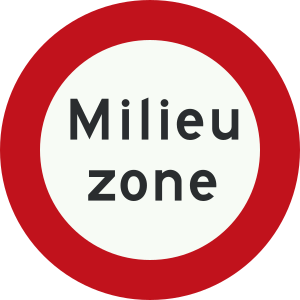 C22a: environmental zone
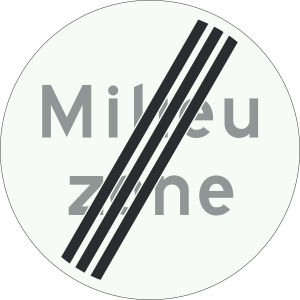 C22b: end of environmental zone / end
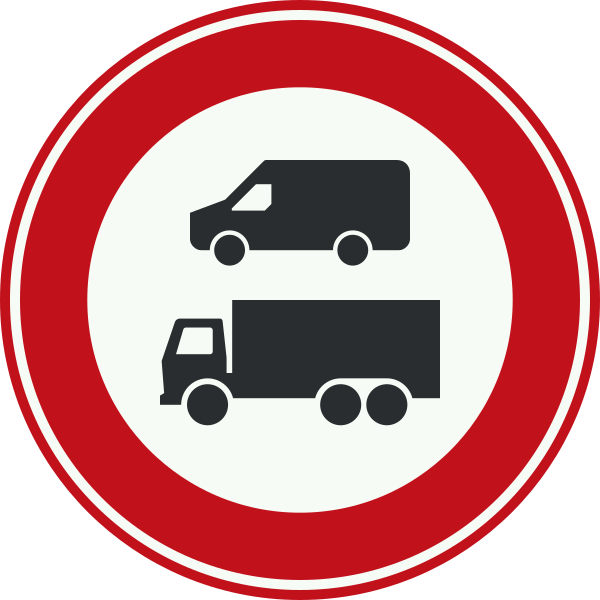 C22c: zero-emission zone
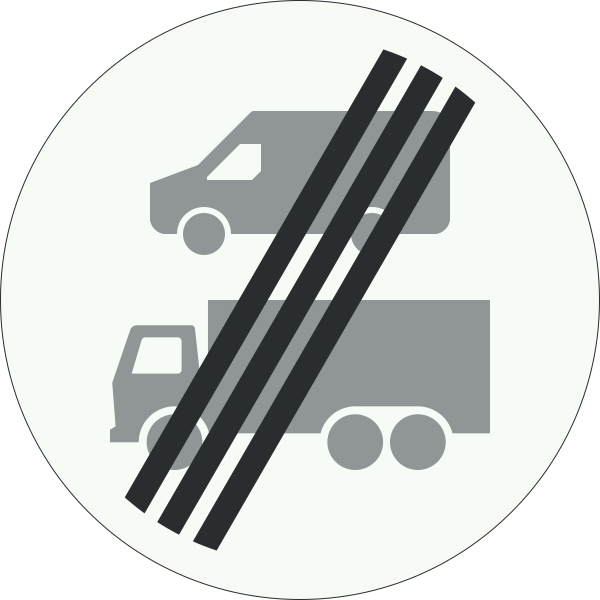 C22d: end of the zero-emission zone
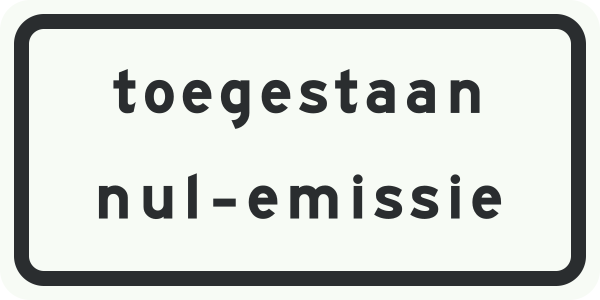 C22c1: sub-sign to sign c22c
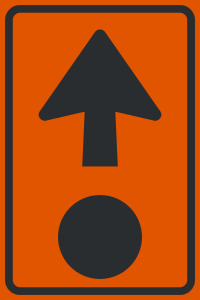 K14: route for the transport of hazardous materials
Practise this with 2,609 questions and 19 animations
Rijtheorie Hub practises exactly like the CBR exam: 50 questions, 30 minutes, pass with 44. Free to try, in 12 languages.
Download free